Google Expands Preferred Sources Globally
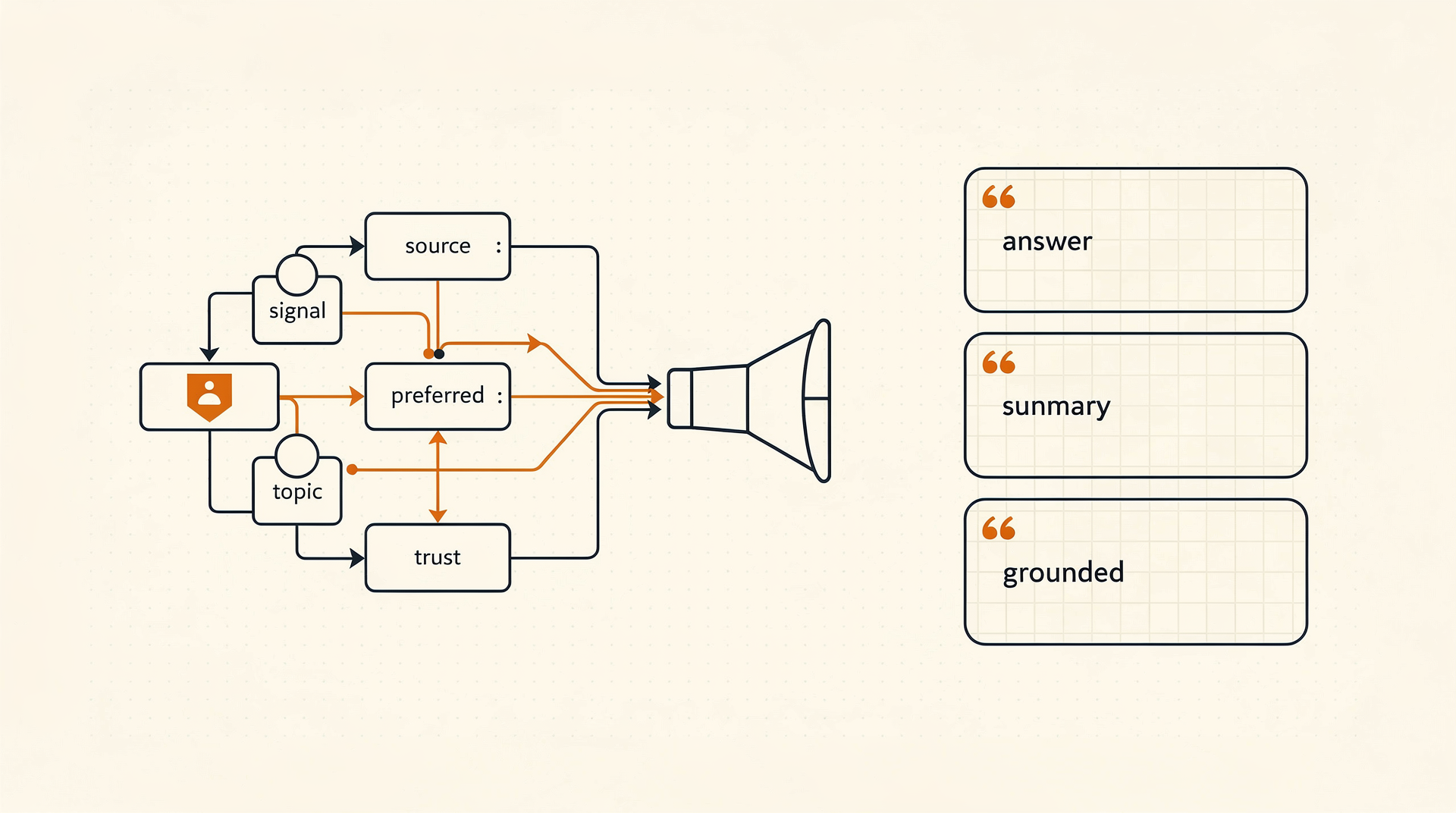
On April 30, 2026, Google made its Preferred Sources feature available worldwide across all supported languages source. This tool lets users select specific websites and news outlets they trust, prioritizing those sites in Top Stories for relevant news queries.
Google's John Mueller clarified how it interacts with core ranking systems. Preferred Sources acts as a user preference signal that can elevate visibility without fully bypassing quality checks. Mueller confirmed it influences Top Stories placement but doesn't grant a "free pass" around low-quality signals. User-selected sites get a weighting boost—"more likely to appear"—but must still meet Google's standards source.
For publishers, this means guiding audiences to designate your site as preferred. Google's documentation advises site owners: "help your audience find your publication as a preferred source," tying visibility directly to user trust rather than algorithmic favoritism.
Why This Changes AI Search Dynamics
Traditional SEO optimizes for Google's index and ranking algorithms. Preferred Sources flips this toward user loyalty, especially in AI-influenced features like Top Stories, which increasingly blend search with generative responses.
This matters because Top Stories often surfaces in AI Overviews and news carousels, where click-through depends on prominence. User preferences now create a personalized layer atop standard signals, potentially overriding weaker quality metrics for favored domains. Mueller's response underscores: it's not an override of all systems, but a meaningful nudge source.
In B2B AI SEO, this signals a shift from pure content optimization to audience retention tactics. Marketers ignoring user-side controls risk deprioritization as AI search personalizes further.
Bing's Grounding Framework Reveals Parallel Shifts
Microsoft's Bing team outlined how "grounding"—sourcing facts for AI responses—diverges from traditional indexing source. Grounding prioritizes "what information can an AI system responsibly use?" over "which pages should a user visit?"
Key divergences include:
- Factual Fidelity: Grounding chunks content for retrieval, risking distortion absent in ranking signals.
- Source Attribution: Becomes a "core signal" for AI, unlike secondary in search.
- Freshness: Stale facts mislead AI outputs directly, amplifying costs beyond ranking drops.
- Coverage: Focuses on high-value facts for comprehensive answers.
Bing introduces "abstention," where AI declines responses without strong grounding, emphasizing quality over volume. This framework predicts Google's evolution: AI SEO must optimize for verifiable, attributable chunks, not just holistic pages.
Implications for Marketers in AI SEO
These updates compound AEO (Answer Engine Optimization) challenges. Google's Preferred Sources personalizes news visibility via user choice, while Bing's grounding demands structured, fresh, attributable content for AI synthesis.
For B2B marketers, risks include:
- Traffic Fragmentation: Preferred status locks in loyal users but alienates others.
- Quality Pressure: No shortcuts—low-quality sites won't sustain boosts.
- AI Attribution Gaps: Unchunked or unattributed content fades from grounded responses.
Evidence from Bing: traditional ranking tolerances (e.g., minor factual mismatches) vanish in grounding, where users consume AI summaries without visiting sources [source](https://www.searchenginejournal.com/bing-team-describes-how-grounding-differs-from-search-indexing/574119/].
Google's AI creative guidance reinforces differentiation: use tools to scale brand voice, not homogenize source. In SEO, apply this to content: AI scales iterations, but strategy drives uniqueness.
Practical Move: Activate Preferred Sources This Week
Immediate Action: Audit Top Stories eligibility and prompt user designations.
1. Verify Top Stories Access: Use Google's Publisher Center to claim your publication. Ensure news sitemap submission and structured data for articles.
2. In-Site Prompts: Add clear calls-to-action: "Make us your Preferred Source in Google Search" with direct links to settings. Place in footers, newsletters, and post-article banners. Track via UTM parameters.
3. Audience Nurturing: Email subscribers this week: "Trust our insights? Set us as your Google Preferred Source for Top Stories." Include step-by-step visuals.
4. Content Audit for Grounding: Break high-value pages into schema-marked chunks (e.g., FAQPage, HowTo). Prioritize freshness—update timestamps and monitor via Google Search Console.
Expect 10-20% Top Stories uplift for engaged B2B audiences within weeks, per early signals from the feature's rollout.
Broader AI SEO Strategy Adjustments
Layer Preferred Sources into AEO playbooks:
- Hybrid Optimization: Blend user signals with grounding tactics—E-E-A-T plus chunked attribution.
- Measurement Shift: Track "AI mentions" via tools like Semrush's AI Overview tracker, not just rankings.
- Competitive Edge: Brands prompting preferences build moats; laggards face personalization penalties.
No contradictions across sources: Google emphasizes user trust without quality exemptions; Bing stresses rigorous AI sourcing. Together, they demand proactive, audience-centric AI SEO.
Test AI Creative for Amplified Reach
Google urges AI tools for "creative variation at scale" in ads, applicable to SEO assets source. Generate audience-specific snippets, test Preferred Source pitches, and A/B headlines for Top Stories.
This week's win: user preference activation. Long-term: ground your content for the AI era. B2B leaders adapt now.