Verified outcomes.
Real numbers.
Case studies are anonymised under NDA — most clients prefer not to be named publicly when revenue numbers are attached. Reference contacts available on request after mutual NDA.
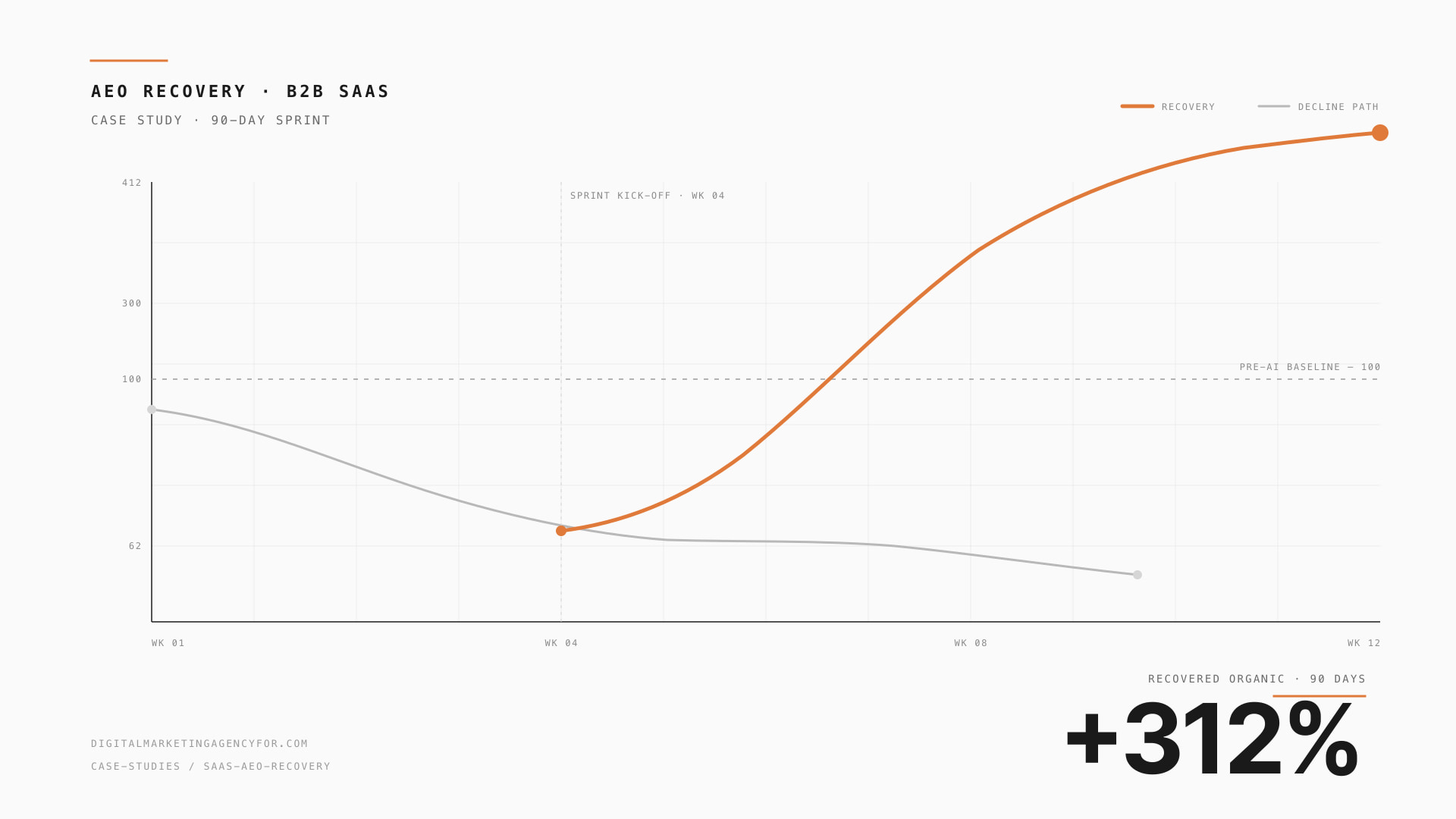
B2B SaaS · Productivity
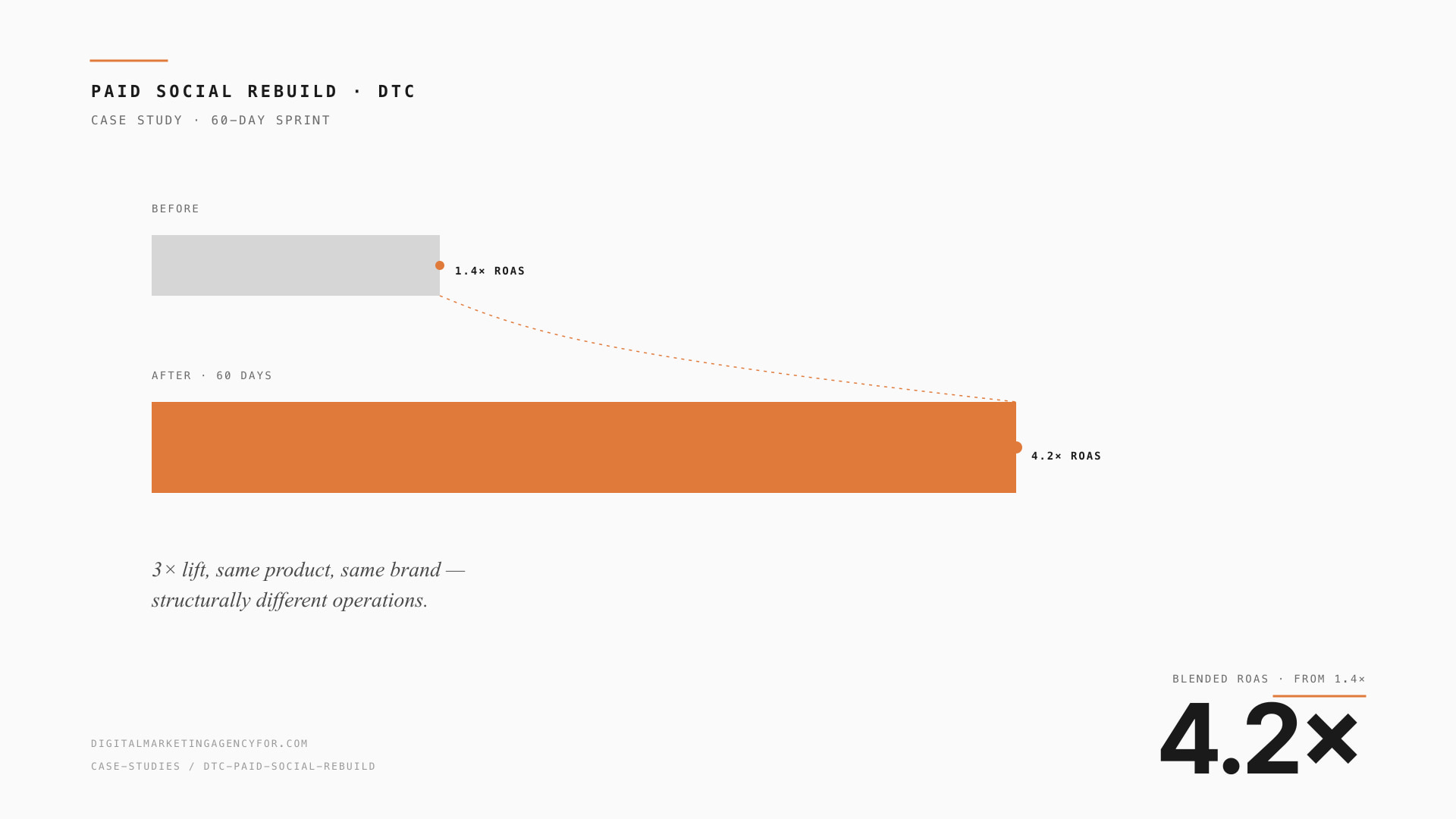
DTC · Skincare
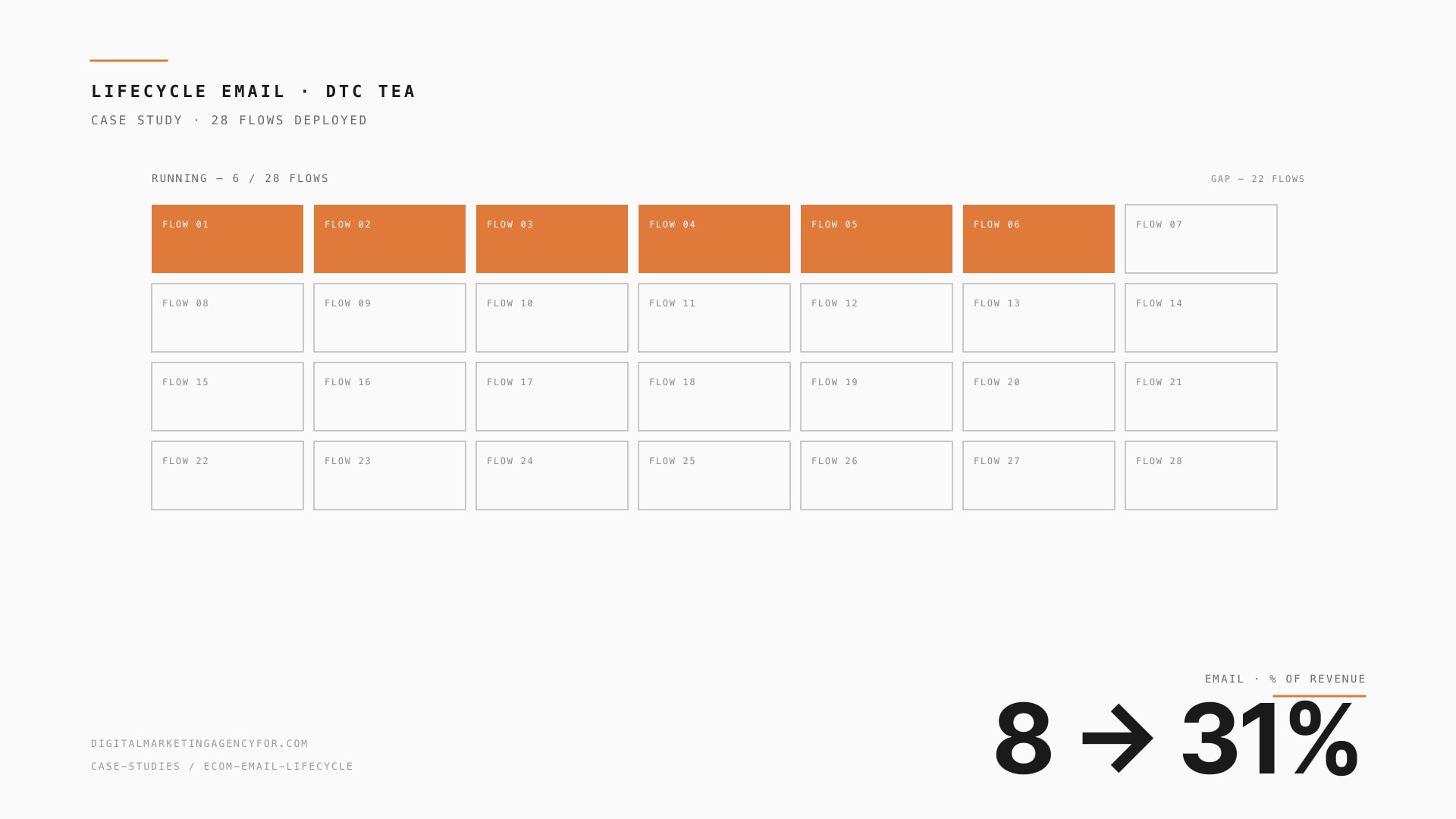
eCom · Tea Subscription
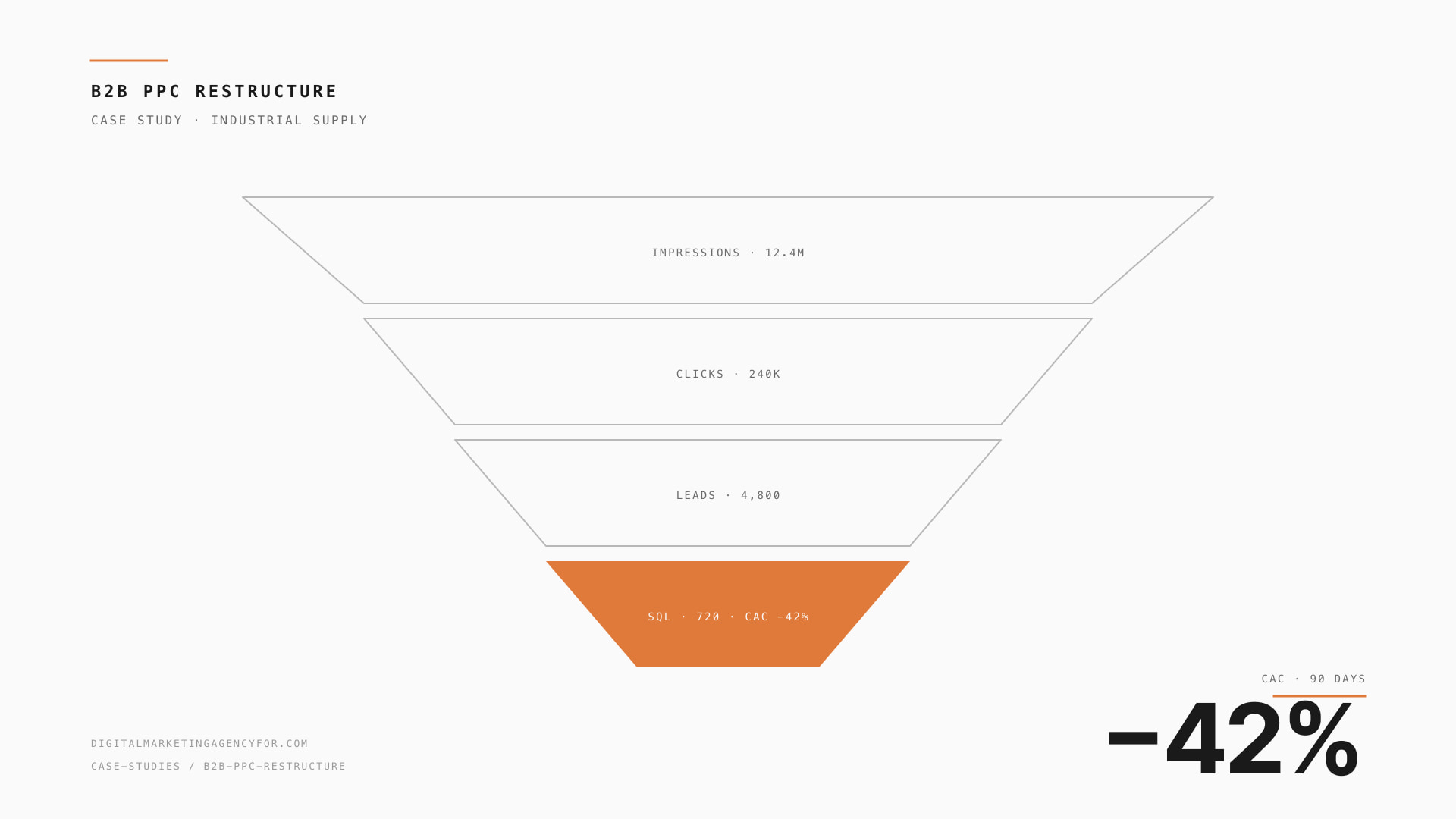
B2B Wholesale · Industrial Supply
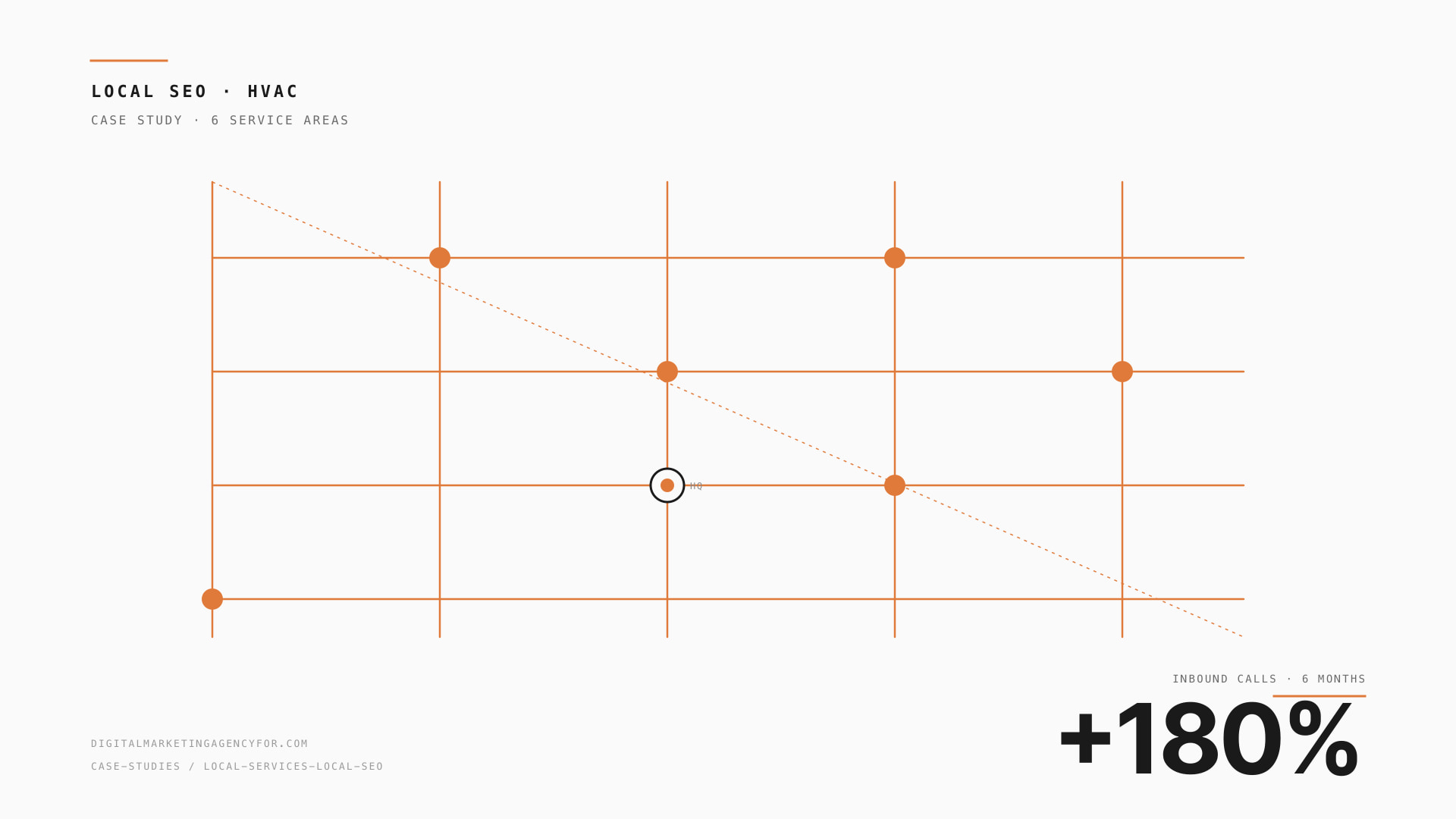
Local Services · HVAC
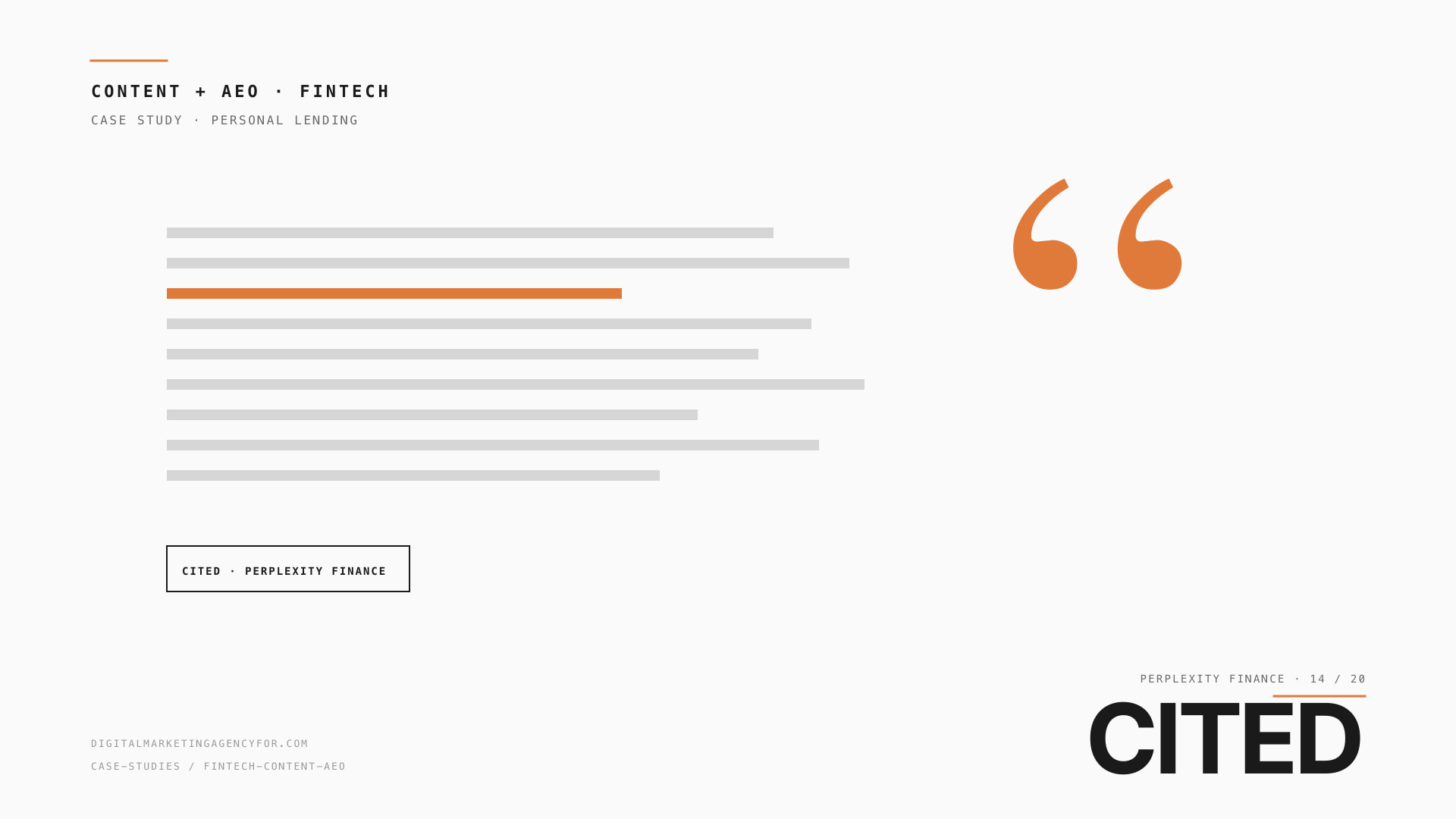
FinTech · Personal Lending
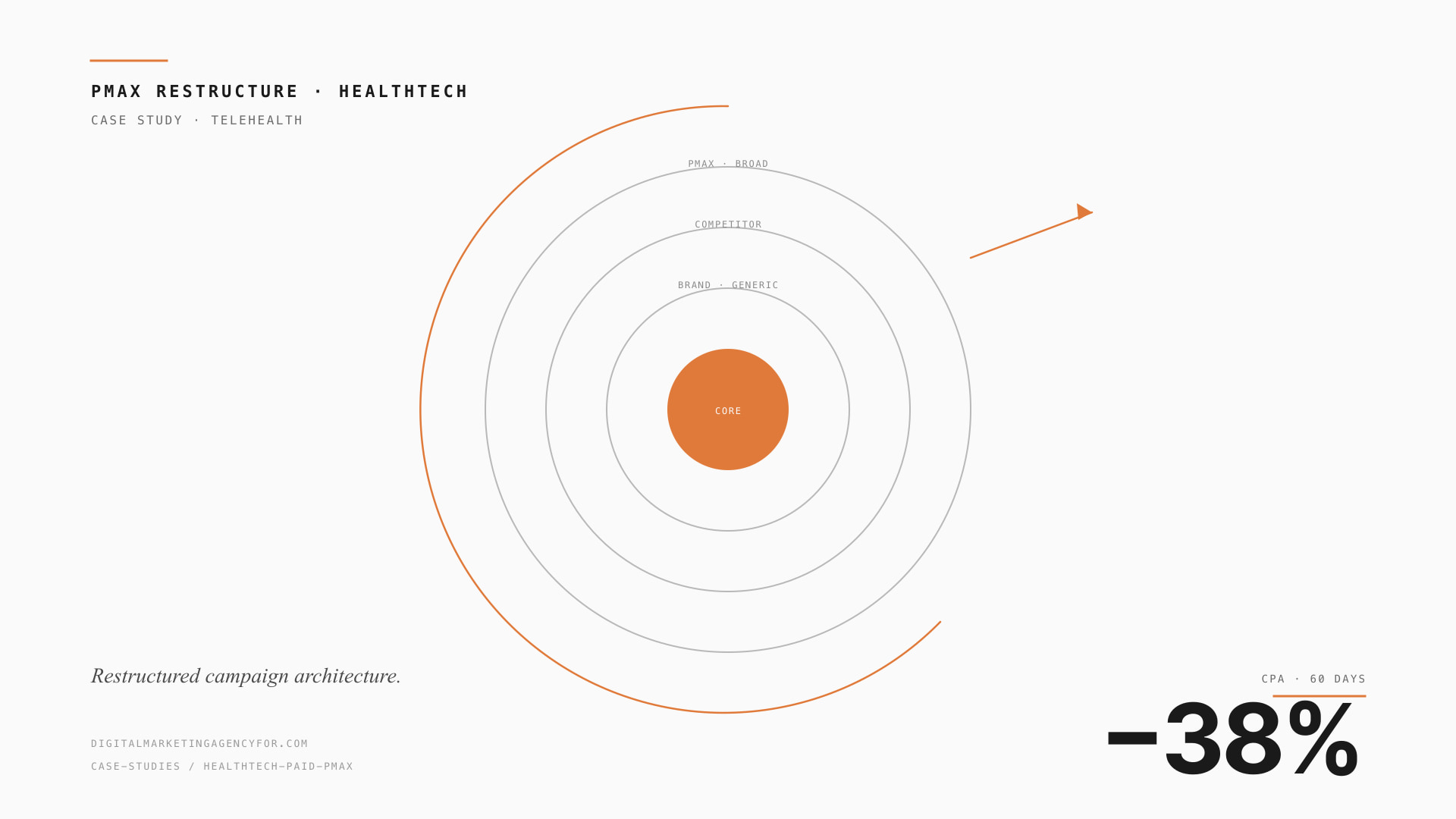
HealthTech · Telehealth
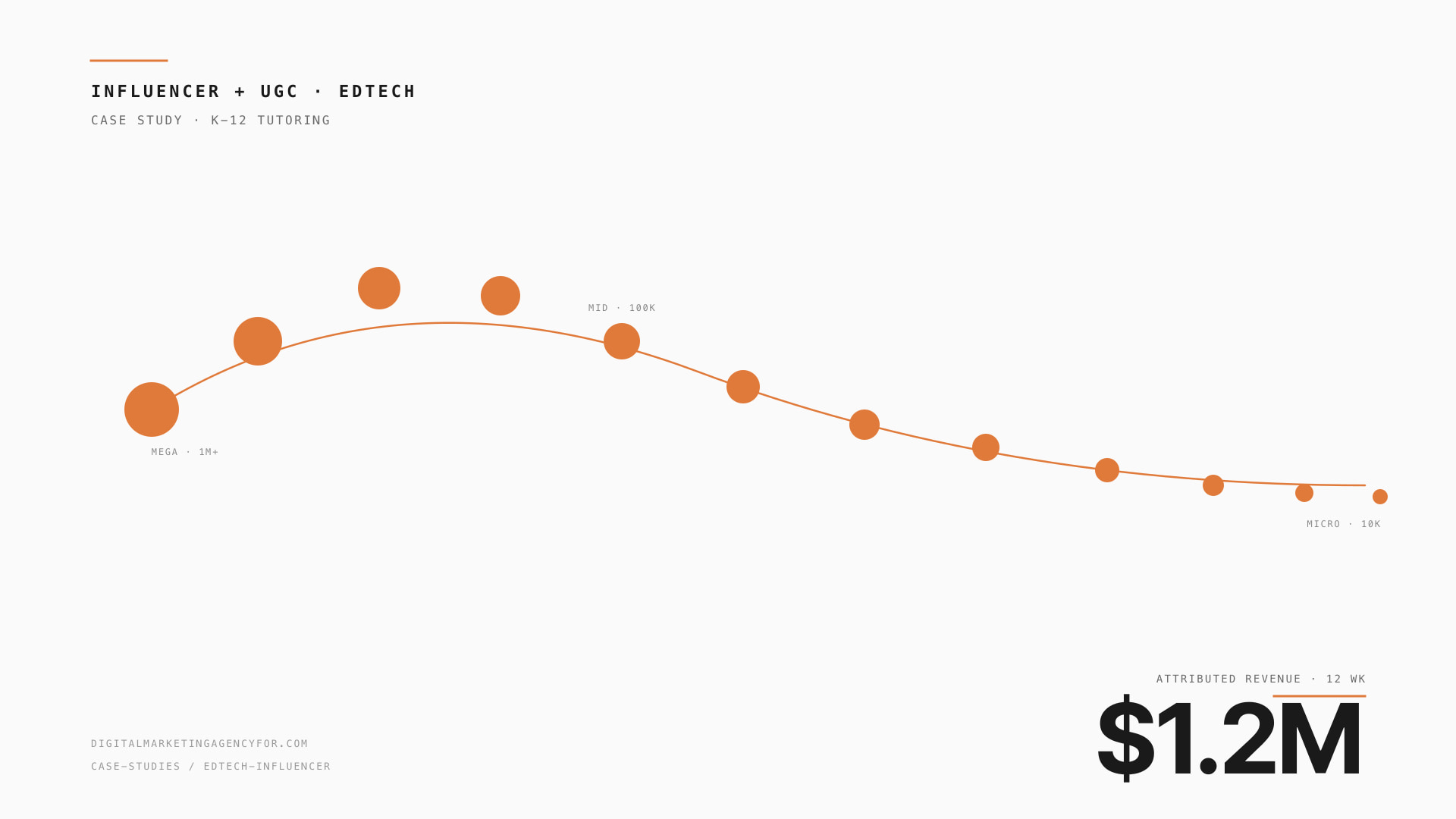
EdTech · K-12 Tutoring
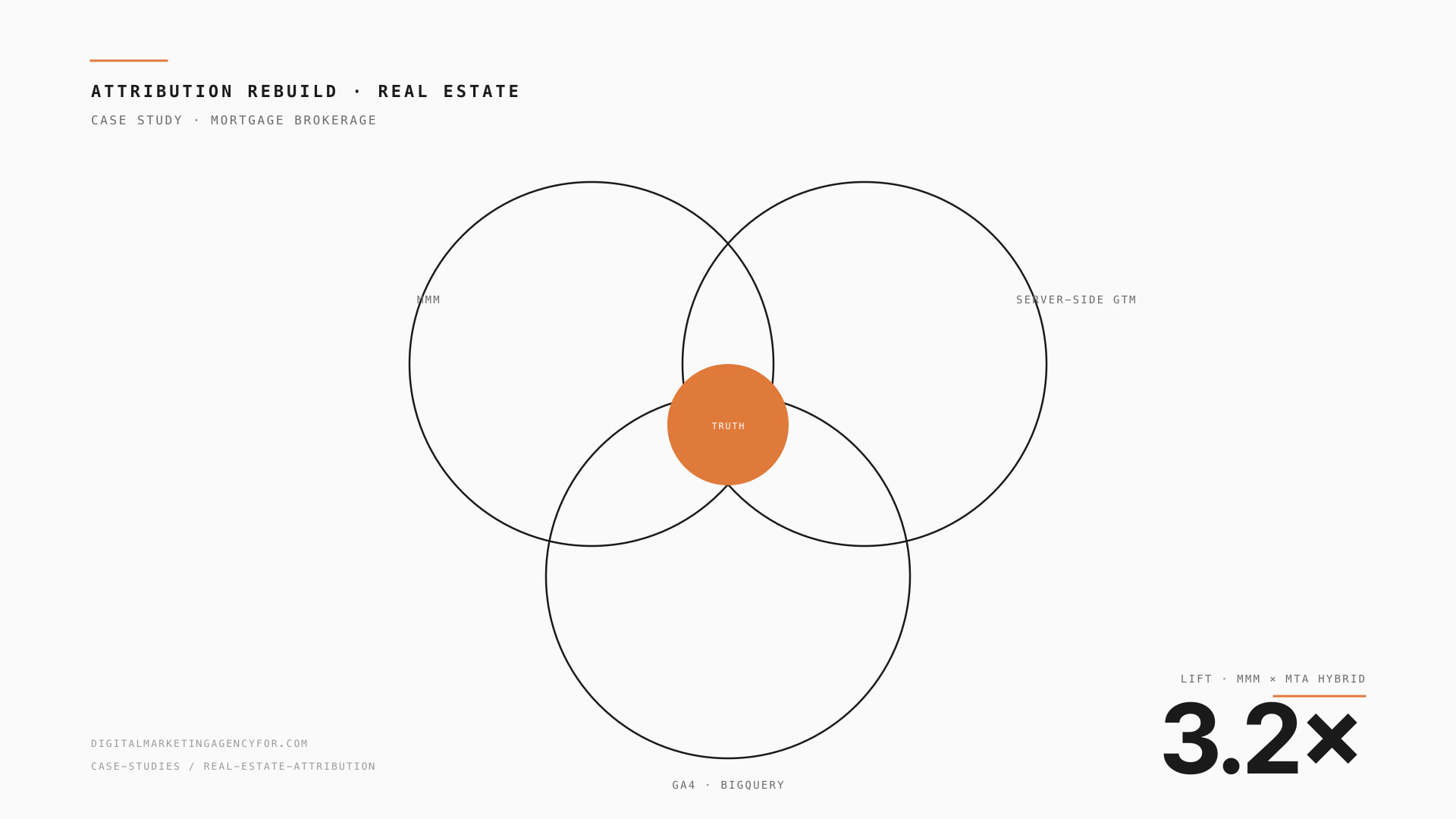
Real Estate · Mortgage Brokerage
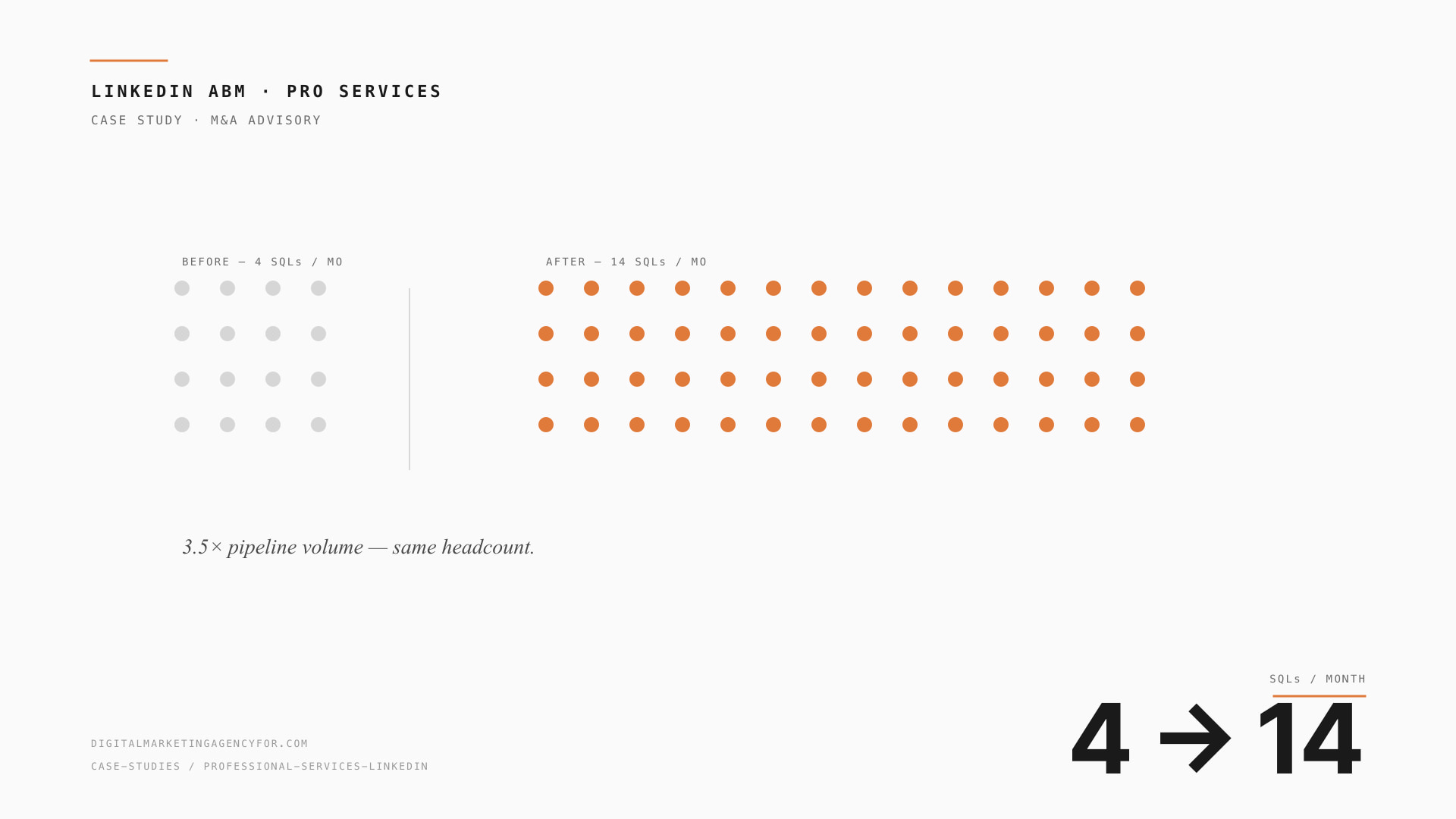
Professional Services · M&A Advisory
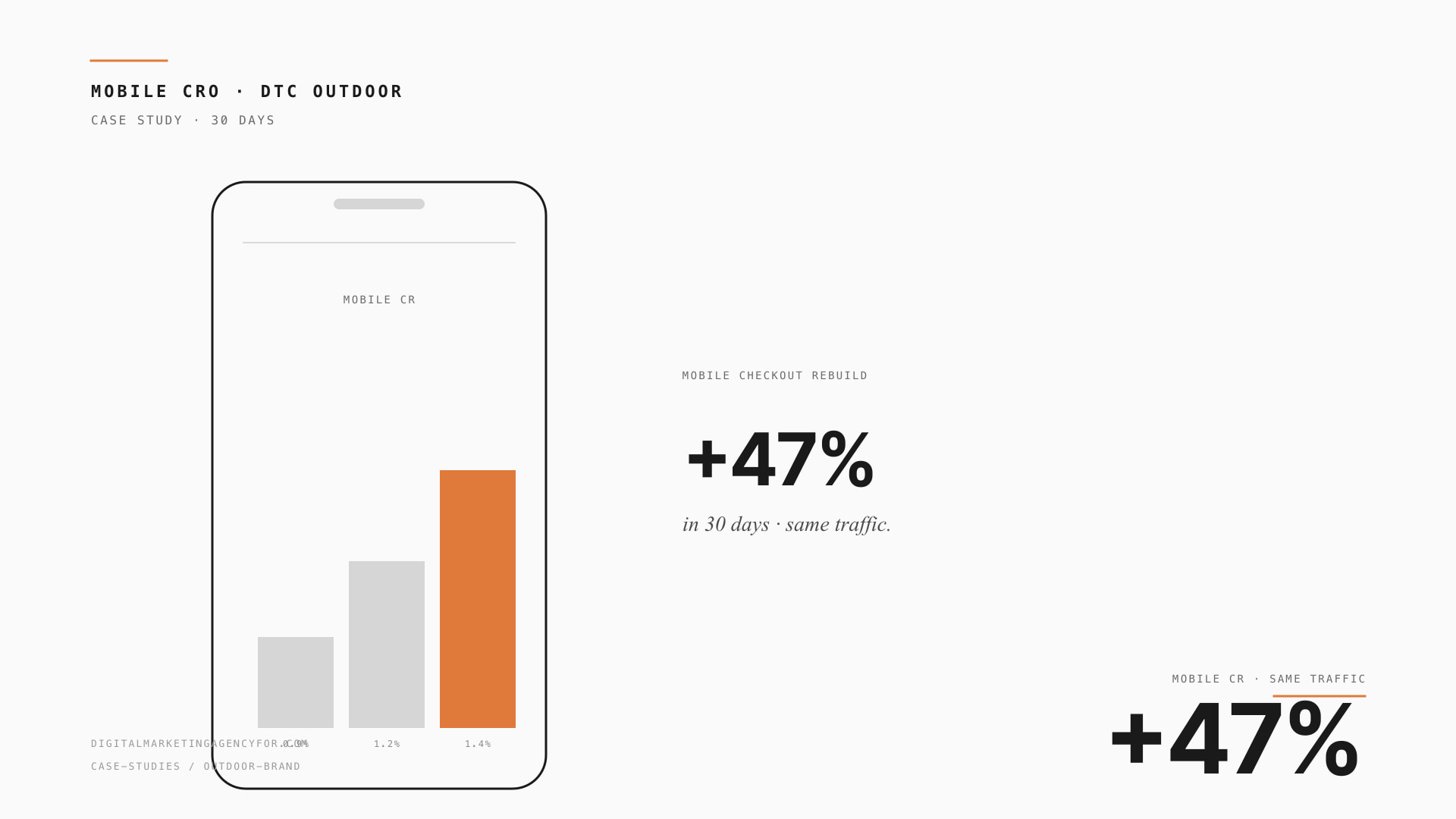
DTC · Outdoor Apparel
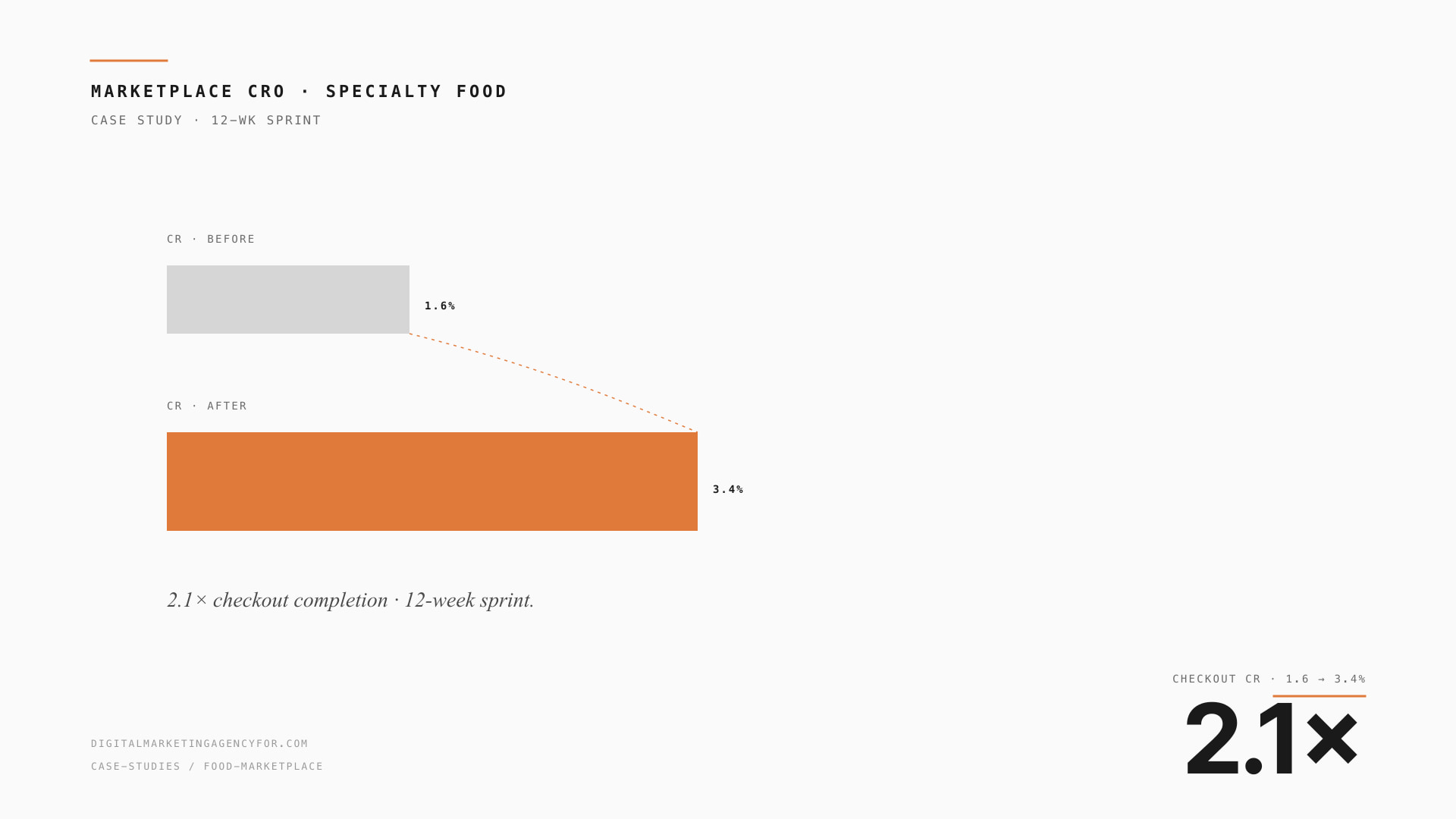
Marketplace · Specialty Food
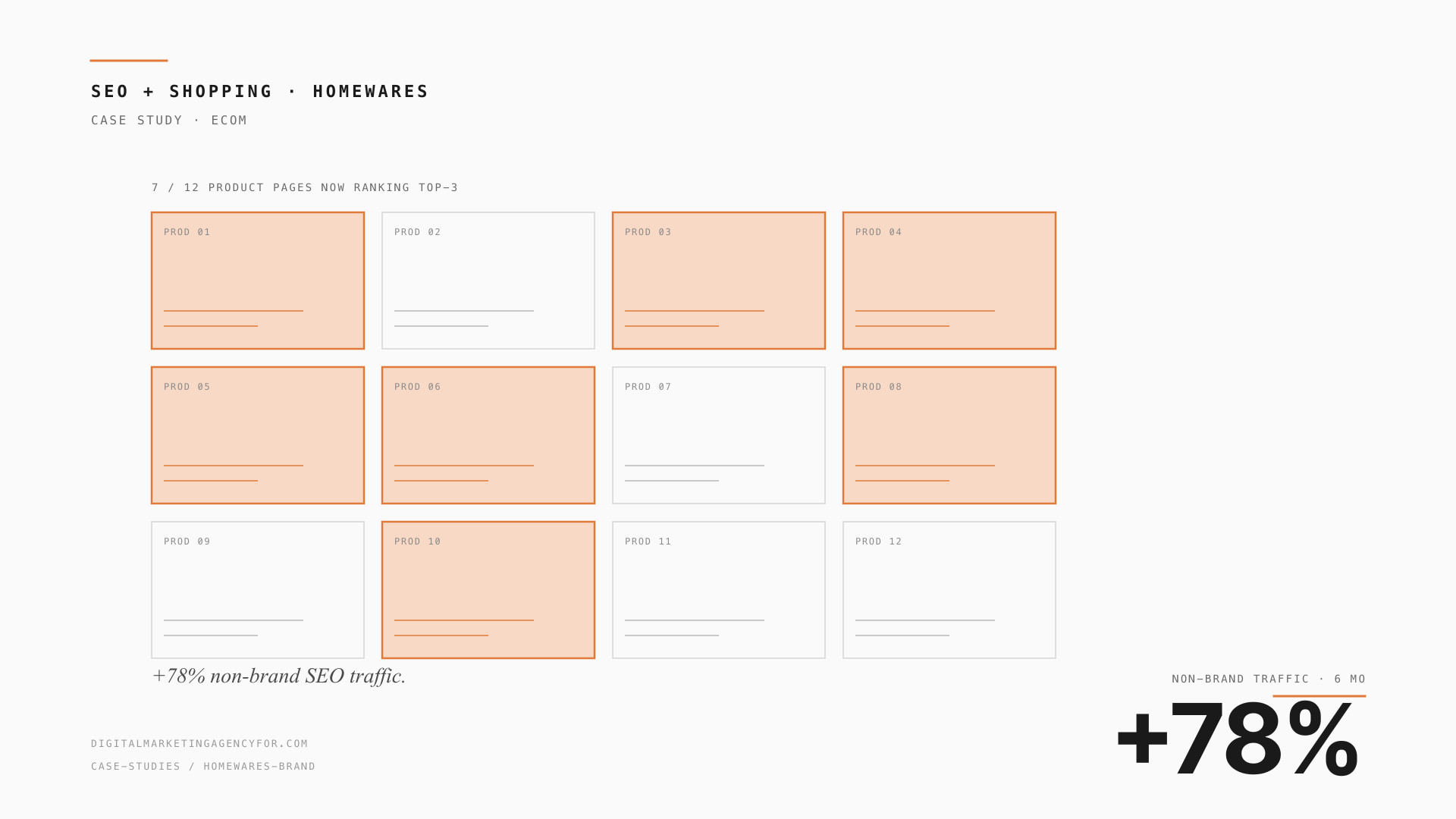
eCom · Homewares
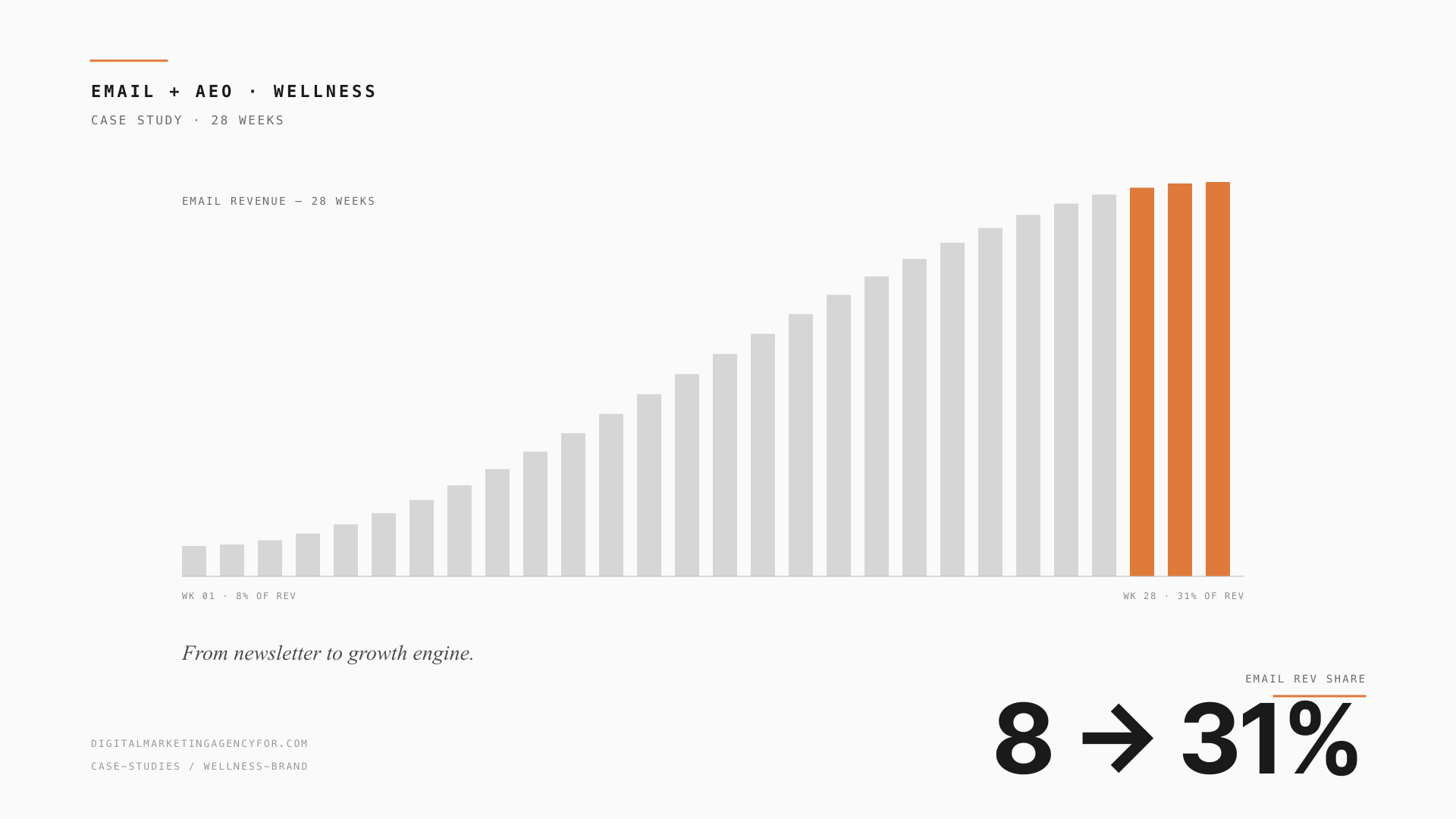
HealthTech · Wellness
Every result published meets a five-evidence-bar standard.
Marketing-agency case studies have a credibility problem: cherry-picked timeframes, undefined attribution models, results detached from baselines, "uplift" numbers without comparison periods. We treat the case-study library as evidence the firm is willing to be audited against — every published case must pass an internal review covering pre-engagement baseline, post-engagement measurement window, attribution model used, and category + revenue-tier context. Cases that delivered the work but failed the measurement bar are not published, even when the client is happy with the outcome.
Anonymisation is structural — most mid-market brands will not attach their name to public revenue numbers, and the NDA terms we sign typically prohibit it. The published case studies are anonymised; the reference contacts are real and reachable, returned within 48 working hours of mutual NDA. The full editorial standards (what gets published, what does not, what gets retracted) are at /about/editorial-standards/. The case-studies-policy detail is at /about/case-studies-policy/.
- 1. Baseline metric: Pre-engagement number with the same measurement method as the result.
- 2. Measurement window: 90 days for fast-cycle, 180–365 days for slow-cycle channels.
- 3. Attribution method: Last-touch / shared / MMM-overlay / incrementality-tested — declared, not assumed.
- 4. Category + revenue tier: So readers can judge whether the result is category-comparable.
- 5. Caveats + counter-evidence: Where the result is fragile, partial, or attribution-dependent — we say so.
Common case-study questions.
Why are the case studies anonymised?+
Under mutual NDA by default. Most mid-market brands are unwilling to attach their name to public revenue numbers, so we work under NDA — sometimes layered with platform-specific clauses (Klaviyo, Stripe, Shopify Plus client data) — and case studies are written under those terms. Anonymising the brand name does not change whether the result happened, only whether we are contractually allowed to publish the name. Reference contacts (current or former clients willing to speak on the record) are returned within 48 working hours of brief acceptance under counter-NDA — those contacts are real and reachable.
How are the result numbers verified?+
Three layers. First, all result numbers are pulled from primary sources at the time of write-up — GA4, Shopify, Stripe, Klaviyo, Ads platform UIs, Triple Whale or Northbeam where deployed. Second, every published case study is internally reviewed against a baseline-vs-result methodology: we record the pre-engagement baseline (typically a 90-day trailing window) and the post-engagement measurement window with the same method. Third, attribution caveats are written into each case (last-touch / shared / MMM-overlay / incrementality-tested) so the reader can judge what the number means. We do not publish "uplift" numbers without specifying the comparison period or attribution model.
What is your editorial standard for case studies?+
Every case study includes: (1) the baseline metric and measurement window before engagement; (2) the result metric and measurement window after engagement; (3) the channels and tactics shipped, listed in execution order; (4) the attribution method used (last-touch, shared, MMM, incrementality-tested); (5) anonymised brand category + revenue tier so readers can judge category-fit. Cases that did not meet the baseline-vs-result evidence bar are not published — including some retainer engagements where the work delivered but the measurement was insufficient to attribute cleanly. The full editorial standards are at /about/editorial-standards/.
How recent are the published cases?+
Each case study is dated by engagement window (start + completion) and we update the metric measurement when the post-engagement window extends. The default measurement window is 90 days post-launch for fast-cycle channels (paid social, email lifecycle, conversion-tracking rebuilds) and 180–365 days for slow-cycle channels (SEO recovery, AEO citation share, organic content). Cases published in 2024 are reviewed annually for stale outcomes — if a result has subsequently reverted (e.g., AEO citation share lost), we update the case to reflect that, not just the original lift.
Can you replicate these results for my brand?+
Honest answer: depends on category fit, current baseline, and execution discipline. The published cases are evidence that the result has happened in similar mid-market brands; they are not a guarantee of replication. Our 7-day Free Growth Audit is the structured way to find out — it benchmarks your specific situation against category leaders + the relevant case studies, identifies the recoverable gap, and ranks Top-5 fixes by revenue impact. The audit is delivered free regardless of whether you go on to engage. Most case-study results required 4–9 months of execution; one-month "miracle" engagements are not in our portfolio.
Why are some case studies marked as stub / placeholder?+
Three of fourteen are fully written; the remaining eleven are stub entries — auto-generated from a brand category + metric + channel tuple — so cross-page links from services / verticals / countries do not 404 in the meantime. We are working through the stubs in priority order based on channel + category leverage. If you want detail on a specific stub case, reply via /contact/ with the slug and we will accelerate that write-up — or, more usefully, point you to a reference contact who can speak to the same engagement directly.


