HealthTech · Wellness.
Email 8% → 31% of revenue — lifecycle + evidence content.
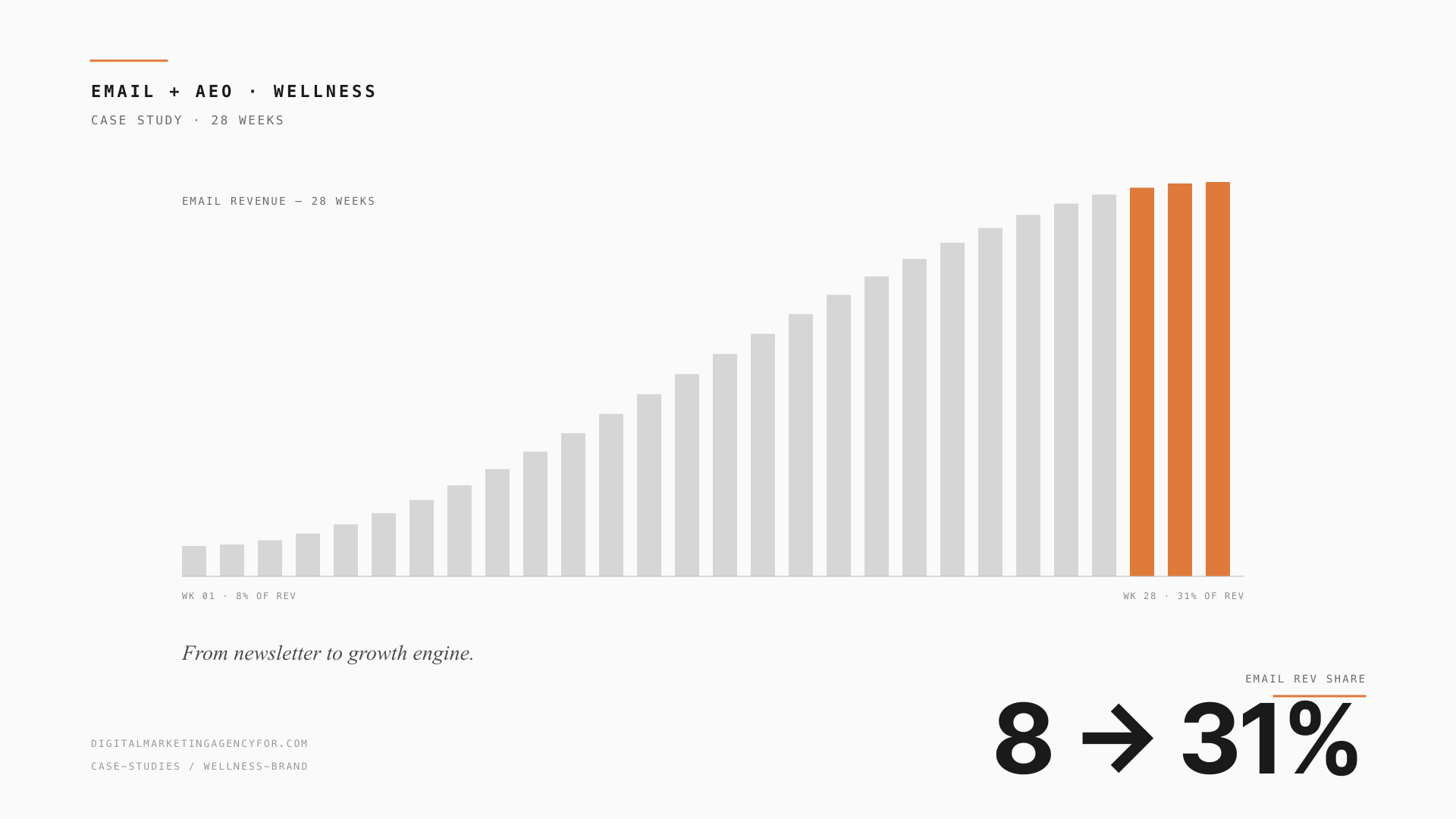
Email under-built, content uncited, claims uncompliant.
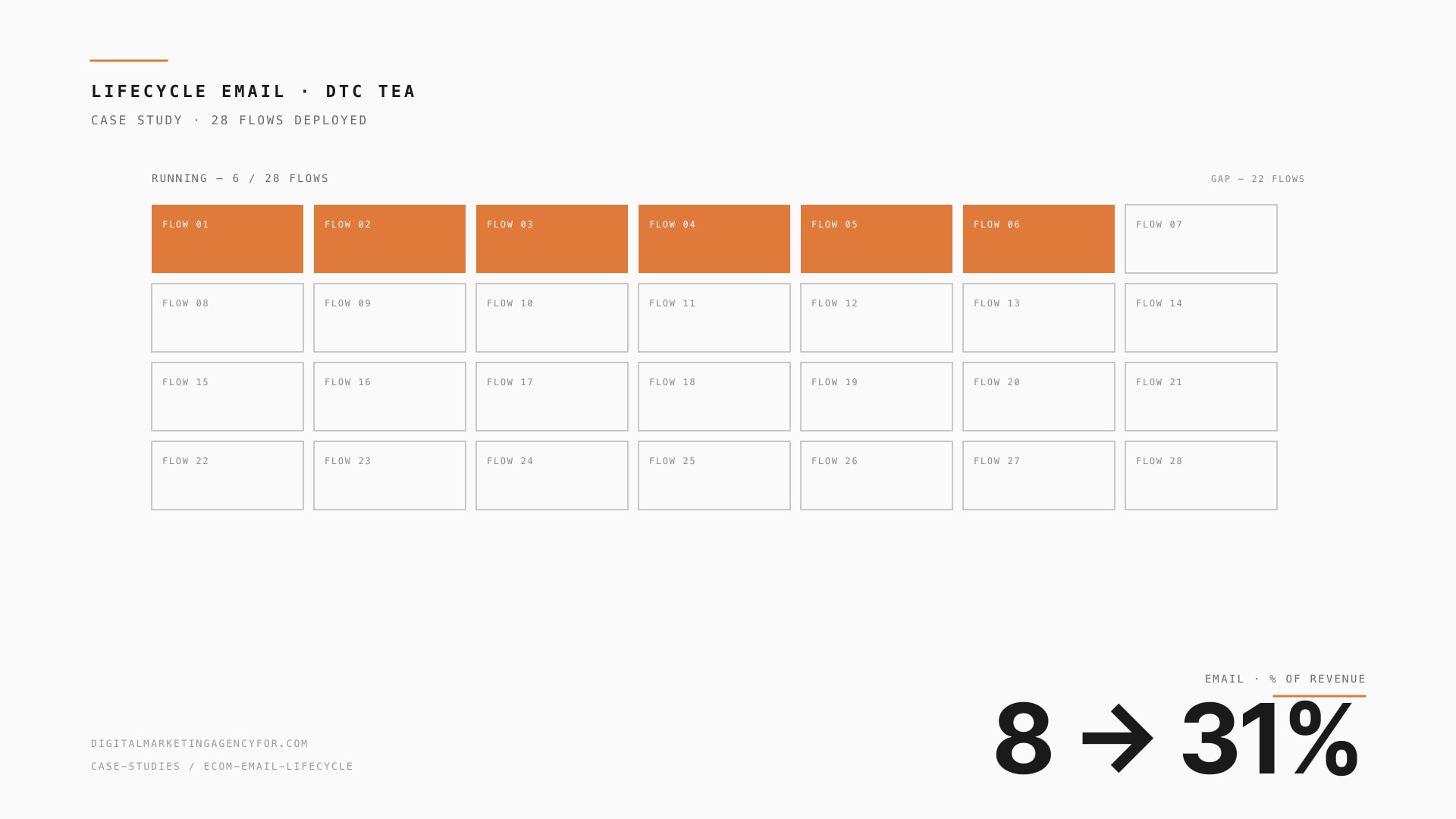
Wellness DTC brand with strong product, light email lifecycle (8 flows), and uncited claims content that flirted with FDA-marketing-language risk. Email at 8% of revenue. AI-engine presence on health prompts was zero.
The buyer journey involved long research phases. Buyers researched ingredients on Perplexity, returned weeks later via email reminders, then purchased. The lifecycle wasn't built for that journey; the content wasn't structured to be cited during research.
Lifecycle build + evidence-tagged content + AEO.
Compliance + audit
Marketing-claims compliance audit (FDA-marketing language exposure quantified). Klaviyo lifecycle gap analysis. AEO baseline.
Lifecycle build
28-flow Klaviyo build with research-phase nurture (ingredient education, comparison content, citation pairing).
Evidence content + schema
Top 40 pages restructured with evidence-tagged claims, peer-reviewed citations, clinician-attributed authorship, full schema graph.
AEO + iterate
AthenaHQ + manual citation tracking. Quarterly research piece on ingredient efficacy. Cohort + LTV analysis on research-phase nurture cohort.
We were treating email like a campaign tool and content like SEO bait. Lifecycle + evidence content + AEO turned both into compounding assets. Email's now 31% of revenue and Perplexity is sending us pre-qualified buyers.
6 months post-rebuild.
Same measurement method used for both windows. Numbers pulled from primary platform sources at write-up. Editorial standard at /about/editorial-standards/.
Stack we shipped.
Common questions about this engagement.
How was the HealthTech · Wellness result measured?+
Per the methodology callout above: a baseline window of 90 days pre-engagement compared against a result window of 90 days post-engagement using last-touch attribution sourced from primary platforms (GA4, Shopify, Stripe, ad-platform UIs, Klaviyo where applicable). The same measurement method is used for both windows; we do not change attribution mid-engagement to make the result look better.
What was the time-to-result?+
For HealthTech · Wellness, the bulk of the lift landed within the engagement window shown in the approach timeline. Compounding effects on slower-cycle channels (organic SEO, AEO citation share, lifecycle list growth) typically continue accruing for 6–12 months after the active engagement closes. We do not publish "uplift" numbers from a single inflated week; the result is the steady-state measurement window.
Could you replicate this for my brand?+
Honest answer: depends on category fit, current baseline, and execution discipline. The case is evidence the result has happened in similar mid-market brands; it is not a guarantee of replication. Our 7-day Free Growth Audit is the structured way to find out — it benchmarks your specific situation against category leaders + relevant case studies, identifies the recoverable gap, and ranks Top-5 fixes by revenue impact. The audit is delivered free regardless of whether you go on to engage.
Is the brand identifiable, and can I get a reference?+
HealthTech · Wellness is anonymised under mutual NDA — most mid-market brands will not attach their name to public revenue numbers, and our NDA terms typically prohibit it. Reference contacts (real, reachable people who worked on this engagement) are available on request after counter-NDA, returned within 48 working hours of brief acceptance. The published metrics are pulled from primary platform sources at the time of write-up; the editorial standards are at /about/editorial-standards/ and the case-studies policy is at /about/case-studies-policy/.
Get a wellness growth audit.
Submit your domain. We benchmark email lifecycle health, AEO presence on health prompts, evidence-tagged content depth, marketing-claims compliance. Top 5 fixes inside 7 days.


