What changed
AI SEO is no longer just about ranking pages; it is about being understood, trusted, and cited inside synthesized answers. Multiple industry analyses now describe discovery as moving from ranked links toward AI-generated responses, where visibility depends less on position and more on whether a brand is represented in the answer itself.https://business.adobe.com/blog/seo-in-2026-fundamentalshttps://searchengineland.com/ai-search-visibility-seo-predictions-2026-468042
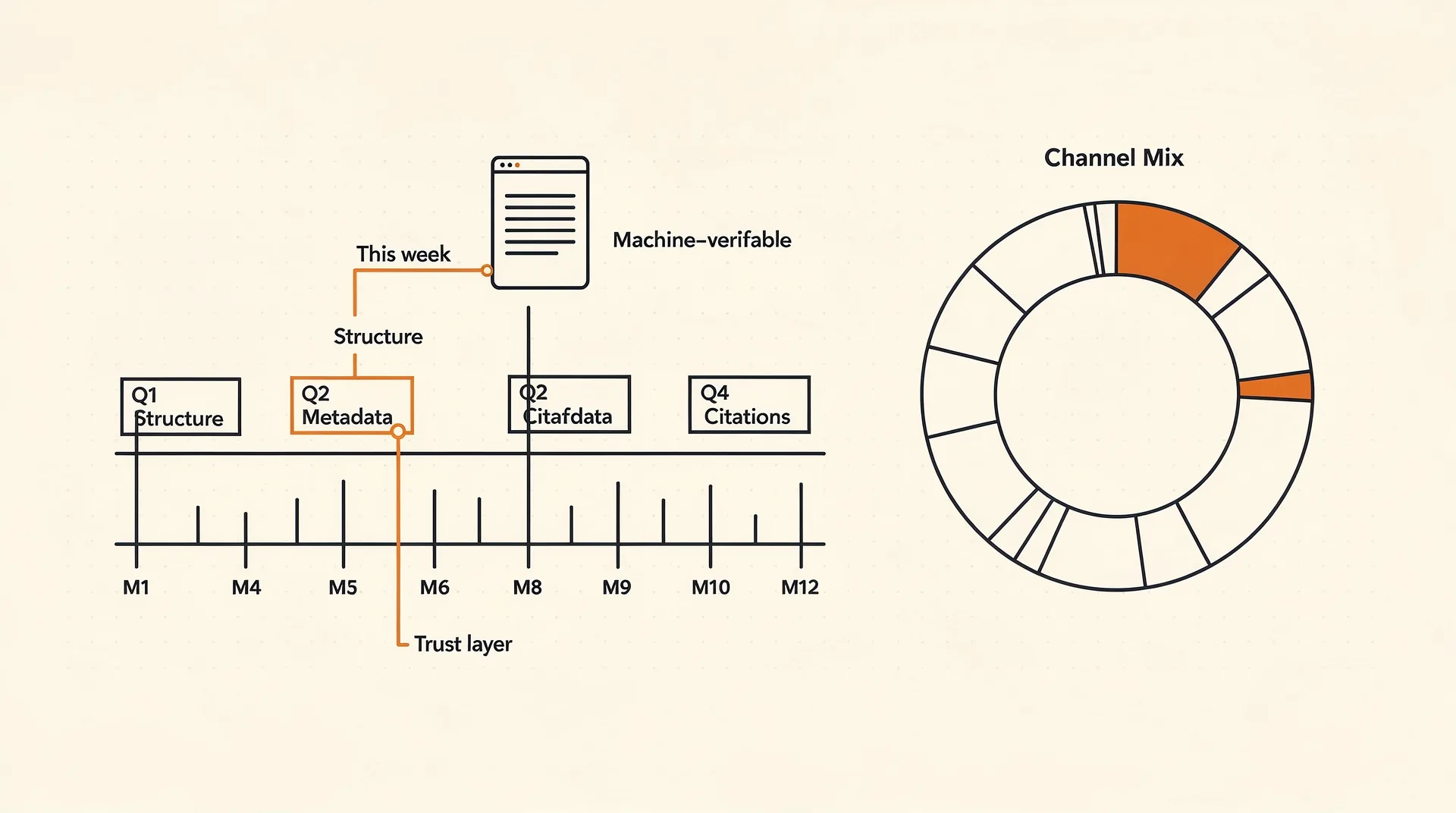
That shift is not only about search. It is also about how machines parse the web. Google’s Open Knowledge Format framing, as discussed by Search Engine Journal, argues that the value is not that an AI agent reads a bundle today, but that the bundle forces publishers to expose meaning, relationships, and freshness in a way a machine can inspect.https://www.searchenginejournal.com/open-knowledge-format-v0-2-adds-a-trust-layer-no-ai-agent-reads-it-yet/583661/
The broader pattern is consistent across the sources: SEO is being pulled toward machine readability, structured information, and citation-worthy clarity.https://business.adobe.com/blog/seo-in-2026-fundamentalshttps://www.mandr-group.com/the-future-of-seo-how-ai-is-changing-content-strategy-in-2026/
Why it matters for marketers
The practical consequence is simple: traffic is no longer the only scoreboard. If AI systems can answer a query without sending a click, then brands need to optimize for being included in the answer, not just for getting visited afterward.https://business.adobe.com/blog/seo-in-2026-fundamentalshttps://searchengineland.com/ai-search-visibility-seo-predictions-2026-468042
That makes trust signals more valuable. Adobe’s overview says AI search optimization prioritizes extractability, verifiability, and contextual clarity, while other 2026 SEO analyses emphasize authority, structured data, entity relationships, and topic clusters over isolated keywords.https://business.adobe.com/blog/seo-in-2026-fundamentalshttps://www.mandr-group.com/the-future-of-seo-how-ai-is-changing-content-strategy-in-2026/https://broschdigital.com/2026-seo-trends-ai-search-guide/
There is also a channel-level implication: platforms are now policing AI content more explicitly. Snapchat said wholly AI-generated videos will no longer be eligible for recommendation in Spotlight, a sign that distribution systems may increasingly prefer human-authored or human-led content over low-value synthetic output.https://www.searchenginejournal.com/snapchat-clamps-down-on-ai-generated-spotlight-videos/584594/
For marketers, that means two things at once. First, content has to be legible to models. Second, it has to look credible to humans and platforms that are tightening quality standards.https://www.searchenginejournal.com/snapchat-clamps-down-on-ai-generated-spotlight-videos/584594/https://searchengineland.com/seo-2026-higher-standards-ai-influence-web-catching-up-473540
The editorial read: this is really a trust problem
The most useful way to read these changes is not “SEO is dead” or “LLMs are replacing search.” It is that the web is being reorganized around proof. Models need enough structure to extract meaning, enough authority to trust the source, and enough freshness to avoid stale claims.https://business.adobe.com/blog/seo-in-2026-fundamentalshttps://www.searchenginejournal.com/open-knowledge-format-v0-2-adds-a-trust-layer-no-ai-agent-reads-it-yet/583661/
That is why formats like llms.txt and Open Knowledge Format matter even before they become mainstream. Search Engine Land notes that llms.txt is one of the few signs of LLM-first decision-making, while OKF’s current value is as a mirror that forces publishers to map content into machine-readable concepts and relationships.https://searchengineland.com/seo-2026-higher-standards-ai-influence-web-catching-up-473540https://www.searchenginejournal.com/open-knowledge-format-v0-2-adds-a-trust-layer-no-ai-agent-reads-it-yet/583661/
That is the editorial point marketers should take seriously: the winning content stack is no longer built only for crawling. It is built for extraction, citation, and reuse.
What to do this week
Start with one high-value page and make it easier for machines to verify.
- Rewrite the opening so the answer appears immediately, not after the setup.https://www.dazonn.com/blog/ai-seo-trends-2026/
- Add explicit entity references, clear H2s, and tightly scoped sections that map one idea per block.https://www.mandr-group.com/the-future-of-seo-how-ai-is-changing-content-strategy-in-2026/
- Strengthen evidence with named sources, concrete figures, and statements that can be quoted without ambiguity.https://business.adobe.com/blog/seo-in-2026-fundamentals
- Review structured data and schema so the page is easier to parse as an entity, not just a document.https://www.mandr-group.com/the-future-of-seo-how-ai-is-changing-content-strategy-in-2026/
- Test whether the page can be summarized accurately by an AI system without losing the core claim, nuance, or proof.https://business.adobe.com/blog/seo-in-2026-fundamentals
What to measure instead of only rankings
Rank tracking still matters, but it is no longer sufficient on its own. Adobe recommends watching AI citation frequency, generative referral traffic, assisted conversions, and share of model versus competitors.https://business.adobe.com/blog/seo-in-2026-fundamentals
That aligns with the rest of the field’s direction: if visibility is happening inside AI answers, then the real metric is whether your brand is being used as a source, not merely discovered as a URL.https://searchengineland.com/ai-search-visibility-seo-predictions-2026-468042https://www.mandr-group.com/the-future-of-seo-how-ai-is-changing-content-strategy-in-2026/
The bottom line for AI SEO
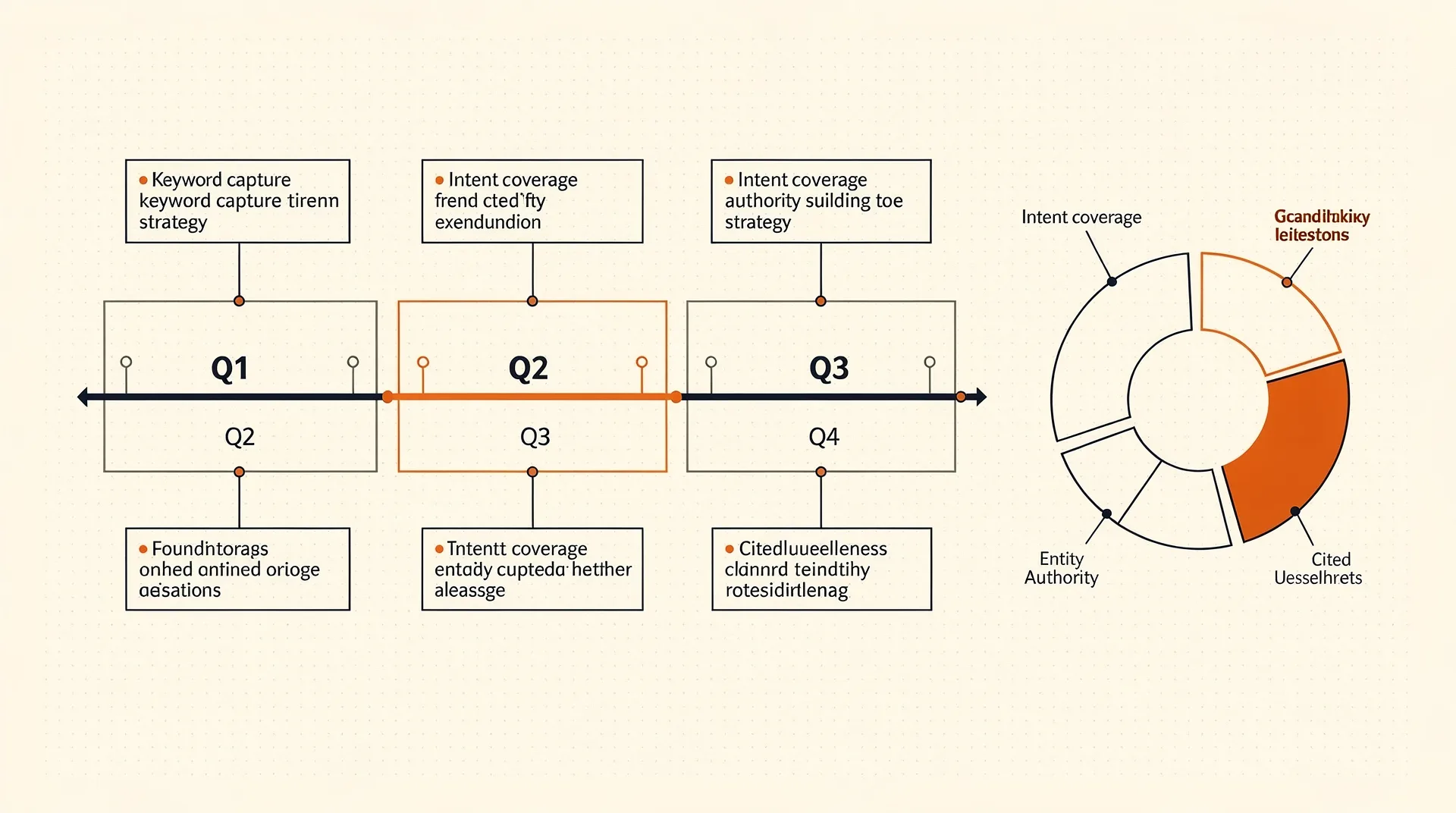
AI SEO has shifted from keyword capture to citation readiness. The marketers who adapt fastest will treat every important page as a machine-verifiable claim: clear, structured, current, and defensible.https://business.adobe.com/blog/seo-in-2026-fundamentalshttps://www.searchenginejournal.com/open-knowledge-format-v0-2-adds-a-trust-layer-no-ai-agent-reads-it-yet/583661/
The move this week is not to chase every new acronym. It is to make one core page easier for a model to trust, cite, and reuse.