What changed
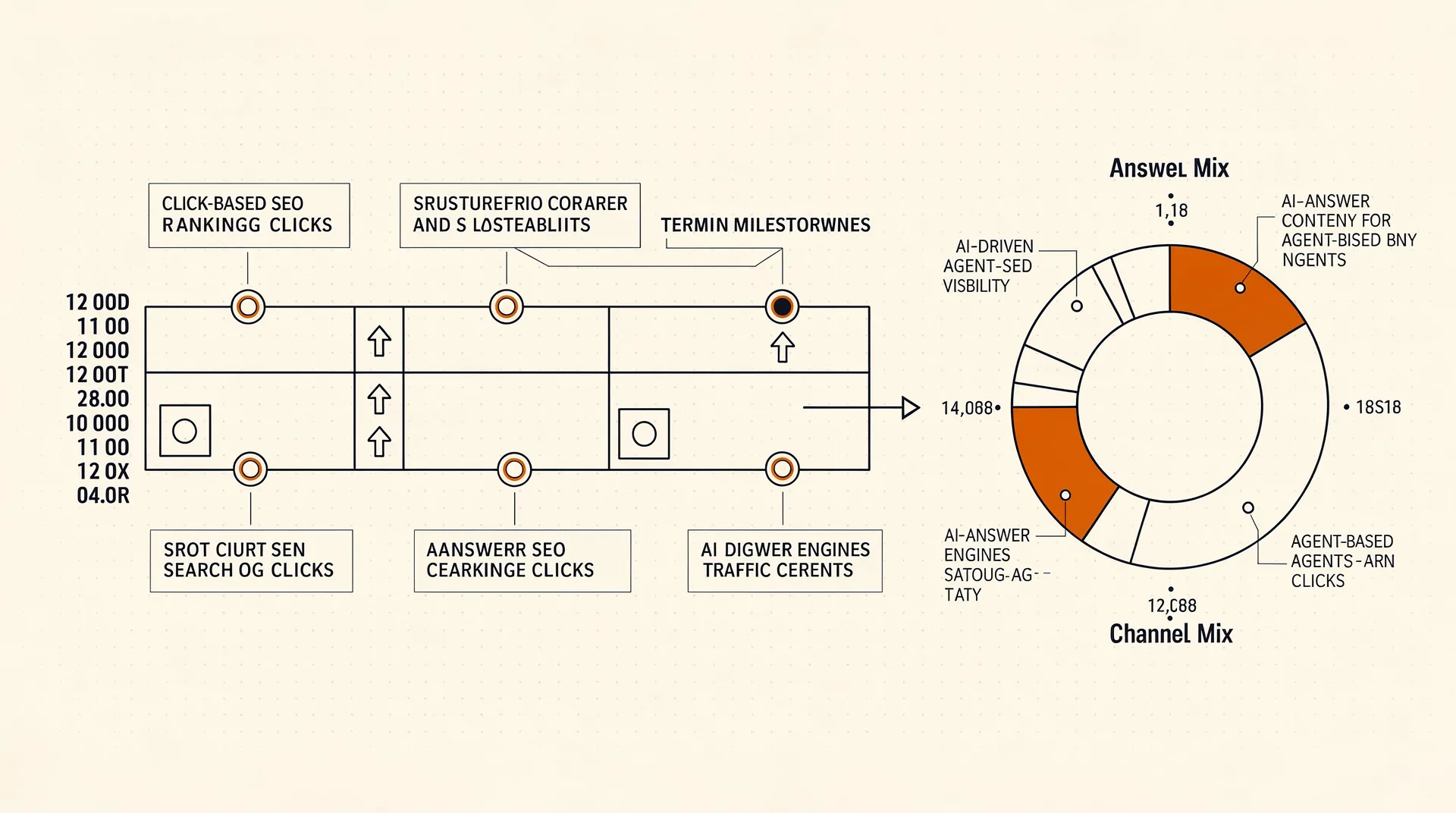
AI SEO is no longer only about ranking pages in a list of blue links. Search visibility now also depends on whether your content can be extracted into AI answers and whether your site can be understood and acted on by AI agents. The shift is visible in the rise of the “agentic web,” which is the layer of the internet where AI agents discover, read, and transact with websites on behalf of humans.
That matters because agents behave differently from traditional users and crawlers. As described by Search Engine Journal, agents are a fourth class of visitor: they read websites like crawlers and act on them like users, completing multi-step tasks such as checking availability, filling forms, comparing prices, and making purchases. Moz is already framing this as a practical search marketing issue, noting that modern SERPs are crowded with ads, AI features, and rich results, and that marketers now need to win visual real estate, get discovered across answer engines, and stay visible as AI agents influence the customer journey.
Why it matters for marketers
The old KPI stack is too narrow. A top ranking can now produce less traffic than a weaker-looking result if AI features absorb the click, and brands can also lose visibility if their content is not structured for extraction. Moz’s speaker announcement makes this point directly: rankings are increasingly disconnected from the visual real estate a brand can earn in search results, so marketers need to prioritize like marketers rather than only like SEOs.
This is not a reason to abandon SEO fundamentals. Google’s SEO Starter Guide still emphasizes unique, helpful, reliable, people-first content; clear titles; easy-to-read structure; and discoverability through strong site hygiene and promotion. What has changed is the layer above and around traditional search. A page now needs to satisfy people, be legible to search engines, and be usable by AI systems that summarize, compare, and act.
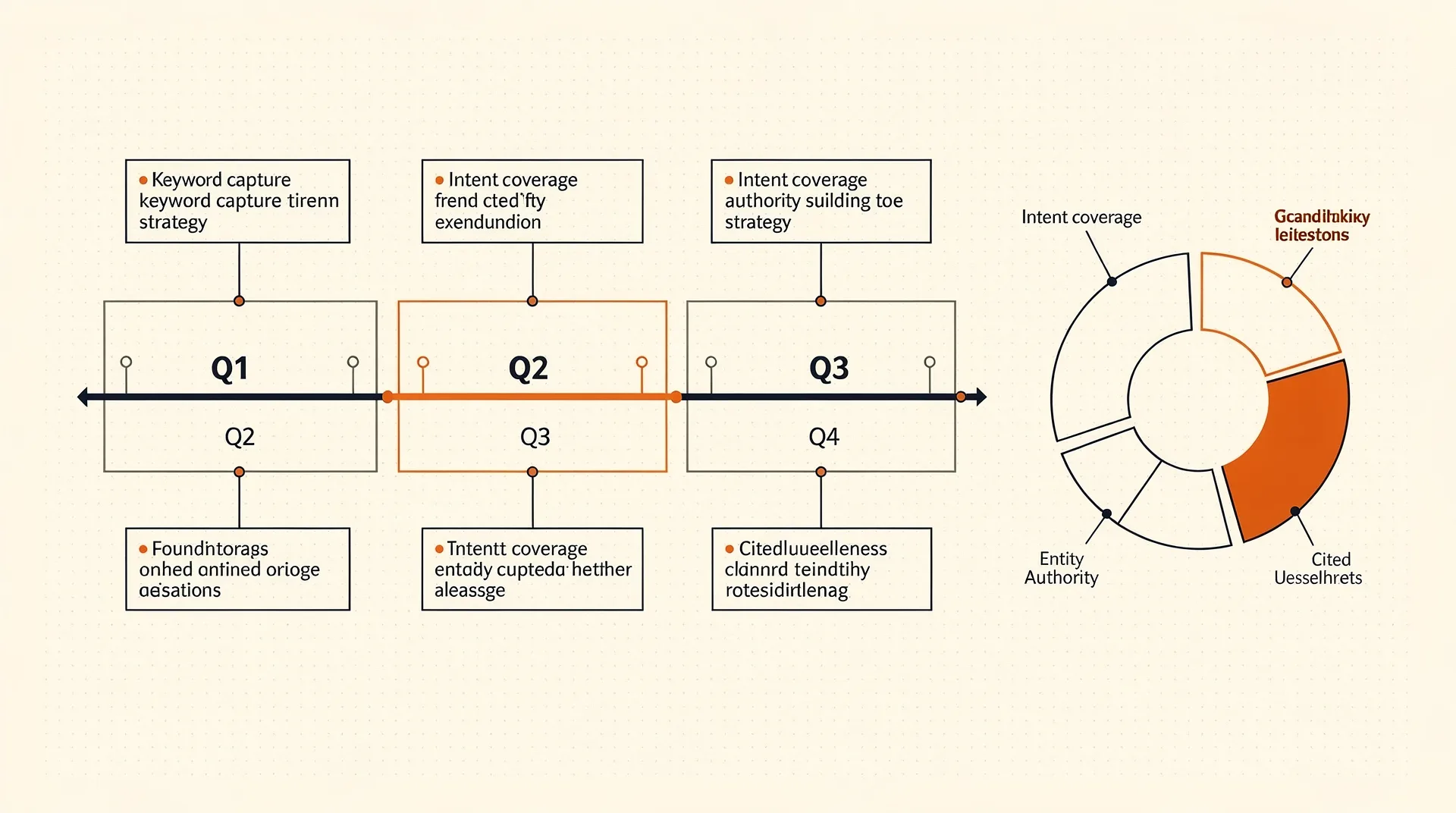
The content strategy implication is also shifting from pure keyword matching toward intent and semantic coverage. Orbit Media’s guidance on topic-first SEO argues that pages should go beyond the target keyphrase, cover adjacent subtopics, and answer related questions, because semantic SEO now matters as much as the exact phrase itself. That aligns with the newer AI-search framing that marketers should optimize for intents people have in high volume, not just high-volume keywords.
The core editorial change
The biggest editorial change is that content must now work in two modes at once.
First, it must remain strong classic SEO content: clear headings, concise titles, topical depth, and trustworthy sourcing. Second, it must be machine-readable enough for AI systems to pull facts, compare claims, and route users or agents into action.
That means the content brief should no longer ask only, “What keyword do we want to rank for?” It should also ask:
- What question is the user trying to answer?
- What facts would an AI system need to cite us?
- What action should an agent be able to complete on our site?
- What proof points make our page and our brand trustworthy across the web?
Moz’s framing is useful here because it links SEO, PPC, and GEO instead of treating them as separate silos. In a world where AI answers often blend multiple sources, authority is not just a page-level problem; it is a brand-level one.
What to keep
Do not confuse “AI SEO” with “write for bots only.” Google’s guidance is still the baseline: write original content, make it easy to read, organize it well, and ensure it is genuinely helpful. Those fundamentals are also what make content easier for AI systems to parse and reuse.
The other thing to keep is keyword discipline. The aim is no longer keyword stuffing, but it is also not keyword avoidance. SEO guidance from Orbit Media and practitioner commentary in the AI search space both point to the same practical truth: use the target phrase in the title, headings, and body where it helps clarify the topic. That still improves interpretability for humans and machines alike.
What to do this week
Start with one existing money page and rebuild it for answer visibility.
- Tighten the page title so it states the topic clearly and naturally.
- Add or revise H2s so each section answers one distinct intent, not just one keyword variation.
- Make the opening paragraph explicit about the problem, the outcome, and the audience.
- Add concrete proof points, examples, and sourced claims so the page is cite-worthy.
- Review the page for extractability: short paragraphs, clear labels, and direct answers near the top.
- Check whether the page can support an action, not just an impression, if an agent or assistant reaches it.
If you want the shortest possible version: optimize for the answer, not just the rank. The brands that win in this phase will publish content that is useful enough for people, structured enough for search, and trustworthy enough for AI systems to reuse.
The practical editorial rule
Every important page should now pass a simple test: can a human understand it fast, can a search engine classify it accurately, and can an AI system reuse it without losing the meaning? If the answer is yes, you are building for the current search environment rather than the one that just disappeared.