Three signals, one direction
This month the AI industry sent three signals that, taken together, redefine what Generative Engine Optimization is for.
OpenAI launched Ultrafast, an API tier running GPT-5.6 Sol up to 14× faster, delivering up to 750 output tokens per second. Hugging Face's community spent 19 days reproducing 2,226 ICML 2026 papers, roughly a third of the entire conference. And the summer State of Open Models report documents open weights shifting where value accumulates, with Qwen becoming the community's base model and small models serving as the practical layer.
Each signal alone is notable. Together they converge on a single point: generated answers are getting faster, harder to ground, and more fragmented across models. That is precisely the triangle GEO now has to operate inside.
The speed question rewrites the volume math
750 output tokens per second is not an incremental improvement; it changes what volume of queries an agent can afford to run. When inference is 14× faster, retrieval gets cheaper. Agents can query more sources, synthesize more candidates, and generate far more answers before committing to one.
For marketers, the implication is not simply that AI-referred traffic is growing. It is that the quality bar for earning a citation rises even as the raw number of opportunities explodes. Fast inference rewards content an agent can parse and cite in one pass — explicit claims, clear structure, verifiable data. Thin, ambiguous pages lose ground fast when a model has the compute budget to compare a dozen alternatives.
Research that can't be reproduced undermines trust
The uncomfortable part is this: faster generation does not mean more reliable generation. When researchers attempted to reproduce ICML 2026 papers, they found a review culture under pressure. Conferences accepted 6,352 papers from 23,918 submissions, roughly double the prior year, while reviewers at volunteer capacity admitted they had not checked all proofs carefully.
The same dynamic is now the end user's experience. Answer engines synthesize from a corpus increasingly dense with AI-generated claims of unknown provenance. The more unverified content enters the training and retrieval pool, the more epistemic risk the engines carry. This is a structural problem — and one where grounded, reproducible content becomes a genuine differentiator rather than a nice-to-have.
Open models reshuffle where value accumulates
The third signal is distribution. Public model repositories grew from 2.43 to 2.96 million, yet roughly 85.6% of models have fewer than 200 lifetime downloads while 1.5% of repositories account for 99.2% of all downloads. Value is concentrating — and it is concentrating around open weights, with Chinese labs skipping the usual progression curve entirely and Qwen becoming the community's default base model.
For GEO, this breaks the assumption that optimizing for a single answer engine is sufficient. Marketing teams that built pipelines around one model's preferences now need to account for heterogeneous retrieval and generation behavior across Qwen, GPT, Claude, and a long tail of open weights. The fragmentation is not hypothetical; it is visible in the ecosystem's shape right now.
Agents are the new user, and they're pickier
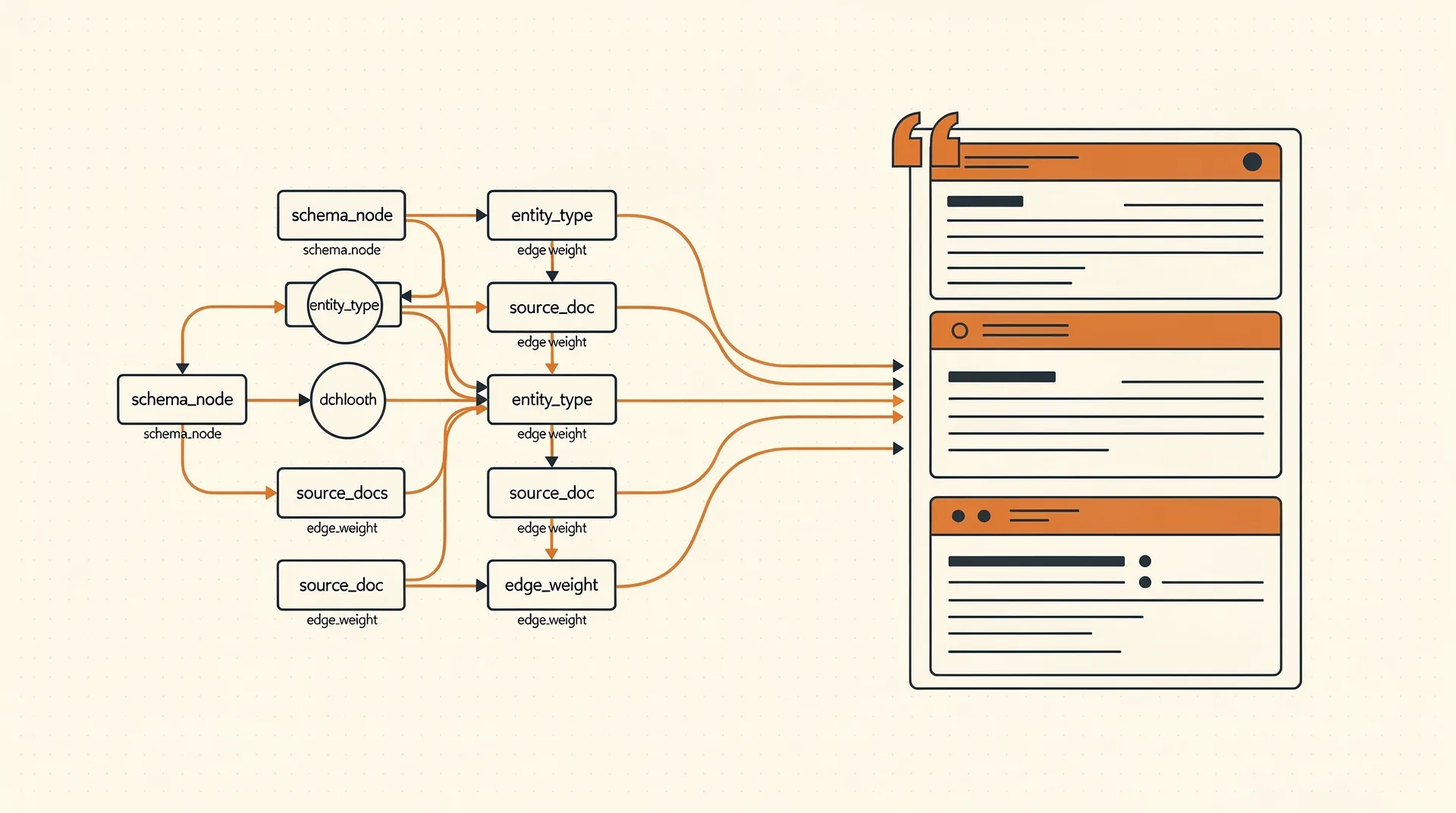
The report's observation that agents are the new user is the throughline connecting all three signals. Agents don't browse. They query, cite, and synthesize. They reward content that is machine-decipherable: direct answers, structured data, clear attribution. And with speed up 14×, they do all of it at a scale no human editorial team can match.
That is not a prediction. It is the operational reality of the systems this month's launches and reports describe.
The practical move this week
Audit your content for machine-verifiability. Can an agent extract a claim, trace it to a source, and reproduce the reasoning without a human in the loop? If not, rewrite it. Then instrument for fragmentation: track which engines and which model families cite you, not just aggregate AI traffic.
The verification gap and the open model distribution define the constraint: volume is rising while trust is fragile. The 14× speed jump defines the clock you're racing. Marketers who move this week — not next quarter — capture the trust arbitrage while it is still an arbitrage. Those who wait will watch their citations get cheaper by the day.