Why regulated categories are different
For most categories, AI engines cite the most extractable, well-attributed source. For regulated categories — finance, health, legal — they additionally weight compliance signals + verified expertise. The bar is higher because the consequences of citing a misleading source are larger.
This is good news for serious operators in regulated categories. The same compliance copy that’s friction in your traditional SEO is leverage in AEO.
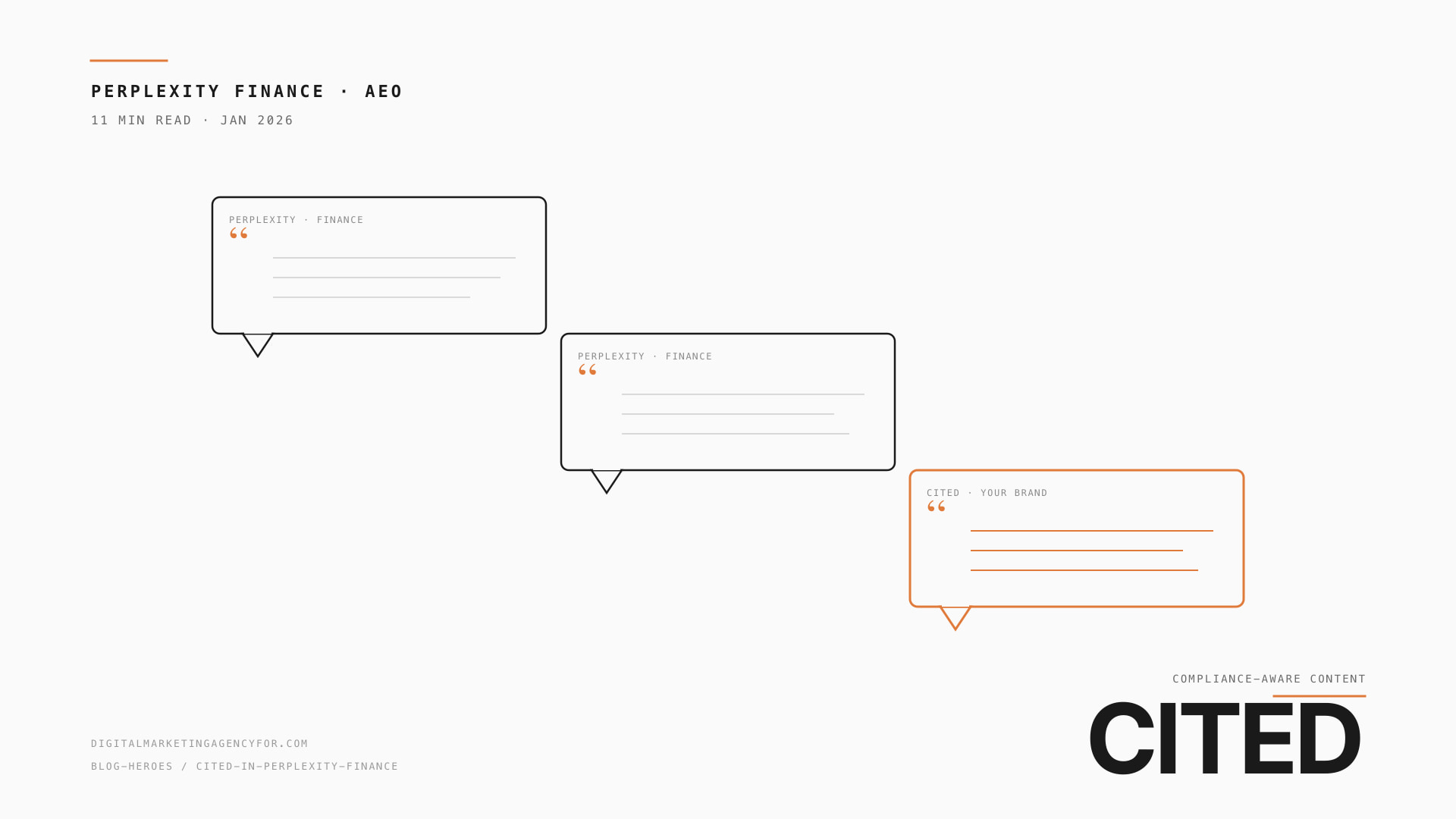
What Perplexity Finance prefers
Perplexity’s Finance vertical preferentially cites:
- Regulator-listed entities (SEC-registered advisers, FCA-authorised firms, FINRA member firms)
- Authored content from named experts with verifiable credentials
- Sources with explicit compliance disclosure (Reg BI, MiFID II, FCA conduct rules)
- Citable original data, especially regulator-quoted statistics
Generic content from anonymous “FinTech blog” sources gets ranked lower in citation likelihood — even if it’s well-written and well-ranked in Google.
Compliance-tagged content as a signal
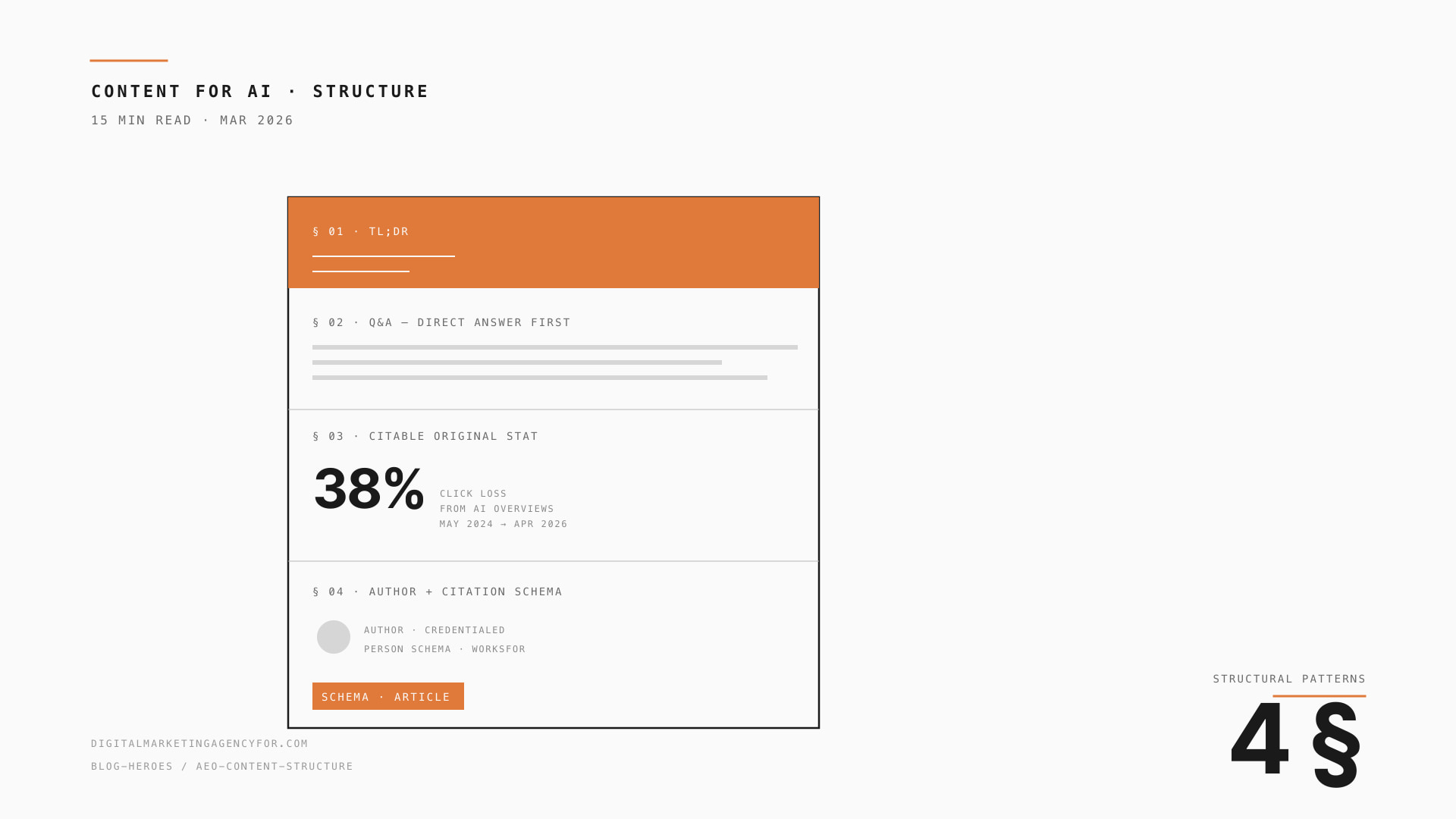
The structural pattern that works:
- Plain-language compliance disclosure visible above the fold (not in footer)
- Regulator-affiliation clearly named (e.g. “Registered Investment Adviser, SEC #IRA-XXXX”)
- Risk disclosure tagged on financial-claim content
- Schema-tagged FAQ sections with regulatory-context disclaimers
Most FinTech brands hide this in footers. Surface it as primary copy and your citation likelihood lifts significantly.
Expert authorship + Person schema
Every regulated-finance article should have an author with:
- Named CFA / CFP / Series 7 / equivalent credentials, schema-tagged
- Verifiable LinkedIn + regulator-listing URL
- JobTitle + worksFor + knowsAbout schema
- Author bio with employment + credential history
This is the highest-leverage AEO lever in finance. AI engines preferentially cite credentialed-author content because credentials are independently verifiable.
Citable original data
Original data is leverage everywhere; in regulated finance it’s compounding. Examples that get cited:
- “In our 2026 client analysis of 4,200 retirement portfolios, the median fee structure delivered…”
- “Across 1,800 small-business lending applications, the typical approval threshold…”
- “Our quarterly report on credit-card delinquency among prime borrowers…”
Original data tied to your firm’s actual book of business is the strongest possible citation source — verifiable, recent, irreproducible.
Entity graph for regulated brands
Wikipedia + Wikidata work matters more in regulated categories. AI engines cross-reference Wikipedia for entity verification before citing — and a Wikipedia entry tied to your regulator listings, leadership, founding history is a powerful citation signal.
Most mid-market FinTech brands aren’t notable enough for Wikipedia. The next-best moves: getting cited on Statista, NerdWallet, Investopedia, regulator newsletters, and trade publications. Brand mentions on these sources flow into citation likelihood across AI engines.
A roll-out sequence
The standard 12-week sequence we run for regulated FinTech AEO:
- WK 01–02: Compliance audit + content audit. Identify top 30 commercial-intent pages.
- WK 03–04: Schema graph rollout — Organization, Person, Service, FAQPage, Article, Speakable. Author Person schema for every credentialed author.
- WK 05–08: Top 30 pages restructured with TL;DR, structured Q&A, citable stats, compliance disclosure surfaced.
- WK 09–10: Original-data publication — quarterly research piece on your category.
- WK 11–12: Brand-mention strategy + Wikipedia/Wikidata work where eligible.
Citation onset typically 8–14 weeks for credentialed brands with surfaced compliance signals. Worth it — Perplexity Finance citation density is one of the highest-leverage acquisition signals in regulated categories.