The Triple Disconnect in Modern Search
Search marketing is experiencing a structural decoupling across its core fundamentals: query volume no longer correlates with revenue growth, traffic dashboards no longer cleanly represent human intent, and paid auctions cannot be assumed to reflect pure market clearing prices.
Three distinct developments over recent weeks illustrate this reality:
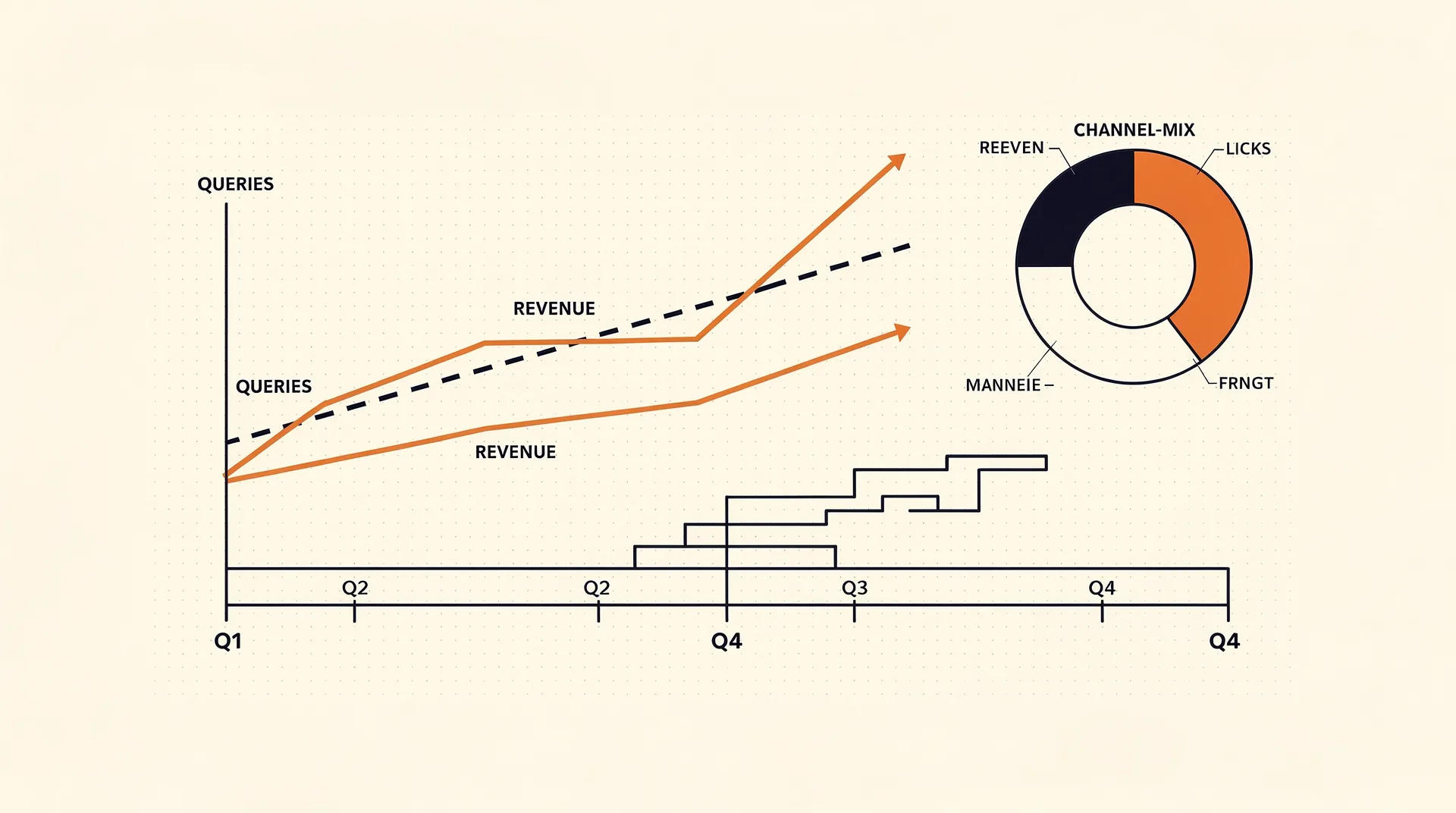
1. Alphabet saw search queries hit a five-year peak while ad revenue growth slumped, driven by lower monetization across generative AI queries.
2. Marketers woke up to inexplicable vertical spikes in Google Search Console clicks that had zero bearing on human search interest.
3. Federal regulators unsealed explosive claims detailing how retail media networks manipulate auction mechanics to hit internal revenue targets.
For CMOs and growth leads, treating platform-reported metrics as an unvarnished source of truth is no longer defensible. Navigating search today requires confronting what happens when AI search answers cannibalize the ad model, analytics platforms absorb unvetted automated noise, and walled-garden auctions operate without independent verification.
The Search Monetization Paradox
For two years, the digital marketing industry debated whether generative answer engines and AI-synthesized responses would suppress search volume or enhance it. Alphabet’s latest earnings provided an answer, but not the one Wall Street or search engine optimization teams expected.
As detailed in an analysis of the earnings release, Google search queries hit a five-year high while search revenue growth slowed sharply. Search and other revenue rose 12% to $63.35 billion—a deceleration from 19% in the first quarter and 17% in the second quarter, missing consensus estimates by roughly $1.6 billion.
The cause was confirmed on the earnings call by Google’s Chief Business Officer, Philipp Schindler, who noted that strong query growth in AI Mode carried an impact because of lower monetization rates compared to traditional search engine results pages.
This marks an inflection point. Until now, the argument that generative summaries reduce monetizable real estate rested on panel studies, click-tracking vendor estimates, and third-party referral data. Now, the effect appears on Google's income statement. Users are conducting more searches, but synthesizing the web into an inline AI response removes the traditional multi-click journey that fueled commercial intent auctions. If Google cannot monetize its own generative interface at parity with a ten-blue-links page, brands relying on legacy organic click-through rates will face even steeper drop-offs.
Ghost Clicks and the GSC Data Integrity Problem
While query monetization falters at the search engine level, organic visibility metrics face a parallel crisis in data integrity. Site owners tracking performance in Google Search Console observed sudden, vertical spikes in click data while impression counts remained virtually flat.
Independent analysis revealed that these November click spikes in Google Search Console were driven by bot traffic rather than organic demand surges. By deploying programmatic scans across multi-brand Search Console properties, researchers isolated anomalies where automated scrapers executed clicks directly within Google’s interfaces without triggering standard analytical filtering.
The immediate casualty here is reporting hygiene. Search teams presenting double-digit organic traffic gains to executive committees are, in many instances, reporting automated bot infrastructure executing head queries. When these phantom clicks hit sites without conversion follow-through, conversion rate metrics crater, skewing optimization models and misattributing pipeline generation across channels.
The Auction Transparency Deficit
The search economics distortion extends directly into paid media environments. While AI answers depress organic real estate, retailers and search platforms face mounting scrutiny over the mechanics that govern paid placement pricing.
In the retail media space, newly unredacted court filings revealed that the FTC unsealed details alleging Amazon covertly inflated ad auction prices through hidden surcharges. Regulators allege that between 2021 and 2023, Amazon artificially raised advertising costs by up to 50% above auction clearing prices on standard days, and by as much as 250% during critical promotional periods like Prime Day and Black Friday.
The filings demonstrate how programmatic ad mechanisms within closed ecosystems can be tuned to meet corporate revenue quotas rather than supply-and-demand dynamics. Advertisers operating on automated ROAS targets absorbed inflated cost-per-click charges while platform interfaces masked the underlying mechanics.
The Practical Moves for Search Teams
Navigating this compressed environment requires shifting away from passive reliance on platform dashboards. Teams must take three concrete steps immediately:
1. Strip Bot Anomalies from Search Console Baselines
Audit GSC data from late October through November. If your property displays a vertical click spike absent a corresponding impression increase, isolate the specific queries, landing pages, and country dimensions involved. Apply regex filters inside Search Console or export the raw API data into BigQuery to exclude these tainted intervals from your quarterly board decks and forecasting models.
2. Model for Lower Organic Click Yields
Accept that query volume is no longer a proxy for organic opportunity. With Google expanding conversational and generative interfaces that intentionally suppress traditional ad and organic clicks, your content strategy must optimize for entity inclusion, brand citations, and generative visibility rather than raw page-one keyword rank. Build scenario models that factor in a 15–30% baseline drop in informational query CTR.
3. Implement Strict Paid Auction Auditing
Audit historical retail media and search ad CPCs against platform performance peaks. Cease the deployment of unchecked automated bidding rules during high-volatility event windows without hard CPC ceiling caps. When walled-garden platforms control both the auction floor and the performance scorecard, unconstrained algorithmic bidding exposes your media spend to artificial price inflation.