Three stories landed this week that look unrelated on the surface: Google cracking down on SERP tracking, John Mueller confirming AI crawlers are reading sitemaps and RSS feeds, and OpenAI rolling out text watermarking in the EU. Read them together and a single theme emerges — the infrastructure layer of search is being rebuilt around machines, not humans, and most marketing teams are still optimizing as if nothing changed.
The agent traffic shock is real
The headline number: daily requests from AI agents grew by more than 1,700% over the past year, according to Cloudflare. For the first time, more than half of internet traffic wasn't human. Cloudflare's edge network went from handling 63 million HTTP requests per second at the end of 2024 to nearly double that today, with peaks above 150 million.
Why should a marketer care about edge-network throughput? Because it tells you who is actually reading your site. A growing share of your "traffic" is agents acting on behalf of humans — comparing prices, summarizing pages, reverse-engineering results. Some of that hybrid human/agent traffic still carries commercial value, but it behaves nothing like a ten-year-old analytics assumption.
Google's quiet war on SERP visibility
The public face of Google's response is its long-running fight against rank trackers. But the sharper read is that networks of LLMs are now reverse engineering Google's search results at scale, and Google's engineering responses are shaped less by rank-tracking vendors and more by the sheer cost of serving AI-era traffic at latency tolerances users expect.
The practical implication: ranking data is getting noisier and harder to collect, for everyone — including you. If your reporting stack assumes stable, third-party SERP visibility, assume that assumption has a shelf life. The teams that will win this transition are measuring presence inside AI answers, not just position on a results page.
AI crawlers are reading your sitemap — Mueller confirmed it
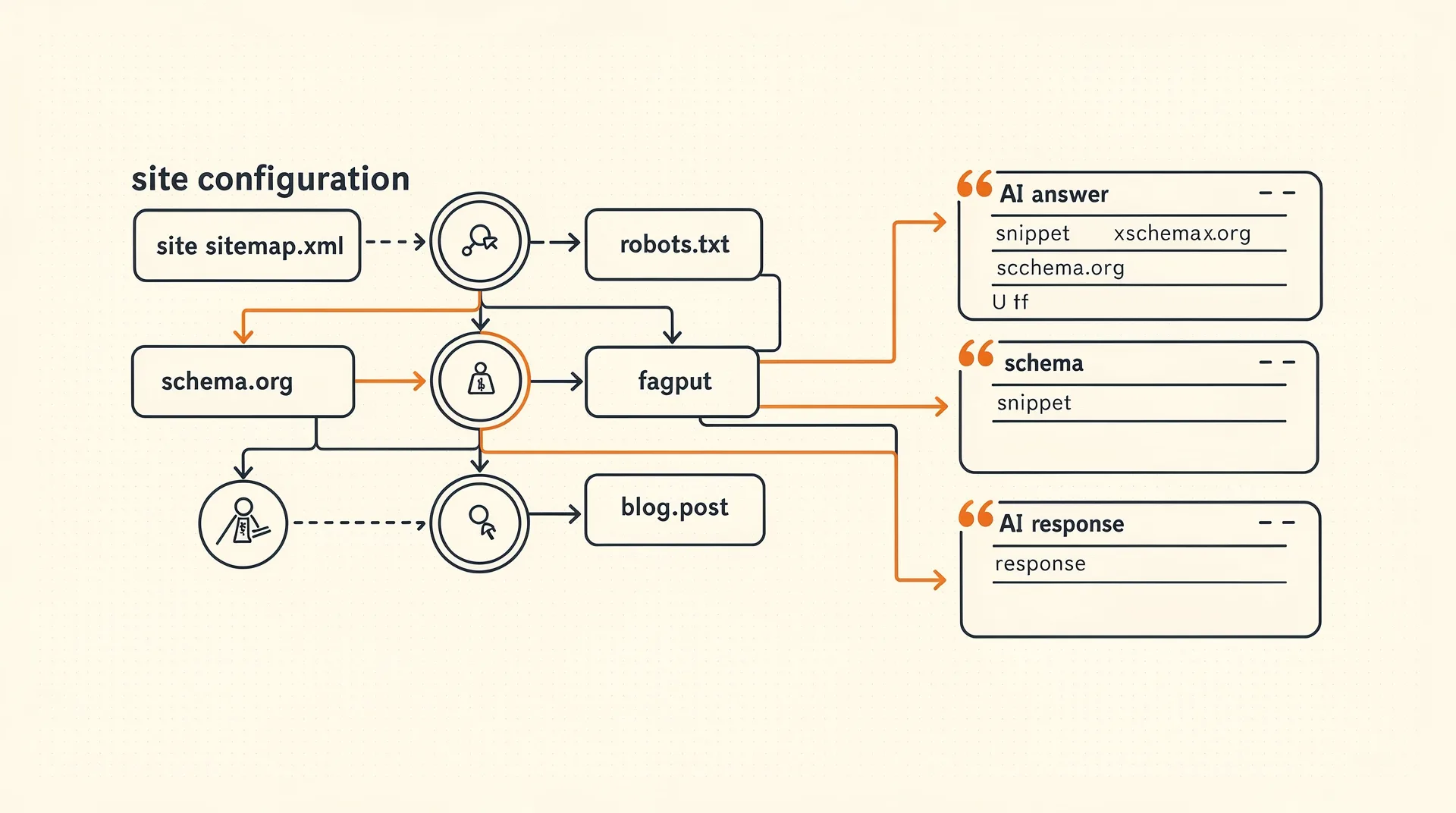
Here's a detail worth pinning: on the October 1 episode of Search Off the Record, Google's John Mueller said he's seen AI crawlers hit sitemap and RSS files in his own server logs. His guidance is refreshingly practical: AI training crawlers have no Search Console equivalent — no way to submit anything — so if you want them to find your content, either keep the default sitemap.xml naming or lean on RSS feeds, which are usually linked from a page's HTML head and easier to discover.
The flip side matters too. If you want your sitemap private, you can give it an unusual filename, leave it out of robots.txt, and submit it directly — at the cost of everyone else's discoverability. This is now a genuine strategic decision: which machine audiences do you want reading your site architecture?
Watermarking arrives, and it's weaker than advertised
OpenAI will introduce an invisible watermark to qualifying ChatGPT and Codex text within the EU over the coming weeks, in response to transparency obligations under Article 50 of the EU AI Act, which began applying on August 2. Organizations with systems already on the market have until December 2 to meet the marking and detection obligation. API users worldwide can opt in today; the watermark stays off by default.
Marketers should note the fragility: OpenAI's own testing found that substituting 25% of words with synonyms dropped detection rates from roughly 92% to 17% on 400-token English passages. If you publish AI-assisted content into EU markets, provenance is becoming a compliance surface, not just an SEO one. Light paraphrasing defeats the watermark — which means the watermark is a policy instrument, not a verification guarantee.
The throughline: machine audiences are now primary
Sitemaps written for crawlers that never check Search Console. Traffic that's majority non-human. Content provenance enforced by regulation. Every one of these shifts points the same direction: your site's most important readers increasingly aren't people browsing a results page. They're agents, training crawlers, and detection systems — and each has its own discovery protocol.
What to do this week
Three moves, none of which require a replatform:
1. Audit your server logs for AI crawler hits on sitemap.xml and RSS endpoints. Mueller's logs showed it happening; yours likely do too. Confirm your sitemap uses default naming and your feed is linked in the HTML head.
2. Stress-test your rank-tracking assumptions. If SERP data is getting harder to collect at scale, diversify your measurement toward AI answer visibility and branded search demand — signals that don't depend on scraping the SERP.
3. Tag AI-assisted content workflows for EU exposure. If you publish into European markets, watermarking and the AI Act's December 2 compliance deadline are now on your calendar, whether or not your CMS knows it.
The ground rules changed this week. Most of your competitors haven't noticed yet.