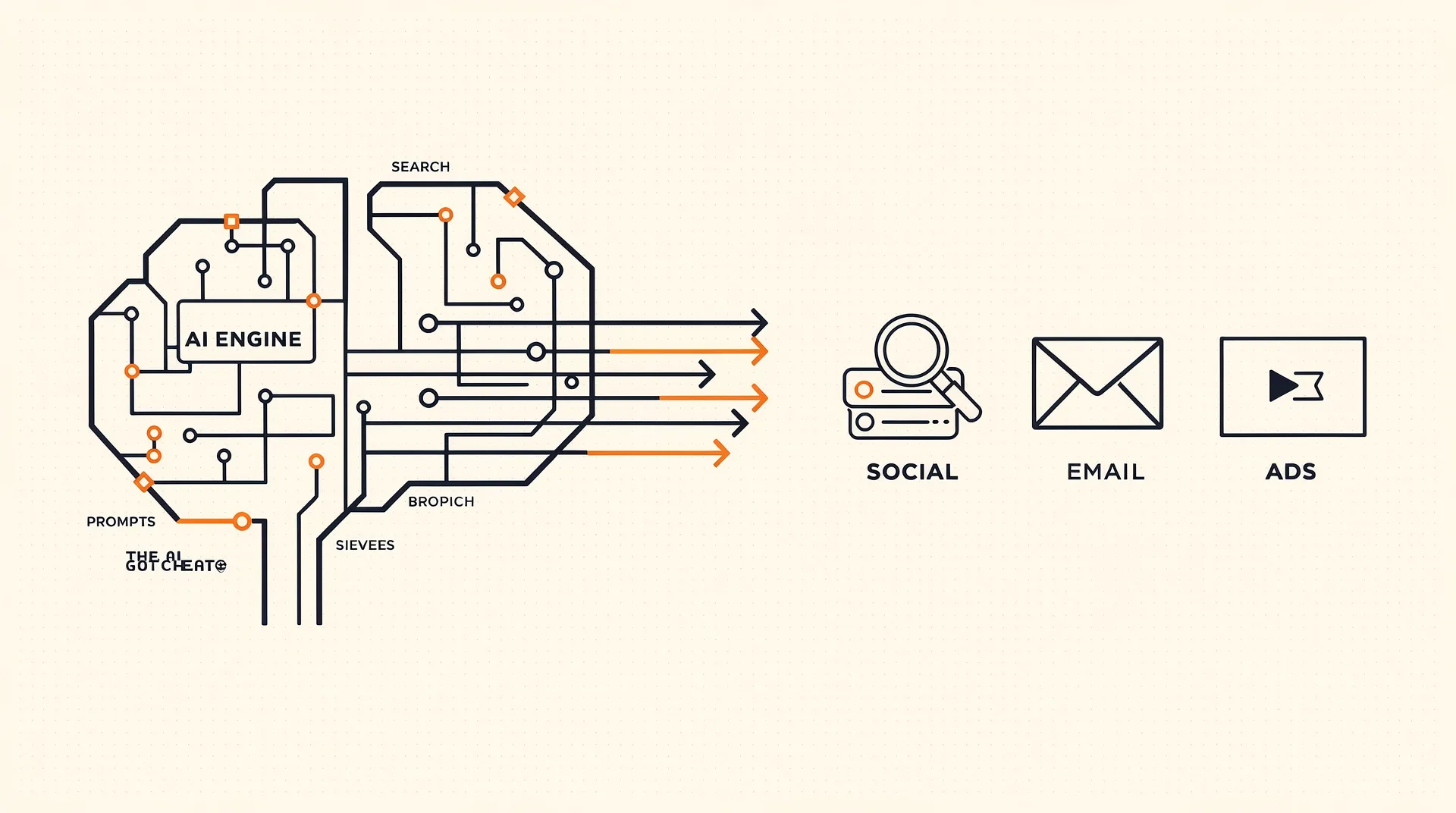
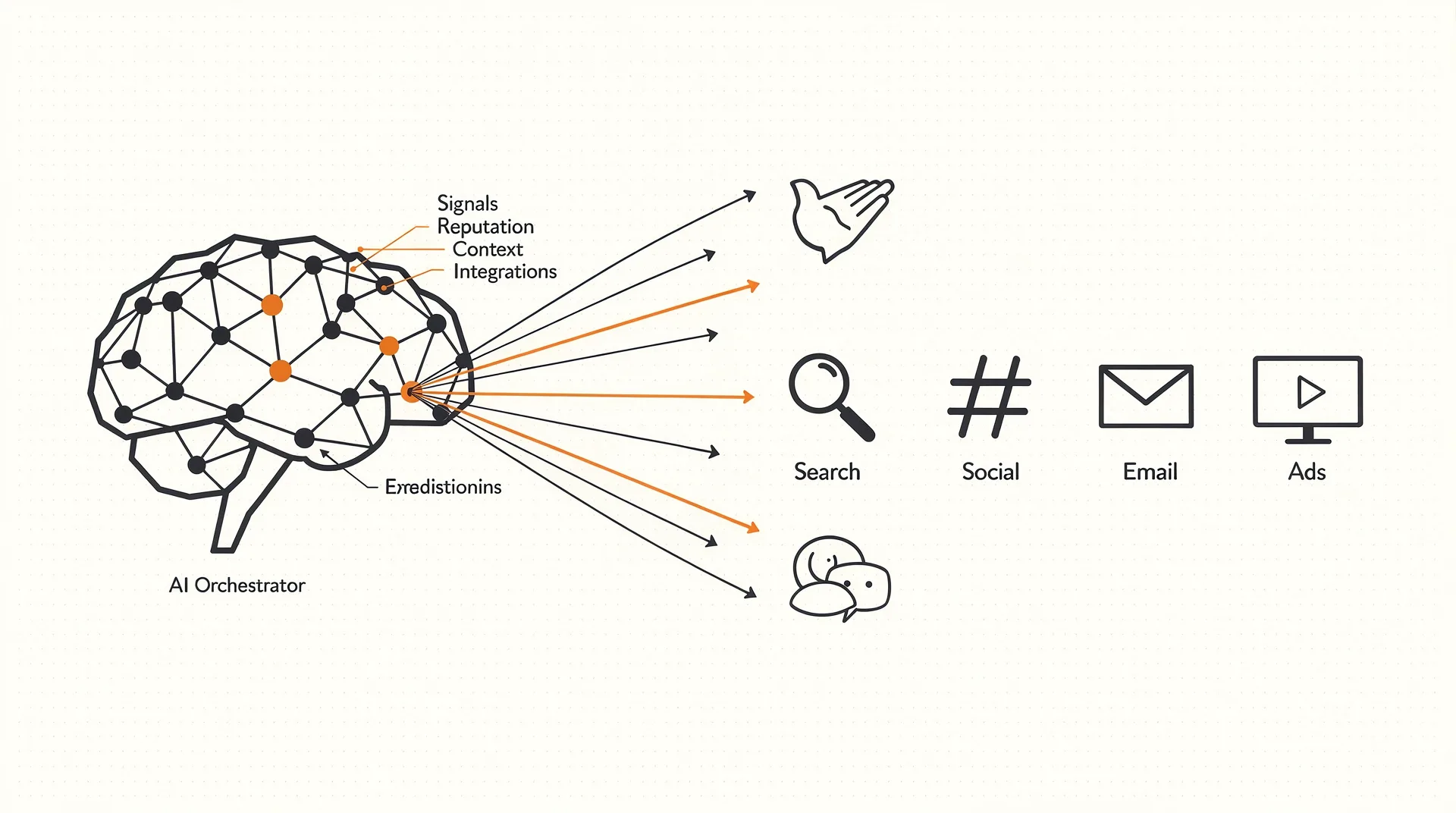
For two decades, the binding constraint on marketing was production. Budget bought headcount, headcount bought output, and every team wanted more of both. Generative AI removed that constraint almost overnight. Copy, creative, landing pages, campaign variants — the marginal cost of another asset is now close to zero.
But the constraint didn't disappear. It moved. Three recent pieces from MarTech converge on the same uncomfortable point from different directions: generation is no longer the bottleneck. Review, governance, and downstream operations are. And most teams scaled the first while leaving the rest at pre-AI levels.
What actually changed
The sharpest framing of the week is the question posed in Do you really need so much marketing? — a challenge aimed squarely at AI-era volume. The point isn't nostalgia for scarcity. It's an operational truth: every new asset creates more work downstream. Review, approval, testing, tagging, QA, measurement — each asset you ship makes a claim on all of it.
AI multiplies the input. Downstream load scales with it. If your team tripled asset output last quarter, the review burden tripled too — whether or not anyone staffed for it. Teams that treat AI as a production multiplier without auditing the downstream cost are not saving money. They're deferring it.
The review queue is the new production line
The prescription from that same analysis is to rethink review, approval, and testing before scaling AI output — not after quality incidents force the issue. In practice, that means treating review as a designed system rather than a heroic effort:
- Tier assets by risk. Customer-facing claims get full review. Internal variants get sampling. Not everything deserves the same gate.
- Define what each stage exists to catch. Brand, factual accuracy, legal exposure — name them, or reviewers will improvise.
- Cap work in progress. An asset without a named reviewer and a test plan isn't finished. It's a liability with a deadline.
Most marketing orgs built their review capacity for a content cadence that no longer exists. That mismatch is now the failure mode.
Migrations are where speed meets undocumented risk
AI-assisted rebuilds and replatforming have put more site migrations on the calendar. On the organic side, the guidance is mature — as the case laid out in Your site migration needs a paid search playbook, Google's organic migration documentation is extensive. Paid search has no equivalent clarity.
That's the gap the article names precisely: paid advertisers need clearer answers about what changes, resets, and recalibrates when a site moves — conversion tracking, historical data, campaign structure, learning phases. Teams dutifully work through an organic migration checklist and discover weeks later that their paid accounts recalibrated in ways nobody planned for and nobody owned.
The editorial takeaway: if a migration is on the roadmap, the paid playbook gets written before the organic one, not reconstructed afterward as a post-mortem.
Governance is the floor, not a ceiling
Copyright and privacy exposure scale with output too — and marketing teams adopt AI tools faster than any policy process can respond. The framework sketched in Building an AI governance framework for marketing is the right shape: cross-functional oversight spanning legal, security, and ops, precisely because copyright and privacy risks don't respect org-chart boundaries.
This doesn't require a treaty. The minimum viable version is three things:
1. An inventory. Which AI tools are actually in use, and by whom.
2. Named owners. One person accountable in legal, one in security, one in ops.
3. Acceptable-use rules. What data may go into prompts, and where output goes for IP and privacy review.
A one-page charter that exists beats a forty-page framework that doesn't. Governance is the floor everything else stands on — and right now, too many teams are building on air.
The move to make this week
Three actions, none of which require new budget:
- Audit the ratio. Count the assets AI added last quarter against your actual review and approval hours. If the gap widened, freeze any asset type that lacks a named owner until it has one.
- Write the paid migration playbook first. One page: what resets, what recalibrates, who owns tracking. Do it before the organic checklist, while the decisions are still cheap.
- Draft the governance charter. Pull in legal, security, and ops for a single working session. Sign it. Iterate later.
The takeaway
Generation speed is table stakes now — every competitor has the same models. Competitive advantage in AI marketing has moved downstream, to the teams whose review throughput, governance, and migration operations scale in step with their output. Volume without oversight isn't a strategy. It's just risk, delivered faster.