Three signals, one direction
Three announcements landed inside the same fortnight, from three different layers of the stack — the answer surface, the execution layer, and the crawl policy layer. Read separately they look like housekeeping. Read together they describe one shift: AI answers are consolidating around recognizable brands at the top, while the machinery for getting into those answers is becoming documented, gated, and — in places — open.
Here is what each one actually says, and the practical read for marketers.
The known-brand bias is now measurable
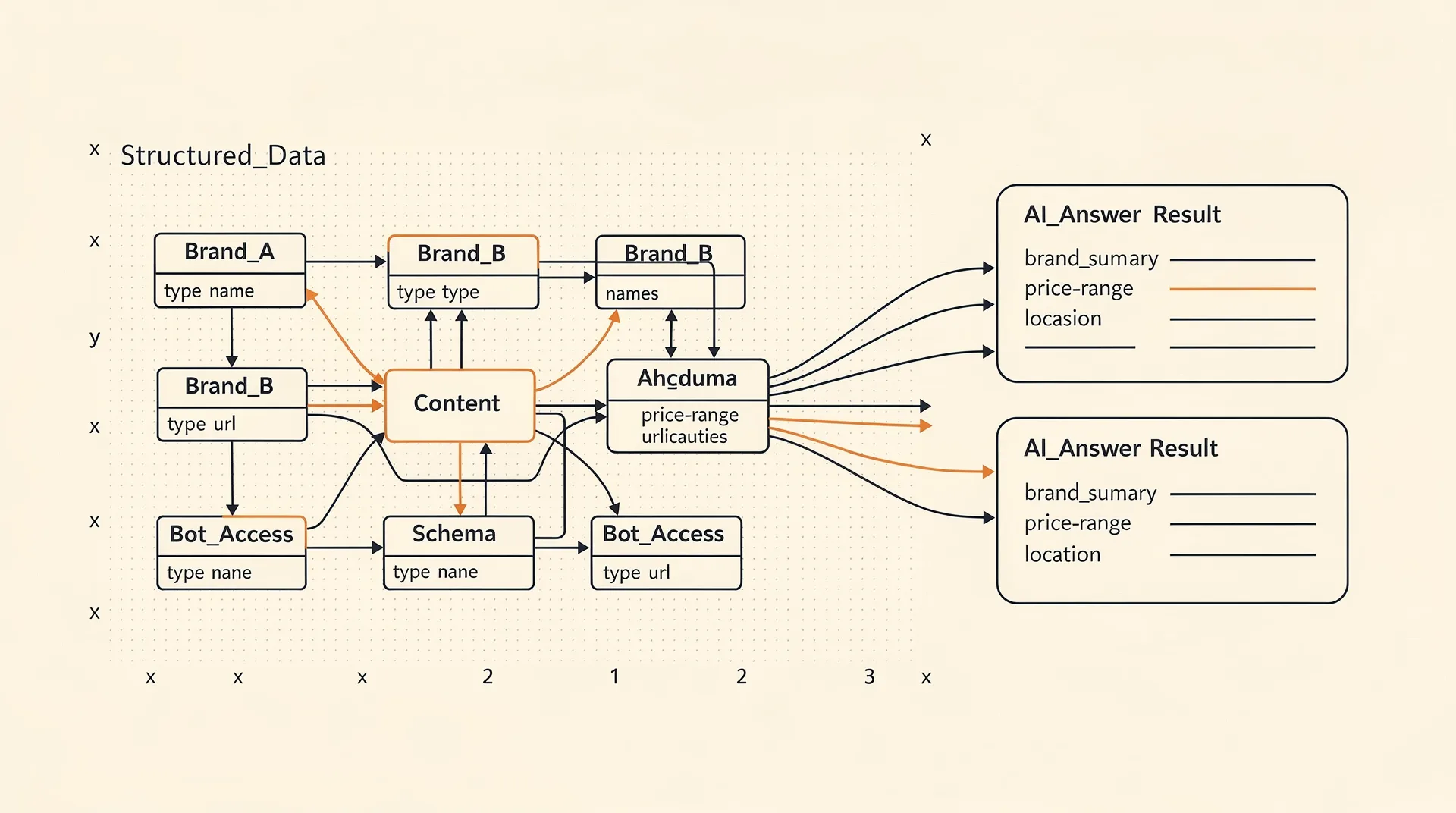
BrightEdge's travel research puts numbers on something everyone suspected. Per the firm's data, American Airlines, Royal Caribbean and Expedia lead their categories on both Google AI Overviews and ChatGPT. Familiarity travels across engines.
But the more useful finding is where the leaders split. In hotels, Hilton leads Google AI Overviews at 28.3% while Marriott leads ChatGPT at 29.4%. Same sector, different winner, different engine. There is no single "AI search ranking" to optimise for — there are at least two retrieval cultures with different taste.
The intent data is sharper still. Only 9% of tracked Google AI Overviews prompts have booking intent, yet booking platforms appear in 78% of budget-related answers, compared with 17% of other answers. And 38% of booking-intent prompts name a booking platform, against 12% of inspiration prompts.
Translation: the closer a prompt gets to money, the more the answer becomes a named shortlist. The high-value queries are exactly the ones where recognition — not clever formatting — decides inclusion.
The front door: apps inside AI Mode
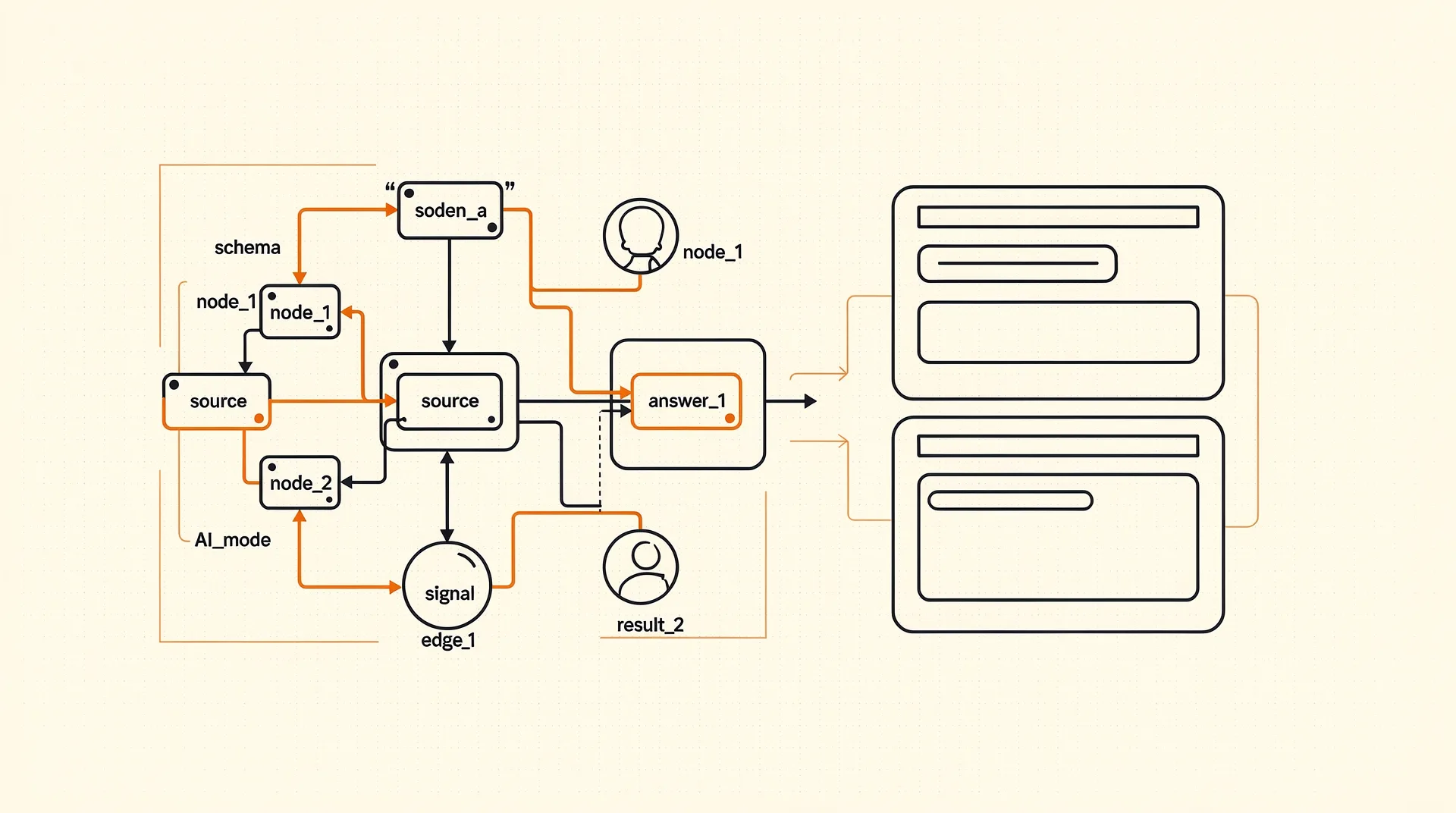
On 28 October Google announced its Connected Apps Platform; on Thursday, VP of Product Robby Stein said Google had just opened the public preview. Approved apps can run inside AI Mode in Search and inside the Gemini app.
Two routes in. A developer can connect via a remote MCP server, which reaches Gemini and Search users on web, Android and iOS — or via AppFunctions, which Google describes as Android MCP, reaching Gemini users on Android only.
The detail that should stop you mid-scroll: registration happens in the Google Connected Console, and developers select a category for each of their applications, which sets the minimum capability bar and, per the documentation, cannot be changed afterwards. Category is a one-way door. Choose it with the same care you'd give a domain migration.
Why it matters: AI Mode has spent a year as a reading surface. Connected Apps makes it an execution surface. If your product can complete a task — book, quote, reserve, dispatch — there is now a documented path to being invoked inside the answer rather than competing to be the answer. That is a different game with a different scoreboard, and for most B2B and transactional brands it is the first genuinely new distribution surface since the app store.
The opt-out is consolidating — not simplifying
Crawl policy moved too. Google, Microsoft and OpenAI said they plan to honor a shared robots.txt line for AI training preferences, letting a site state one preference to every participating provider instead of writing per-crawler rules.
The mechanism is drawn from an Internet Draft submitted by Anthropic's Kevin Kelley to the IETF's AI Preferences working group — an individual draft, which the IETF's own tracker notes does not represent official IETF standardization activity. The draft adds no new directive; a site writes a normal rule group under the policy token `__usage_ai-training`, using Allow and Disallow as it always has.
Now the contradiction worth surfacing plainly: none of the three companies currently supports the line, and their stated implementations differ. Google says it plans to treat a shared opt-out like a Google-Extended block where a site hasn't specified Google-Extended, and that this control also applies to grounding within Gemini Apps. Microsoft wants sites using its NoArchive and NoCache tags to switch to new preferences by March 1, 2027.
So: intent announced, support not shipped, timelines measured in years. Don't rewrite robots.txt this week. Do note the direction — one preference, machine-readable, universally read — and note that Google's version reaches grounding, not just training. That is a visibility question wearing a compliance costume.
What the three stories have in common
Answers shortlist. Shortlists skew to recognition. The way to stop competing for recognition is to become the thing the answer calls. And the rules for being callable are being written down in public, with deadlines.
The move to make this week
1. Re-cut your share-of-voice by sub-category, not category. The BrightEdge split between Hilton and Marriott only appears at sector level. If you're tracking one number for "travel," you're averaging away the signal.
2. Check your transactional prompts. Search your own brand in the prompts with buying intent — the 38%-versus-12% gap tells you where named platforms cluster. If you're absent there, that's your AEO priority, not your informational content.
3. Decide whether you want to be an answer or an action. If you can complete a task, read the Connected Apps developer documentation before you register, and settle the category question with product and legal in the room. You get one choice.
4. Write your AI training position down once, in one document, before the March 2027 migration conversations arrive. Note explicitly whether you intend to opt out of training, of grounding, or both — they are not the same decision.
None of this is a rebrand. It's the unglamorous work of making a brand legible to systems that increasingly answer with a shortlist and act on a protocol.