Something changed this week that most content strategies aren't built for. Two product launches landed nearly simultaneously, and together they redraw the boundaries of what we optimise for. Google began rolling out hotel booking inside AI Mode, and OpenAI added WebMCP support so websites can expose actions to ChatGPT's browser. Both ship the same idea: AI search is no longer about delivering an answer. It's about delivering an outcome.
The bargain just changed
For most of search's history, the trade was simple — the search engine gave us candidates, and we did the rest. We chose words, scanned results, opened pages, compared sources, refined the query, and eventually assembled an answer we were willing to trust. Under that arrangement, SEO was a candidate-list game: rank high, win the click, and let humans carry the load from there.
AI answer systems break that bargain. Retrieval, source selection, reading, comparison, and synthesis can all happen before the answer appears. The page becomes a provenance note rather than a destination. Yet the work didn't vanish — it just moved.
Cognitive load moved, it didn't vanish
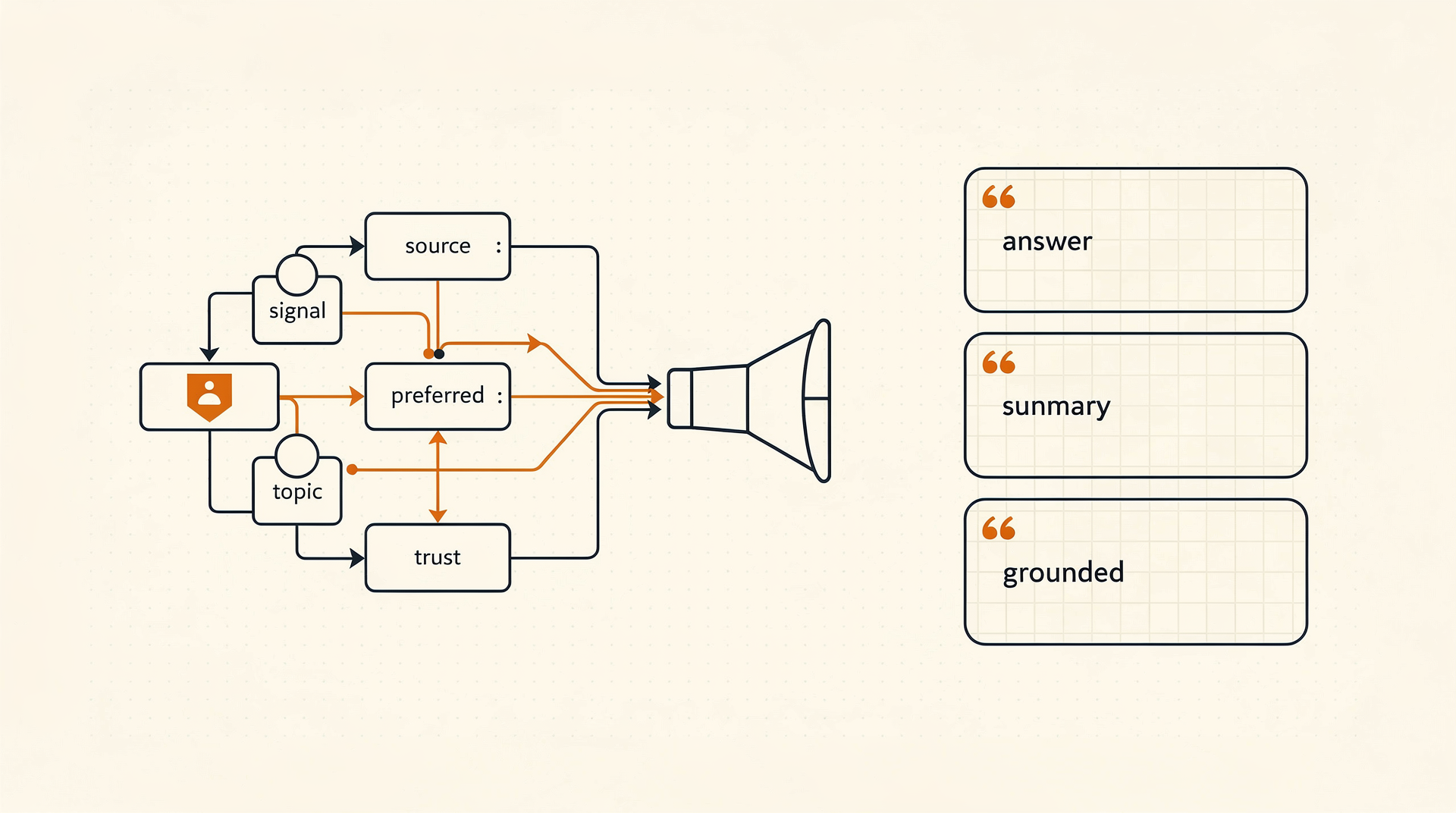
Jakob Nielsen's recent work frames cognitive load as a budget, not an enemy, treating working memory as constrained to roughly four meaningful chunks. That framing is useful for SEOs because it reveals what AI is actually saving the user: not the thinking, but the legwork. The user still has to decide whether to trust the synthesis, check assumptions, and ultimately act — so the cognitive load didn't disappear, it moved to the point of trust and execution.
That's the real strategic break. The winning move isn't just ranking inside the AI answer. It's making sure the answer — and the brand behind it — survives the user's trust check, because that's where the cognitive load now sits.
Google finishes the transaction
That trust check now has a checkout. Google started rolling out hotel booking in AI Mode for U.S. users, where users can complete eligible reservations through a Continue on Google flow that uses Google Pay. The initial rollout covers ten hotel chains and online travel sites, with Booking.com, Expedia, Hotels.com, Priceline, and Trip.com among the platforms, and Marriott, Hilton, and IHG among the participating chains.
Google is also adding flight price alerts and points or miles rates to AI Mode, pulling current prices from more than 300 partner airlines and travel sites. Travel just became the first vertical where the AI answers the question and closes the deal in the same interface. The page is no longer the finish line — the transaction is.
OpenAI hands the keys to the page
Meanwhile, OpenAI added WebMCP support to the built-in browser in its ChatGPT desktop app. WebMCP lets the webpage you're visiting provide tools automatically, without setting up a separate MCP connector. A page can register JavaScript functions as tools, including their names, descriptions, and structured input schemas.
Site tools assist with tasks like searching documents, editing files, exploring dashboards, comparing travel options, and updating shopping carts. This is distinct from server-based MCP: WebMCP is page-scoped, lives and dies with the URL, and hands the agent the actions your site already offers. For marketers, this is the moment schema markup starts meaning something literal again — except now it's about registering actions, not just entities.
What to do this week
The synthesis across these three stories is straightforward: AI search is moving from the answer layer to the action layer. That suggests three practical moves.
- Structure content for the trust check. Because the cognitive load moved to the user's verification step, write answer-first, surface opinions and data transparently, and make claims that survive being lifted into a synthesis. A brand that reads as trustworthy in isolation gets cited; a brand that reads as a sales page gets filtered.
- Register your actions. If you have a product, travel, or service flow, start treating key interactions as agent-callable actions. Expose clear, structured inputs for the tasks Google and OpenAI already perform — compare, book, track, configure. The sites that ship WebMCP tools are the ones agents will live on.
- Get transaction-ready in AI Mode. For any brand with bookable inventory, verify that listings, reviews, cancellation policies, and payment data are consistent and machine-readable. Google selects the merchant of record from a structured, integrated set — being chosen requires clean, current data.
The new metric
Clicks and rankings were the candidate-era currency. The AI-era currency is completion — the session that ends in a booking, a comparison, a signup, or a purchase the agent can attribute to your brand. The cognitive load didn't leave search users; it moved, and it now sits exactly where your content, structured data, and transactional readiness intersect.
The finish line moved past the page. Optimise for what happens after the answer.