What changed in AI search
AI SEO has moved beyond the question of whether a page can rank.
The more consequential question is whether a system can retrieve, understand, trust, and correctly attribute that page when constructing an answer. That shift is visible across the latest search experiments and practical testing workflows: Google is packaging related coverage into generated topic overviews, AI search tools can be prompted to reveal whether they can retrieve an exact passage, and organisations are being pushed to demonstrate how they govern AI rather than merely deploy it.
That makes AI visibility less like a conventional ranking exercise and more like an evidence and governance problem.
Google’s Discover experiment illustrates the direction. Its new “Dive deeper” experience creates a short topic overview around a piece of content, then presents links to related stories, community reactions, and original reporting. The test begins with videos, but the underlying model is familiar: a system summarises a topic, selects supporting sources, and decides which links deserve prominence. The Google Discover topic-overview test is another indication that search interfaces are becoming more active editors of the web.
For marketers, this means the page itself is only one part of the product. The other part is the evidence trail an AI system can assemble around it.
Retrieval is now a practical SEO check
Traditional SEO teams have long used `site:` searches, quoted text searches, Google Search Console, and Bing Webmaster Tools to investigate indexing. Those checks remain useful, but they do not fully answer the AI-search question: can an answer engine find this content and associate it with the correct URL?
A practical method is emerging. Take a distinctive passage from a page and ask an AI system with search access to find the exact text and return only pages containing it. If the system retrieves the passage and attributes it to the correct URL, you have evidence that at least one of its search pathways can locate the content.
This does not prove inclusion in every AI answer, nor does it reveal every retrieval source. It is not a replacement for log analysis, crawl diagnostics, or webmaster tools. But it is a useful directional test, especially where AI platforms provide limited visibility into their indexes.
The retrieval-pipeline testing workflow points to a broader operational principle: AI SEO needs observable tests. Teams should stop treating citations as mysterious outcomes and begin checking whether important claims are findable, extractable, and correctly attributed.
Trust has become a search signal in practice
The trust problem is not separate from visibility. It shapes it.
AI systems are designed to produce answers that appear coherent and useful. To do that, they need signals about source quality, relevance, consistency, and authority. A brand that publishes unsupported claims, obscures authorship, contradicts its own documentation, or offers no evidence may still be crawled. It is less likely to become a dependable source in a generated answer.
That is why an AI accountability document matters beyond internal policy. The example of a school district’s AI accountability document frames governance as a public answer to questions about responsible use, oversight, data, and accountability. For brands, the same logic can strengthen the information environment around their content.
An accountability document will not create authority by itself. But it can make important facts explicit: which systems the organisation uses, what review process applies, how human oversight works, what data is excluded, and where customers can challenge or verify a decision. Those details give users—and potentially answer engines—clearer material to interpret.
The practical lesson is straightforward: trust should be documented, not implied.
The real unit of AI SEO is the claim
Conventional content planning often starts with keywords and ends with pages. AI SEO should also start with claims.
List the statements your brand most wants an AI system to repeat. These may include product capabilities, compliance positions, performance outcomes, market definitions, or customer results. Then ask:
- Is each claim stated in plain language?
- Is it supported by primary evidence?
- Does the same claim appear consistently across the site?
- Can a crawler extract the relevant passage without surrounding ambiguity?
- Is the author, organisation, date, and context clear?
- Does the page distinguish fact from opinion, estimate, and projection?
This approach makes content more useful to people and machines. It also exposes weak foundations quickly. A vague service page may look polished but fail when a system needs to identify exactly what the company does, for whom, under which conditions, and with what proof.
The goal is not to write for an imagined AI reader. It is to make the organisation’s most important knowledge precise, verifiable, and easy to retrieve.
What to do this week
Run a focused AI SEO evidence audit on five high-value pages.
First, select pages tied to revenue, reputation, or strategic positioning. Pull one distinctive passage from each page and test whether an AI search tool can retrieve it and attribute it to the correct URL. Record the prompt, response, URL returned, and any citation errors.
Second, extract the ten claims your sales and marketing teams repeat most often. Match each claim to a page, author, date, and supporting evidence. Mark anything that is unsupported, outdated, or expressed differently across channels.
Third, publish or update a short AI accountability page. Keep it concrete. Cover approved use cases, human review, data handling, disclosure, and a contact route for questions. Link to it from relevant corporate, product, and policy pages.
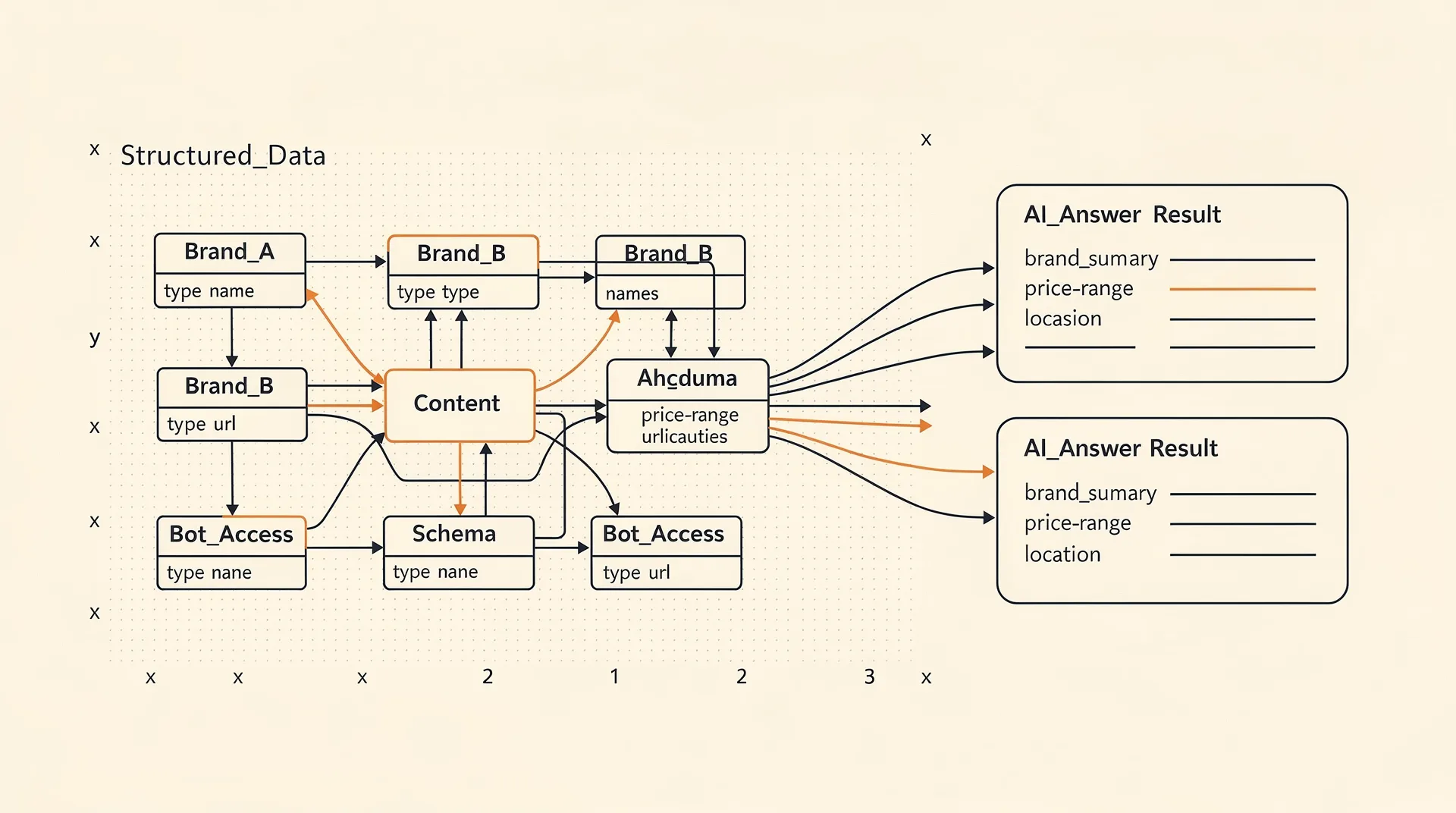
Finally, fix the highest-impact gaps: unclear authorship, missing dates, buried evidence, inconsistent terminology, and pages that make important claims only inside images or unstructured layouts.
AI SEO is becoming less about winning an opaque contest for mentions. It is about becoming a source that retrieval systems can find, interpret, verify, and cite. The brands that prepare for that reality will not just appear in more answers. They will be easier to trust when they do.