The measurement era is over
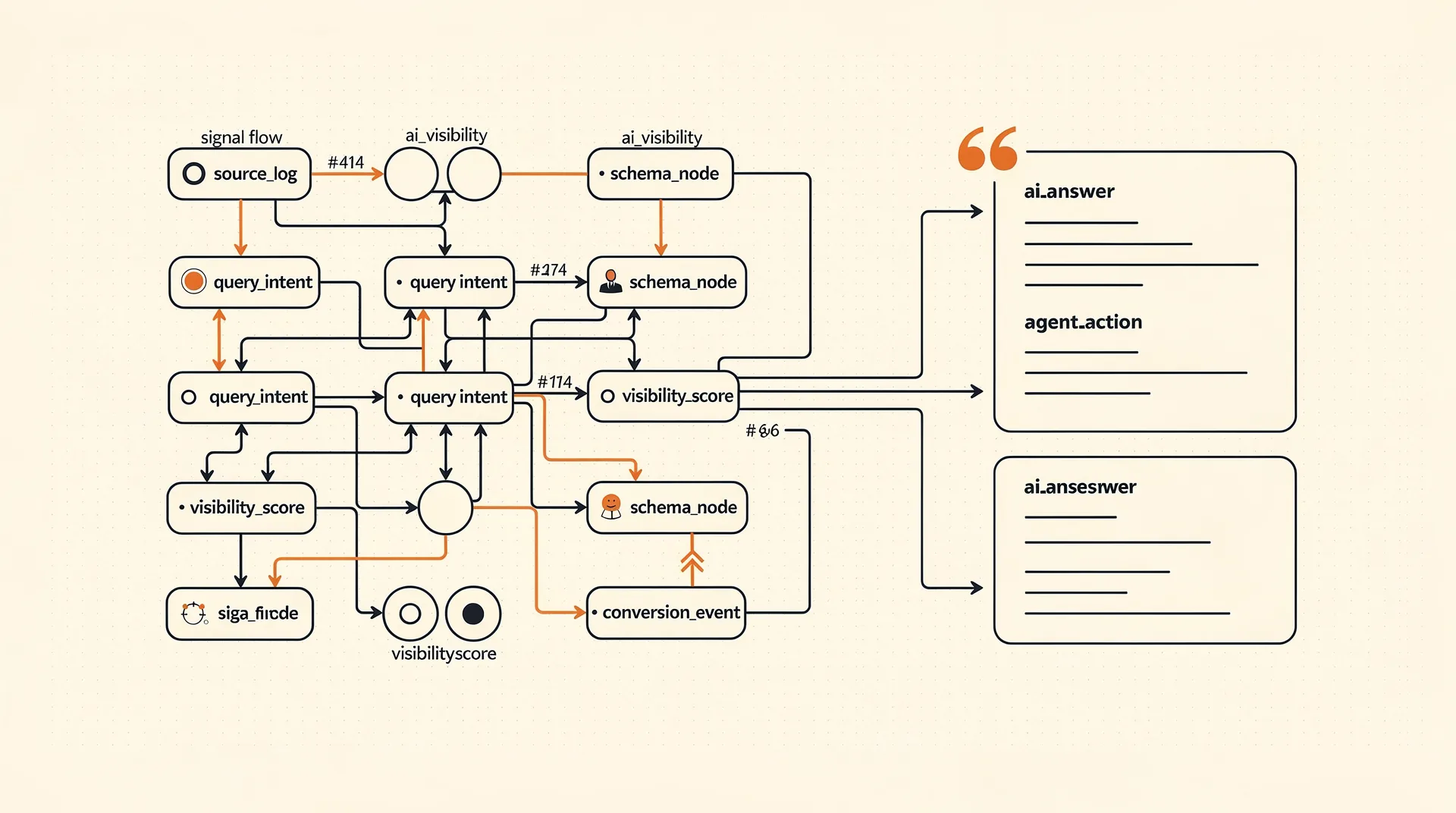
The first year of AI search was about seeing the invisible. Most marketing teams now track AI visibility — the tooling is bought, the dashboards are live, and share of voice in ChatGPT and Google AI Overviews holds a slot on the monthly report. That problem is solved, which is exactly why it no longer matters. The puzzle is that queries about tracking AI visibility far outnumber queries about improving it, and the gap behind that statistic is the real story: nearly everyone can see where AI cites their brand, while very few teams have a process for changing it. That distinction now draws the line between reporting on AI search and competing in it.
Google closed the data gap
The last excuse for tracking without acting disappeared on August 31, when Search Console AI reports went global for all websites. Marketers anywhere can now inspect impressions from AI Overviews, AI Mode, and generative AI features in Discover, segmented by page, country, and date. The control plane is in place too: Google says opting out will not affect your ranking in other parts of Search, so the data you are seeing is honest, not coerced.
Two caveats worth treating as operating signals. First, sites with fewer AI impressions may not appear in the report at all — an empty page list is now a diagnosis, not an absence of data. Second, the report shows where you are visible but never what those appearances yield, so the conversion layer is entirely on you. Add John Mueller's patience warning — fixes tied to a big update can take many months until you see the effects — and the implication is clear: start acting this week, because the payoff is the lag.
The buyer is now an agent
The more consequential shift is downstream of citations. On Shopify's February 2026 earnings call, orders arriving through AI-powered search have grown 15 times since January 2025, routed through the infrastructure built in the last year: Google's Universal Commerce Protocol, OpenAI's Agentic Commerce Protocol, and Salesforce's Agentforce Commerce. Real brands have already moved into distribution: Etsy sellers went live inside ChatGPT first, with Shopify merchants including Glossier, Spanx, and Vuori following.
OpenAI has since pulled purchases out of native in-chat checkout and into retailer apps — a reversal that sharpens, rather than softens, the underlying problem: once an AI agent, not a person, completes the transaction, does the checkout underneath still work? Getting your product into ChatGPT is not the hard part. Getting it through checkout is. Visibility that does not survive the transaction is just another report.
The practical move this week
1. Open the global AI reports with an action list, not a notebook. Inventory your pages and their AI impressions. Every page that doesn't appear is a candidate for a structured-data or content lift — not a shrug. Empty report pages for search AI: that's a pipe to fill.
2. Run an agentic checkout discipline. Choose your highest-value product, take the journey through Universal Commerce Protocol or OpenAI's Agentic Commerce Protocol — product choice, variant, cart, ordering — discover where the agent's path stops (availability, offers, shipping data). Fix the feed, not the wording.
3. Turn every citation into a sprint. The gap identified in the Ahrefs analysis is the ability to win more citations in AI answers — a repeatable routine of clarity and structure. Assign one owner to answer "what is stopping the AI from citing the page" per week, and measure the output as citations won, not impressions logged.
4. Set expectations internally. Observed: fixes take time — often a half-year — before the effects appear. So the deeper strategy is to stack changes over a quarter, with a defined review at weeks 4, 8, and 12.
The gap is the assignment
AI search has passed through the measurement phase. The AI reports are global, the commerce protocols exist, and agents traverse from citation at the top to checkout at the bottom. The skill that's now scarce is the one in between: turning a list of AI citations into an executable pathway that ends in conversion. Most teams can measure AI visibility. Few can move it. And today, moving it means treating the checkout as part of the AI strategy — because by the time the buyer is an agent, visibility alone isn't a result.