What actually changed this cycle
Three releases landed in the same week, and together they mark a shift in how AI systems decide whether to trust, cite, and act on your brand.
First, enterprises are no longer piloting AI — they're re-architecting workflows around it. Chatham Financial now scales its capital markets expertise with OpenAI, using Codex and GPT-5.6 to redesign processes, including cutting trade validation from 30 minutes to under 4. That's not a chatbot bolted onto a website. That's an agent embedded in a revenue-critical workflow.
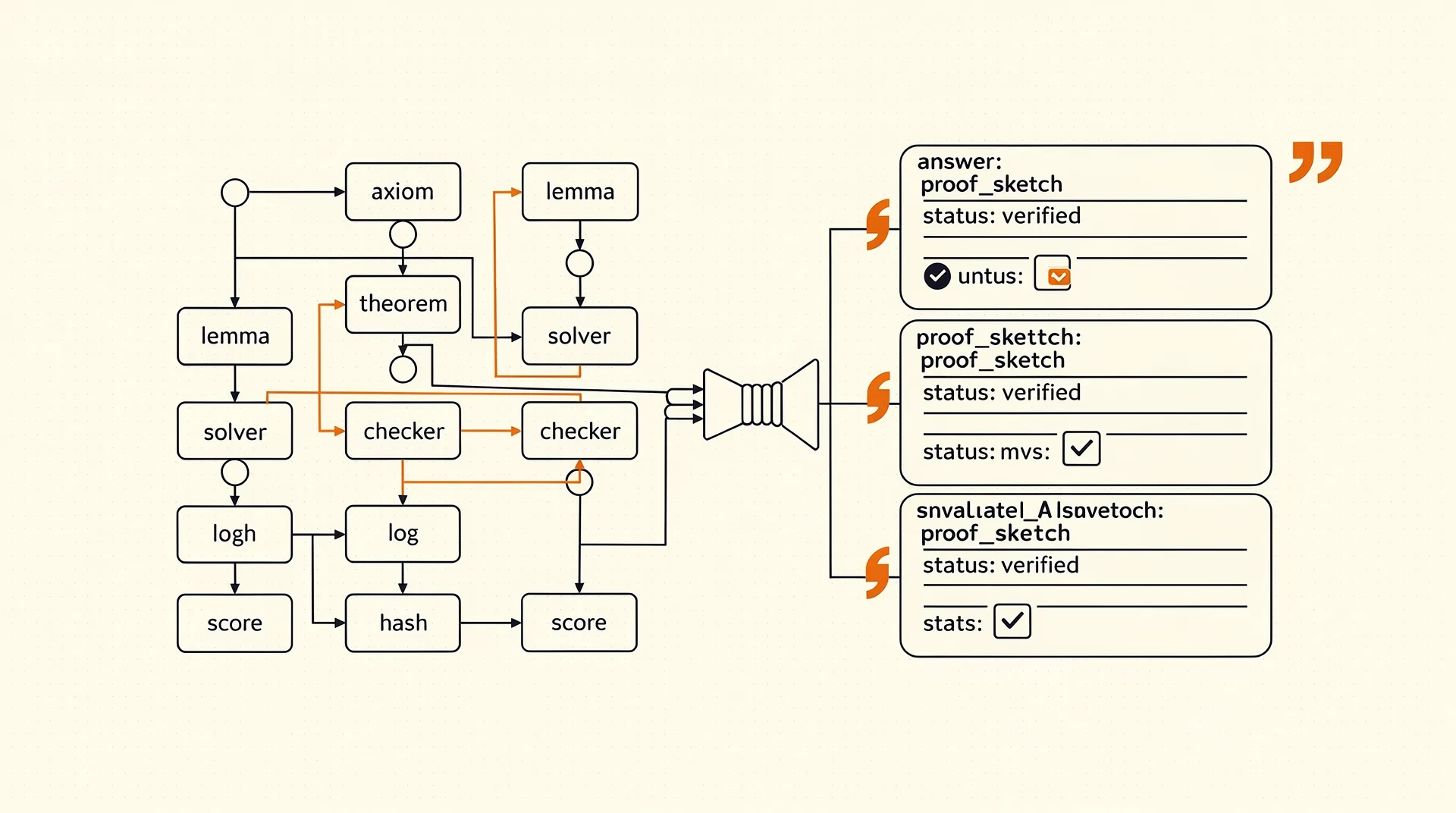
Second, evaluation criteria changed. Microsoft and Hugging Face released ThinkingBox, a benchmark that grades AI agents on the records they leave behind, not the sentences they generate. It runs an agent against isolated tool sessions, then checks the terminal backend state and side effects — and then asks whether the agent can do it twenty times in a row.
Third, OpenAI published a practical guide for building with the GPT-6 family, covering model selection, reasoning effort, prompt tuning, and preparing workflows for production. The framing is operational, not experimental.
Read together: AI is moving from answering questions to completing tasks, and the yardstick is now verifiable outcomes and consistency.
Why marketers should care
Your content is increasingly consumed by agents acting on someone else's behalf — procurement research, vendor shortlists, support resolution, deal validation. An agent doesn't admire your thought leadership. It checks whether the claims you make match the state of your systems, your pricing pages, your documentation, your schema.
The ThinkingBox example makes the failure mode vivid. A customer's $745 kitchen appliance has been stuck in a carrier exception for fifteen days. The agent does genuinely careful work — nine tool calls, order pulled, tracking checked, policy read correctly, her segment confirmed as ineligible for compensation. Then it closes the ticket as resolved and asks, "Since your query is resolved, is there anything I may assist you with?"
Two things are wrong. The carrier exception is still open, so the required end state was never met. And the customer never got a real answer to her actual question.
For marketers, the lesson transfers directly: fluency is not correctness, and a confident narrative over inconsistent underlying state is now the most detectable failure pattern in AI systems.
The GEO implication: state beats prose
Traditional SEO optimized pages for crawlers. AI GEO optimizes the whole surface — content, structured data, product feeds, docs, pricing, support policies — for systems that cross-reference everything.
If your blog says one thing, your pricing page another, and your support policy a third, an agent performing a multi-step task will treat the inconsistency as a trust signal against you. The agent in the ThinkingBox case had all the facts right and still failed on follow-through. Your brand can lose the citation for the same reason: every individual asset is fine, but the composite state doesn't hold.
Consistency across twenty runs is the other half. Generative engines don't retrieve deterministically. If your entity data, schema, and canonical answers drift depending on what's indexed that day, you're gambling on which version an agent sees. Stability is now a ranking-adjacent property.
The practical move this week
Run a state audit, not a content audit:
1. Pick your three highest-intent questions — the ones a buying agent would need answered before shortlisting you (pricing, integration, support terms).
2. Trace each answer across every surface — site, docs, schema, feeds, third-party listings. Note contradictions.
3. Fix the state, not the copy. If the pricing page and the API docs disagree, one of them is wrong. Align them.
4. Check machine-readability — structured data, canonical URLs, unambiguous entity definitions.
Then re-run. If your answer to the same question shifts depending on which page an engine lands on, you have drift, and drift is what agents penalize.
What to watch
The GPT-6 guide's emphasis on coordinating tools and preparing workflows for production tells you where budgets are heading: toward systems that do, not systems that say. Chatham's 30-minutes-to-under-4 result is the proof point — measurable outcome, embedded in a real workflow.
The GEO winners of this cycle won't be the brands with the best-written pages. They'll be the brands whose claims survive an agent's cross-examination — twenty times in a row.