The Great Unification: Search and Agents Are One Product
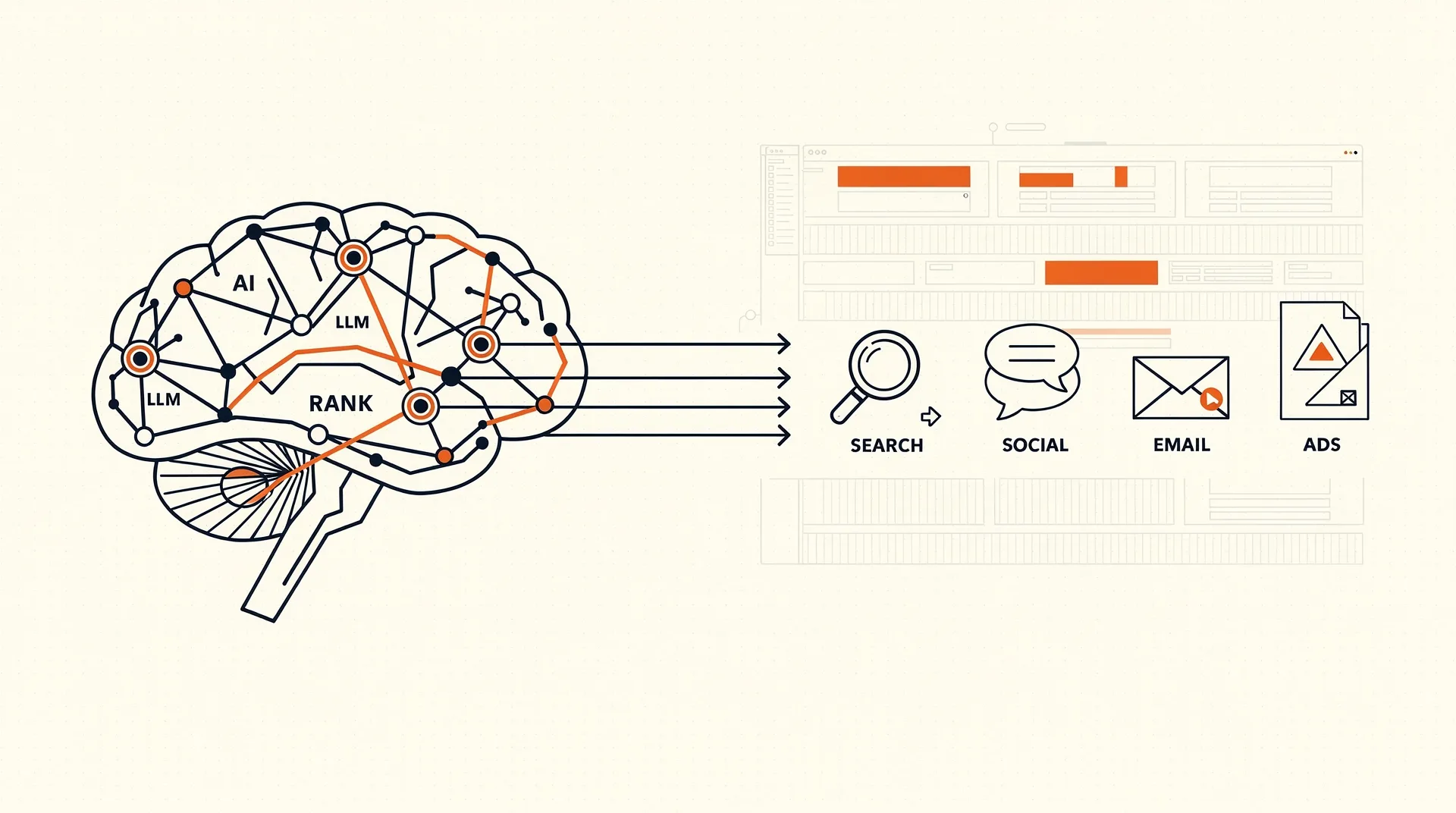
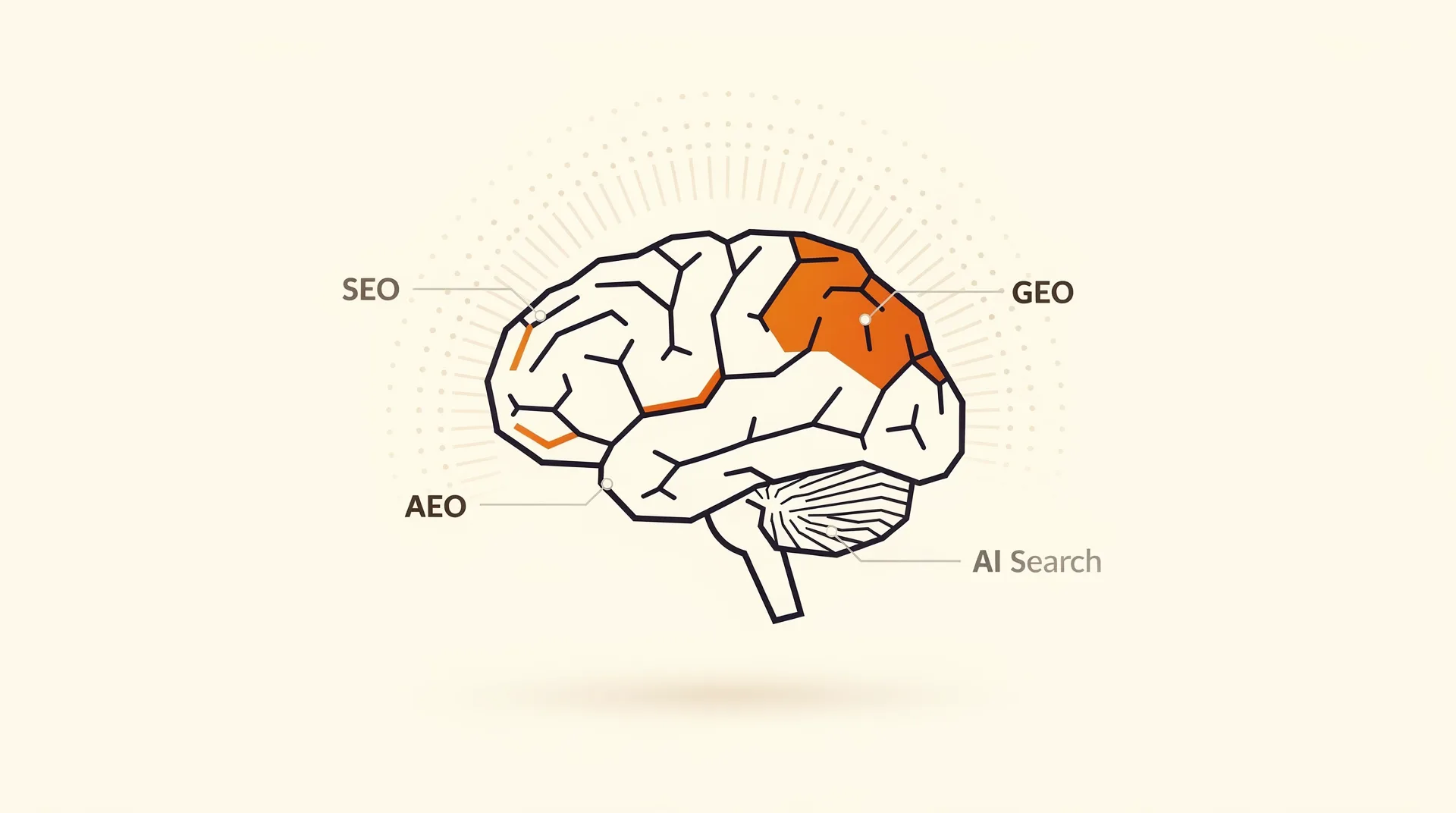
The most critical shift in 2026 is not a new algorithm, but a fundamental redefinition of the product itself. Google CEO Sundar Pichai recently declared that "Search as an agent manager" is already happening, a corollary confirmed by Nick Fox, Google’s SVP of Search, who stated that the way to optimize for AI search is identical to optimizing for traditional search: "Create great content."
This unification means treating search and agents as separate disciplines is a fatal error. It requires running two playbooks for a single product surface. The surface is live: AI Mode sits in the Chrome address bar, while background agents handle complex queries and Chrome auto-browse completes bookings with OS-level permissions. These features all inherit the same web, demanding a unified strategy focused on content quality rather than technical manipulation.
The New Spam Boundary: Optimization vs. Manipulation
While the strategy remains "create great content," the enforcement landscape has tightened dangerously. Google’s June spam update, the second of the year, now explicitly enforces policies against attempts to "manipulate generative AI responses" in Search.
This policy is harder to enforce than its wording implies, as revealed by a Cornell Tech preprint. AI research agents often rely on community pages that carry third-party comments. A single comment can plant a recommendation the original author never wrote. Consequently, what Google labels as spam travels through the very retrieval mechanisms these agents depend on.
For brands attempting to push their presence into AI-generated answers, the stakes are high. A gray market has already formed where marketers test ways to nudge these answers. However, Google’s tracking shows self-citations to its own properties are rising, accounting for roughly a fifth of AI Mode citations. With external sites being cited less, the pull to manufacture visibility is immense, but the line between valid optimization and spam is being redrawn with zero tolerance for shortcuts.
The "Slop" Problem: Why People-First Content Wins
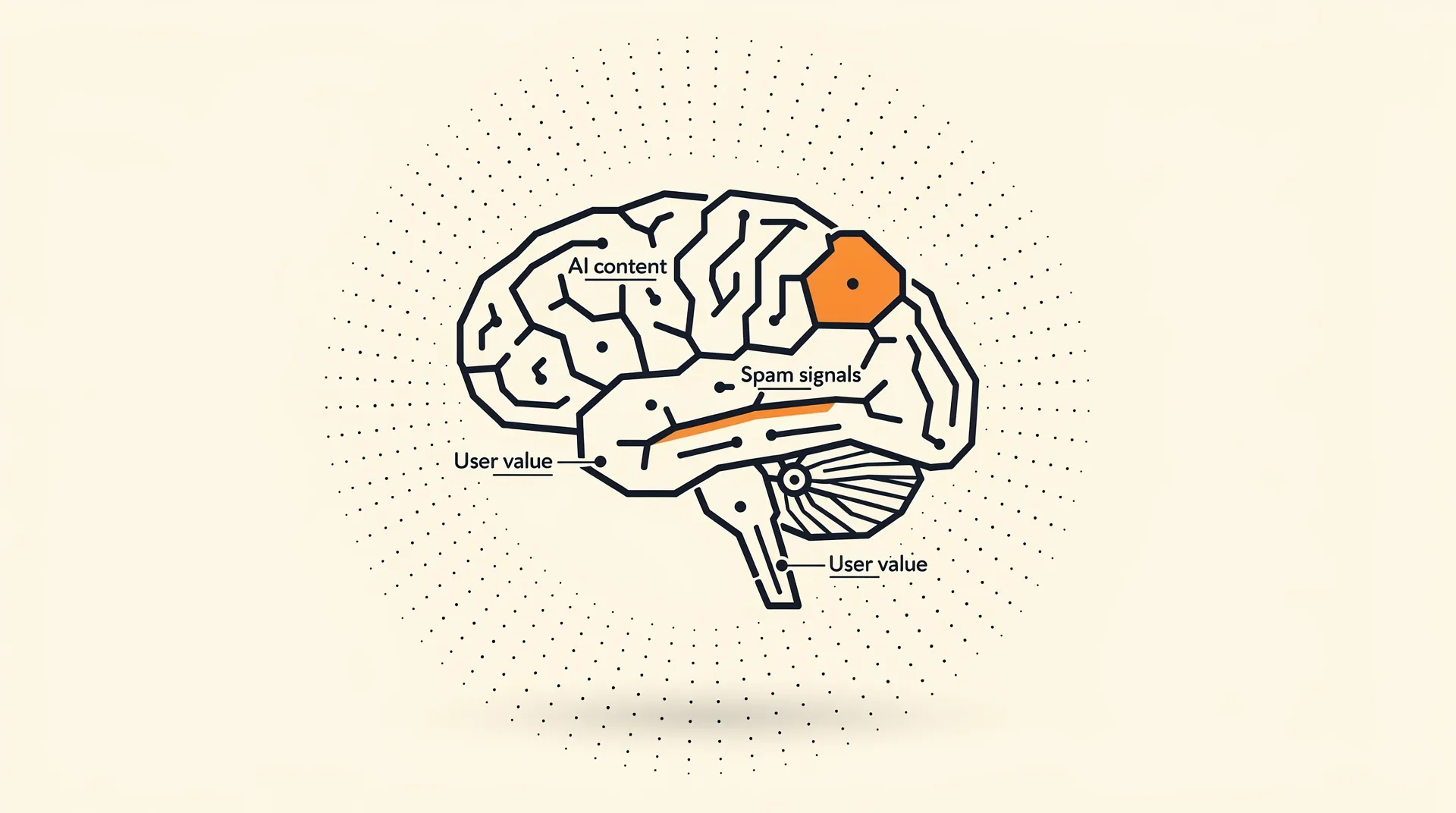
Google VP of Search Liz Reid stripped away the ambiguity regarding what gets cited in AI search: publishers must create content people actually want to read. She explicitly warned against producing "slop content" that is merely the "1,000th copy" of existing material.
Reid stressed that the decline in publisher traffic is not solely due to AI; it is also driven by users shifting toward non-textual formats like video and social media. The reality of this new time demands innovation. If a piece of content is a rehash of everything else, it will not be cited. The burden is on publishers to step up, ensuring their content offers unique experiences, expert insights, and genuine utility that AI models cannot easily replicate from generic sources.
The Week-One Move: Engineer for Extractability
Knowing what changed and why it matters, the practical move for this week is to shift from content refinement to content engineering. To succeed in AI search, your content must be designed for three core pillars: Extractability, Verifiability, and Contextual Clarity.
1. Structure for Direct Answers
AI models prioritize information that is self-contained and logically formatted.
*
Action: Rewrite your top 3–5 key headings as direct questions (e.g., "How does X work?").
*
Action: Ensure the first paragraph under each heading directly answers that question without fluff.
*
Action: Use clear, nested headings (H2/H3) to break content into smaller, accessible chunks that AI can easily parse.
2. Make It Verifiable and Quotable
AI systems need to trust the source. Generic claims are ignored; specific data is cited.
*
Action: Find 2–3 statistics for your article and add them, explicitly citing the source.
*
Action: Include expert quotes, case study results, and concrete examples. These make your content "citation-worthy" and provide the "proof block" the model lifts for its answer.
3. Simulate and Test
Do not guess how models interpret your content.
*
Action: Ask ChatGPT or Perplexity one question your audience would ask about your topic.
*
Action: Note which competitors get cited and the language patterns the AI uses.
*
Action: Identify the top element from the most-cited competing source and adapt it for your content immediately.
The era of keyword-spinning is dead. The era of extractable, verifiable, and human-centric content engineering has begun. If you want to be seen in AI search, you must stop making the 1,000th copy and start engineering the one piece of content an AI agent cannot ignore.