What Changed This Week
Three seismic shifts are reshaping AI SEO and local search strategy: first, a proposed class-action lawsuit accuses Google of using millions of copyrighted books to train Gemini without permission, with internal documents warning of $10B–$100B in potential fines Publishers and Authors File Class Action Lawsuit Against Google for Willful Copyright Infringement to Develop Gemini AI Models. Second, Apple Maps ads are launching this summer with a strict ban on home services (plumbing, HVAC, roofing, etc.), plus crypto ATMs and bail bonds Apple Maps Ads Ban Home Services, Crypto ATMs, Bail Bonds. Third, Google is embedding AI-generated images directly into AI Overviews, letting the surface produce custom visuals without a click Google On Canonical Fixes; Mueller On Hidden Links And A/B Tests – SEO Pulse.
These aren’t isolated updates—they’re a convergence of legal, platform, and creative risk that demands immediate action.
Why This Matters for Marketers
The Gemini lawsuit threatens the legal foundation of AI SEO. If courts rule that training on copyrighted text is infringement, the entire pipeline of content generation, keyword clustering, and semantic enrichment built on unlicensed data could collapse. The plaintiffs—Hachette, Cengage, Elsevier, and author Scott Turow—argue Google exceeded the scope of Google Books licenses, which were meant for search snippets, not commercial AI training Google Faces Fresh Copyright Lawsuit. Internal Google documents even flagged the risk as “highly problematic,” citing potential fines up to $100B Google faces another AI training lawsuit from major publishers.
For local advertisers, the Apple Maps ban eliminates a major future channel for home services. With launch expected “this summer” in the U.S. and Canada, businesses in plumbing, electrical, or roofing must redirect budgets before the policy takes full effect. Apple’s wording also leaves room to expand the ban beyond the seven named categories, creating regulatory uncertainty for adjacent verticals Apple Maps Ads Ban Home Services, Crypto ATMs, Bail Bonds.
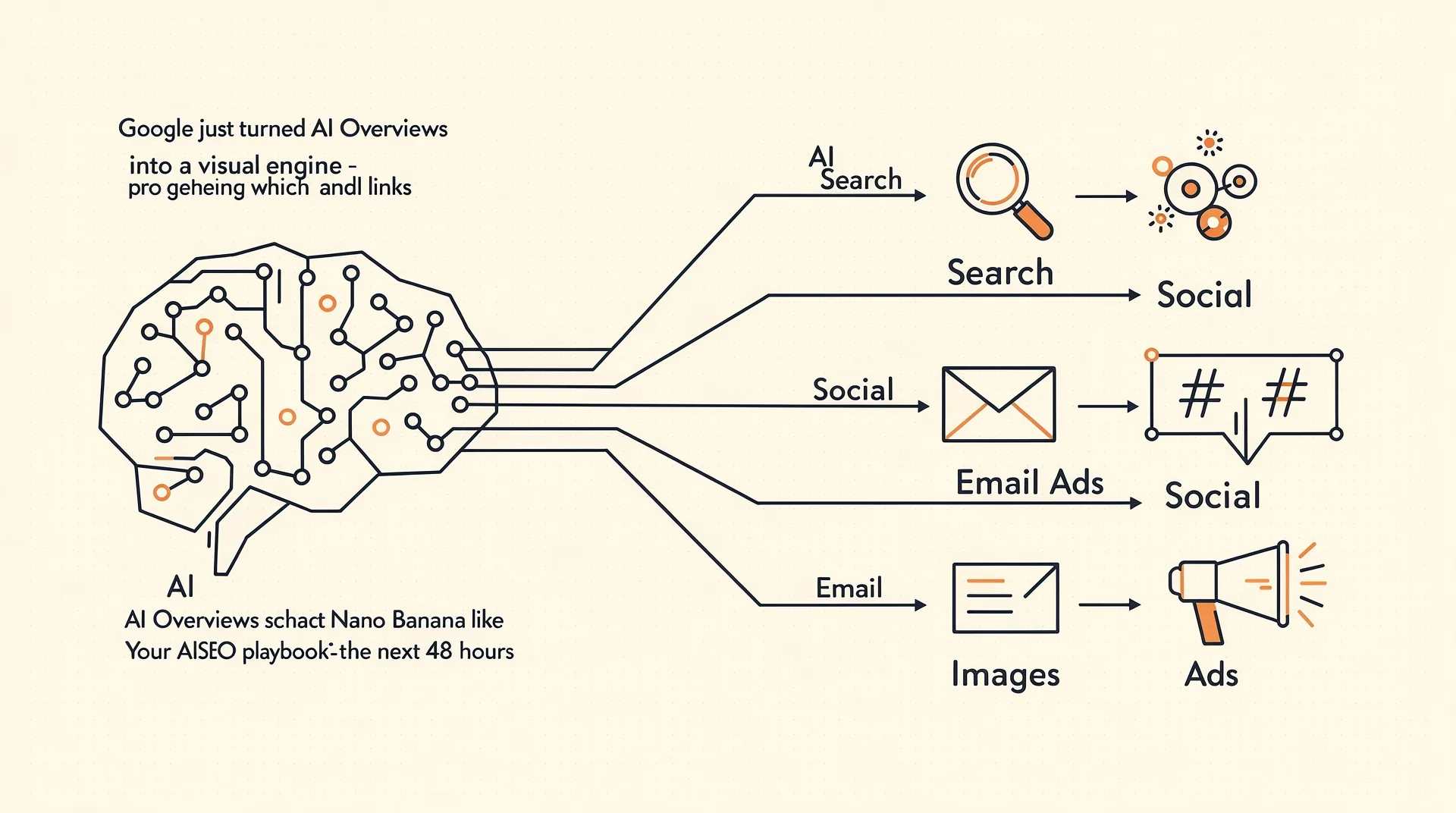
Meanwhile, image generation in AI Overviews reduces click-throughs to image galleries and branded sites. Since AI Overviews already answer queries without clicks, adding visual output means Google can satisfy more user intent on its own surface—directly competing with your organic image SEO and visual content strategy.
The Practical Move to Make This Week
Audit your AI content pipeline for licensed data. Immediately verify whether your keyword research, content drafts, or schema tags rely on unlicensed text from books, journals, or paywalled sources. If so, switch to public-domain corpora, licensed datasets, or first-party content to avoid future liability. Document your data sources and retention policies now—this will be critical if litigation escalates.
Reallocate local ad spend from Apple Maps to Google Local and Bing. For home services, pause all planned Apple Maps campaigns and shift budget to Google Ads Local campaigns, Bing Local, and direct review platforms like Yelp. Apple’s policy is final; there’s no loophole for plumbing or HVAC.
Test image SEO in AI Overviews. Run 5–10 queries in your niche with image prompts and observe whether AI Overviews generate visuals instead of linking to your image assets. If so, optimize for alt text, caption relevance, and fast-loading image formats that may survive as “preferred sources” if Google starts attributing generated images.
The Legal Risk Behind AI SEO
The lawsuit alleges Google copied works from Google Books, Play Books, and Scholar, then stripped copyright management info to obscure training sources Publishers and Authors File Class Action Lawsuit Against Google for Willful Copyright Infringement to Develop Gemini AI Models. It also claims Google used web scrapes from pirate sites and paywalls—further weakening any fair-use defense. While courts previously ruled AI training is fair use in cases like Anthropic, this case hinges on license scope violation, not just transformation Book publishers sue Google for copyright infringement over Gemini AI training.
If the class is certified, millions of copyright owners could join, creating a massive damages pool. The plaintiffs seek injunctive relief, statutory damages, and an order to destroy unauthorized training copies Google Faces Fresh Copyright Lawsuit.
Platform Shifts Beyond Google
Apple’s Maps ad policy isn’t just about home services—it signals a broader tightening of ad eligibility for sensitive categories. Medical services aren’t automatically banned but will be evaluated individually, suggesting Apple is building a risk-based filter for advertisers Apple Maps Ads Ban Home Services, Crypto ATMs, Bail Bonds. For marketers, this means assuming any vertical with regulatory sensitivity could face future restrictions.
Meanwhile, Google’s image generation in AI Overviews uses the Nano Banana model, which is already extending across Search and Chrome. This isn’t a one-off feature; it’s a systematic move to own the visual layer of search Google On Canonical Fixes; Mueller On Hidden Links And A/B Tests – SEO Pulse.
The Bottom Line for AI SEO
The window for risk-free AI content is closing. Legal uncertainty, platform bans, and visual substitution are converging to force a pivot. Marketers must act now: audit data sources, reallocate local spend, and optimize for attribution in AI-generated visuals. If you wait for the court to rule, you’ll be reacting to a crisis instead of leading the shift.
The new AI SEO playbook isn’t about volume—it’s about verified data, platform agility, and visual resilience. Build it this week.