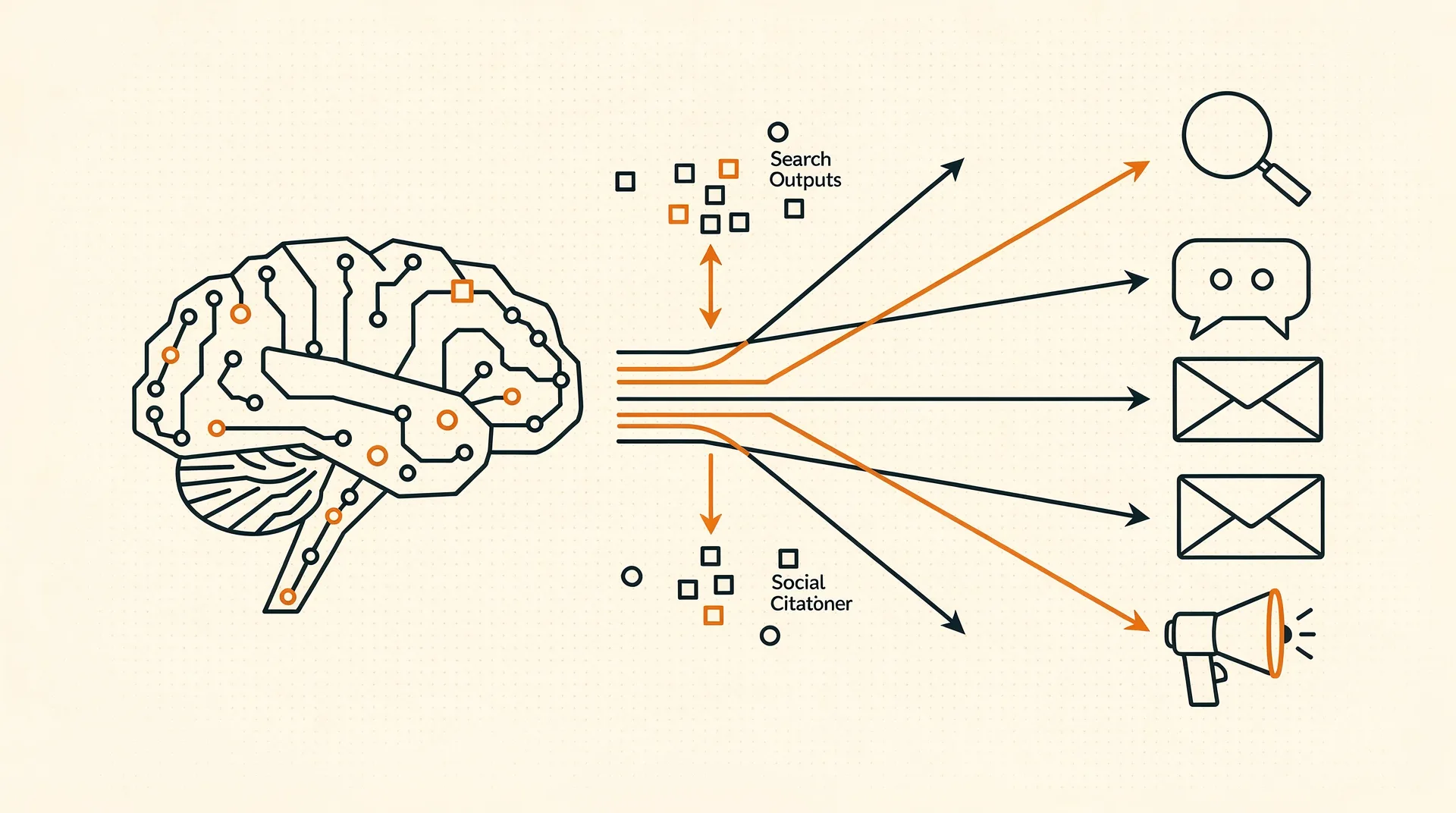
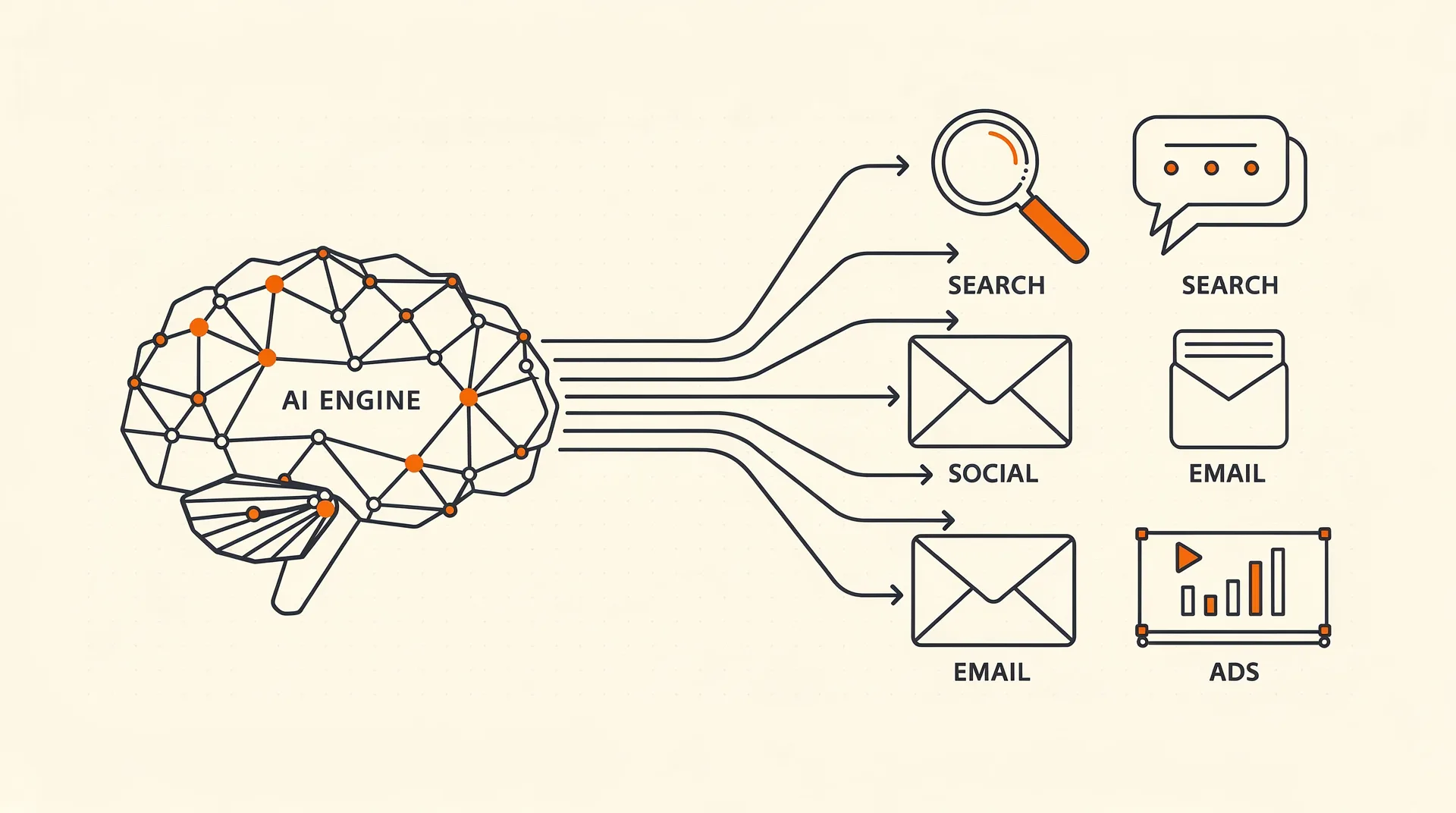
What Changed: The Mental Model Is Broken
The biggest gap between how marketers perceive AI search and how it actually works is the mental model. For years, SEO success was measured by a familiar set of metrics: rankings, traffic, and clicks. Even when attribution got messy, the basic model held well enough for teams to plan, measure, and defend their work.
AI search is fundamentally different. The value does not always show up as a click or even a traditional ranking. A brand can be recommended by an AI model without being cited with a link. Conversely, a brand can be cited without driving a user to the site. The old playbook, built on the assumption that visibility equals traffic, is no longer sufficient.
We are not seeing a sudden replacement of lexical search; lexical search had been declining long before ChatGPR. Consequently, many core SEO assumptions were already obsolete before AI search gained prominence. AI search is not completely separate from SEO, but the blend, priority, and the way you think about tactics have to change. You cannot treat AI responses like traditional rankings or assume the old playbook applies without adjustment.
Why It Matters for Marketers: The Crisis of Visibility
The shift matters because it fundamentally alters how brands achieve visibility. In the traditional model, your goal was to be the top result. In the AI model, your goal is to be the top source of truth. The AI model acts as a synthesizer, pulling information from various parts of the internet to construct an answer.
If your content is vague, filled with marketing fluff, or lacks concrete facts, the model will not trust it. It will look for sources that are clear, structured, and backed by evidence. This creates a crisis for marketers who rely on "glossy" content. If you cannot provide the specific data the model needs, you will be invisible, even if your traditional SEO metrics are strong.
Furthermore, the rise of bot analytics tools like Microsoft Clarity, which now flags bots ignoring robots.txt, highlights a new layer of compliance. AI crawlers are navigating your site differently than human users. If your site is not structured to be easily parsed or if your rules are ignored, your data may be ingested incorrectly, leading to AI misrepresentations of your brand.
The New Metrics: What to Track Instead
Since the value of AI search doesn't always show as a click, tracking the old metrics is a waste of time. You need a new mental model for measurement.
Stop measuring AI search like SEO. Instead, track:
* Brand Recommendations: How often is your brand mentioned by the AI when relevant queries are asked, even if no link is provided?
* Citation Quality: When you are cited, is the link high-quality and does the context accurately reflect your offering?
* Entity Consistency: Is your brand name, location, and offering consistent across high-authority surfaces (Wikipedia, Crunchbase, major directories)? Inconsistency creates noise that models reject.
* Grounding Queries: Use tools that show which queries are grounding your citations. This tells you what topics the AI trusts you to answer.
The Practical Move: Build One "Proof Page" This Week
Here is the single, high-impact move you must make this week. Do not try to overhaul your entire site. Instead, build one page that does three things at once:
1. Answers a Real User Question: Pick a specific, high-value question your audience asks.
2. Defines the Entities Behind the Answer: Clearly identify the products, services, locations, and leadership involved. Use neutral, machine-readable language (tables, lists, glossaries).
3. Cites the Evidence: Pair every strong claim with a concrete stat and a source external to your organization (e.g., a government report, a peer-reviewed study, or a major industry publication).
This page must be "engineered for citation." It should be stripped of marketing fluff. It should lead with facts, comparisons, and third-party validation. Make it trivial for the AI model to lift three sentences and a table as the "proof block" inside its answer.
By building this page, you are not just optimizing for traffic; you are optimizing for the AI model's trust. You are providing the clarity and completeness that the model requires to elevate your brand from a possibility to a recommendation.
In an era where AI is rewriting the SEO playbook, the winner is not the one with the most traffic, but the one with the most trusted, clear, and evidence-backed content. Start building your proof page today.