What changed in AI SEO
AI SEO used to be described as a visibility problem: get your brand, product, or expertise into the sources that language models retrieve, then hope the model mentions you.
That description is now incomplete.
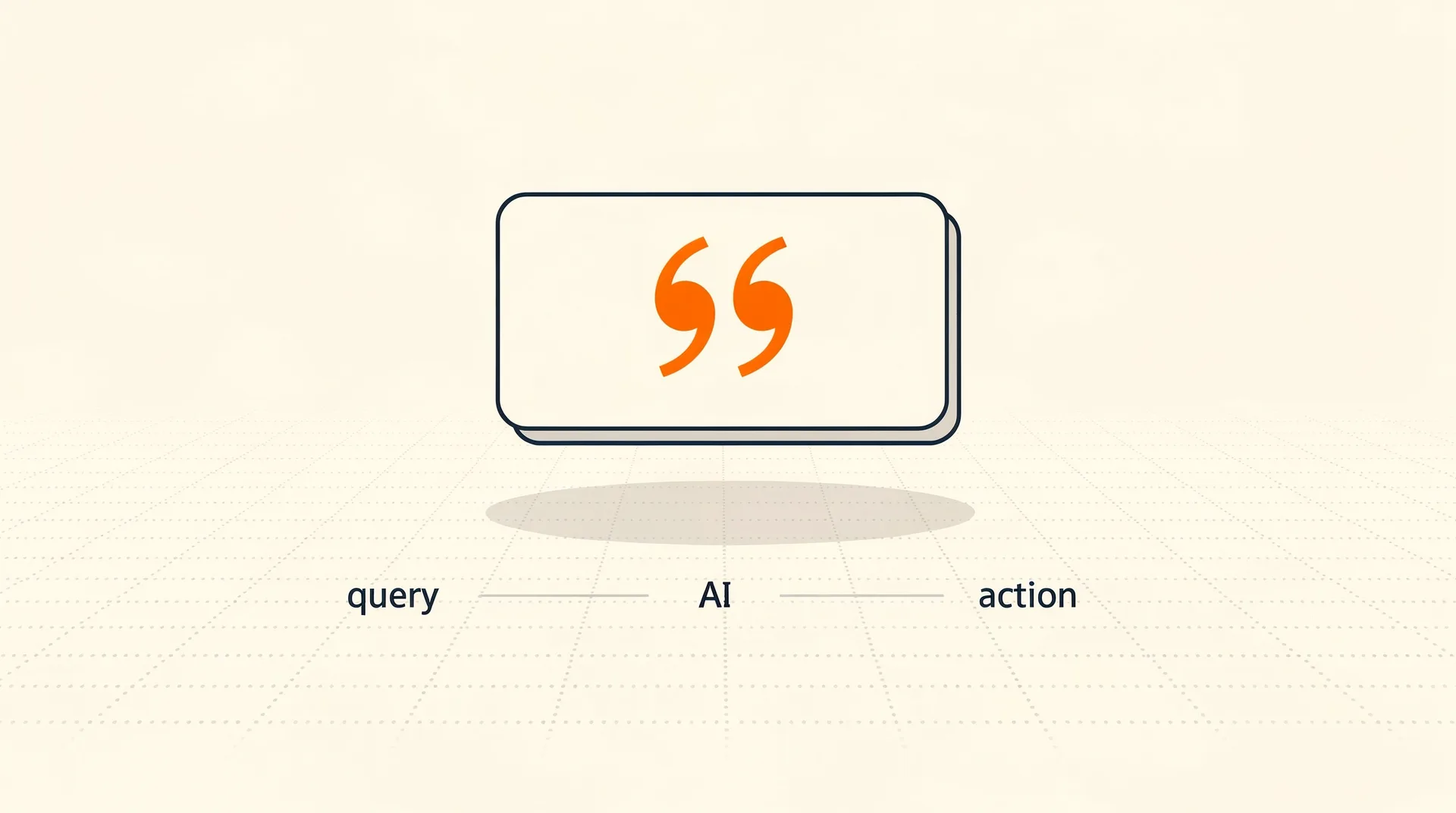
The more consequential shift is that AI systems are becoming active intermediaries between a user and a business. They do not simply retrieve information. They interpret it, reconcile conflicting inputs, recommend next steps, and increasingly support transactions.
That creates two distinct risks for marketers.
First, an answer can be correct in one context and disappear in another. A study discussed in “It Was There A Minute Ago” by Search Engine Journal tested what happened when a model had already answered a factual question correctly, then received an incorrect answer from an external tool. Across four models, correct-answer retention ranged from 6.5% to 17.1%.
The important point is not the precise range alone. It is what the experiment implies: a model’s previous correct answer does not guarantee that the answer will survive new retrieval, tool output, or contextual pressure.
Second, the search journey is moving beyond the results page. Google is testing ways for users to move from AI-assisted discovery into product selection, cart management, and checkout. At the same time, it is giving publishers new ways to build identity and audience relationships inside Search.
AI SEO is therefore becoming less about winning a single ranking and more about remaining legible, trusted, and actionable across a chain of machine-mediated experiences.
Why marketers should care
The conventional SEO funnel assumes that visibility leads to a click, and the click leads to evaluation or conversion. AI search can compress or remove the first step.
A user may see a synthesized answer without visiting the cited publisher. A shopper may discover a product through Google and continue with a cart transfer rather than beginning on the retailer’s website. A reader may encounter a publisher through a Search profile, Discover, or a knowledge panel instead of a traditional organic listing.
This changes what “performance” means.
A brand can be cited but misunderstood. It can be mentioned but not selected. It can be visible in an answer but absent from the next action. Conversely, a business may lose referral traffic while gaining influence earlier in the decision process.
Google’s rollout of cart transfer and expanded UCP checkout options makes that shift concrete. Merchants using the Merchant Center hub can enable a path for shoppers to move items from Google to the merchant’s own site to complete a purchase. The Cart API and sandbox testing also make the interaction more operational: product data is no longer only a feed for ranking and ads; it can become an input into an AI-assisted transaction.
For publishers, Google’s new Search Profile badge guidance points in a similar direction. Profiles centralize content, enhance knowledge panels, connect with Discover, and support multi-brand management. The badge is not a substitute for traffic, but it reflects a search environment in which identity and repeat audience access matter more than a single page impression.
The practical implication: optimize for persistence
The immediate strategic mistake is to ask only, “How do we get cited by AI?”
A better question is, “What remains true and useful when the system encounters our brand through different sources, tools, and interfaces?”
That requires three kinds of consistency.
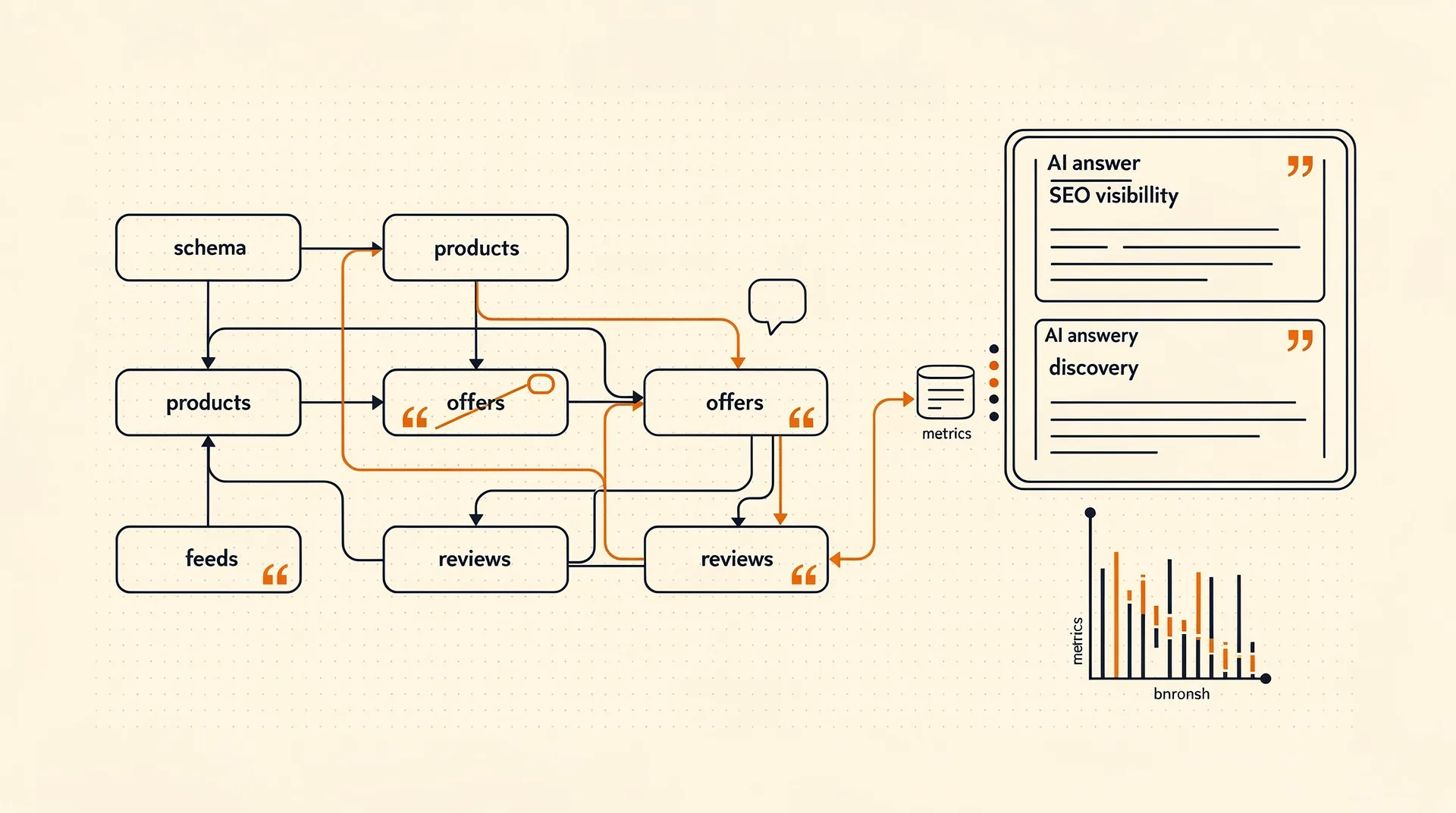
Factual consistency. Product claims, pricing logic, service descriptions, author credentials, and company facts should agree across the website, structured data, merchant feeds, review profiles, and third-party references.
Contextual consistency. Important pages should explain not just what the business offers, but when it is appropriate, who it is for, how it compares with alternatives, and what limitations apply. This gives retrieval systems enough context to produce a qualified answer rather than a vague mention.
Transactional consistency. If an AI system surfaces a product or service, the next step should work. Product availability, variants, policies, checkout paths, and support information need to align with the claims made in discovery.
This is not a request to write content for machines. It is a requirement to make the business easier for machines to represent accurately.
The move to make this week
Run an AI visibility and consistency audit on one commercially important topic.
Choose a product category, service line, or high-intent question. Then test it across three layers:
1. The answer layer
Ask several AI search systems the same question using different wording. Record:
- Whether your brand appears
- Which claims are attached to it
- Which competitors are included
- Whether the answer distinguishes your offer correctly
- Which sources the system relies on
Do not treat one successful response as proof of visibility. Repeat the prompt later and introduce reasonable variations. The research summarized in the MemToC discussion is a reminder that model behavior can change when external information changes.
2. The evidence layer
Compare the answer with your own pages, structured data, merchant information, reviews, and authoritative third-party references. Look for contradictions, missing qualifications, outdated details, and unsupported superlatives.
Fix the source of the inconsistency, not merely the wording on one landing page.
3. The action layer
Follow the user’s likely next step. Can they verify the claim? Compare options? Check availability? Add the correct product to a cart? Contact the right team? If discovery happens in Google or an AI interface, measure whether the transition into your owned experience is functional.
For retailers, that may mean reviewing Merchant Center eligibility and testing relevant UCP cart flows. For publishers, it may mean establishing or improving a Search Profile and making author, organization, and content relationships clear.
Measure influence, not just clicks
Clicks remain useful, but they are no longer a complete account of search performance.
Track brand mentions in AI answers, citation quality, assisted conversions, branded search behavior, direct traffic, product-feed health, and the consistency of downstream actions. Separate “visible” from “represented accurately” and “able to convert.”
The core lesson is straightforward: AI SEO is moving from page optimization toward system resilience. Your brand must survive retrieval, synthesis, comparison, and action without losing its meaning.
This week, pick one high-value topic and test the entire journey. The goal is not to force an answer. It is to make the correct answer easier to retrieve, harder to distort, and simpler to act on.