The shift is real. The payoff needs perspective.
AI is changing how people find information—and how marketing teams plan for the work. But visibility in an AI answer is not the same as meaningful traffic, and a new optimization label does not automatically signal a new budget priority.
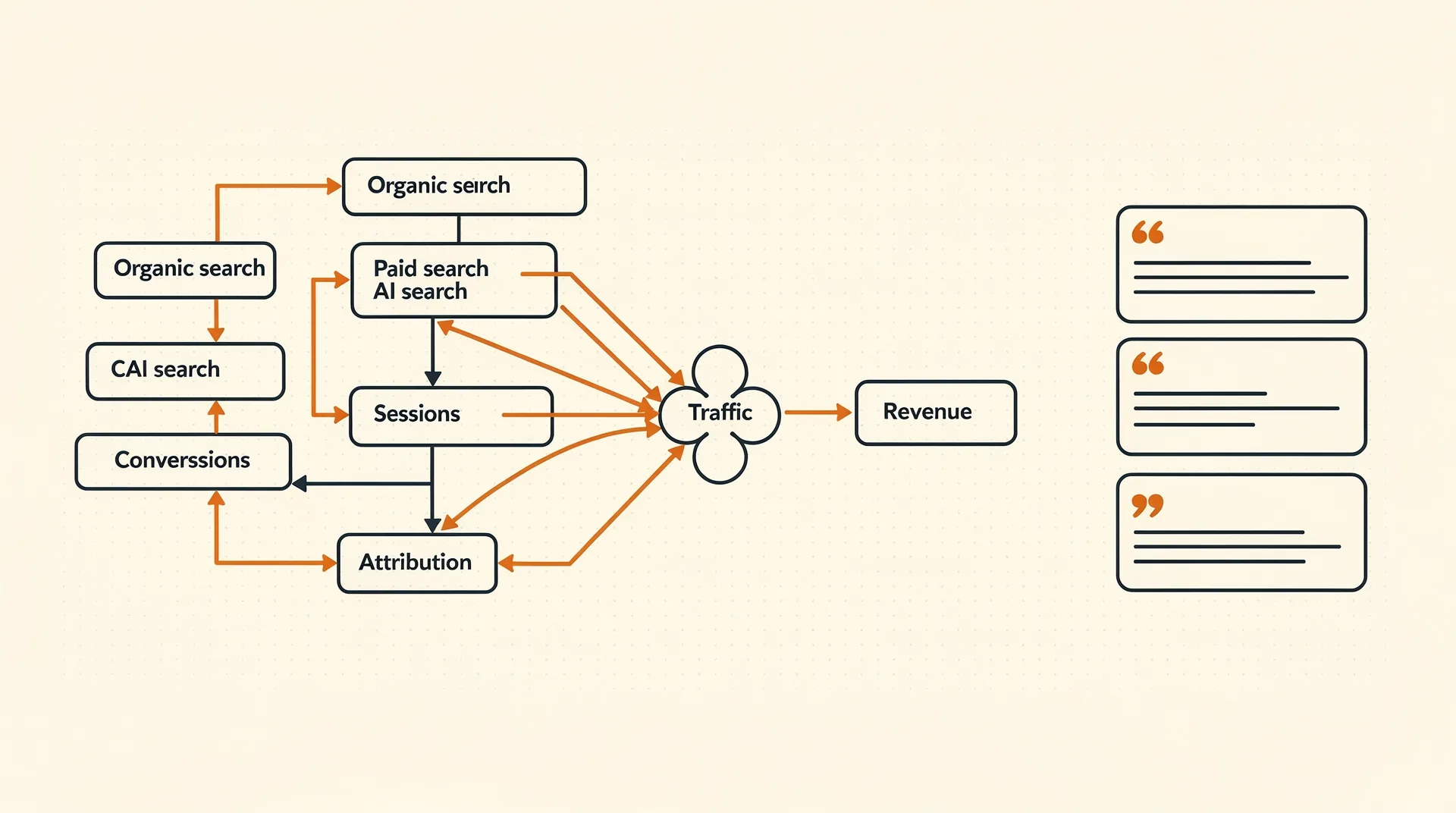
That distinction is the practical takeaway from recent reporting on AI referrals. Across 100 websites and more than 145 million sessions, Marie Haynes found that ChatGPT sessions amounted to 0.62% of Google Organic volume. Including other large language models brought the share to 0.73%. The result is a useful corrective to the idea that AI referrals have already displaced traditional organic search at scale.
The same dataset shows why marketers should not dismiss those referrals. Among the 55 sites tracking conversions, ChatGPT visitors converted at 13.8%, compared with 3.02% for Google Organic visitors. Yet Google accounted for 96.5% of conversions across the channels analyzed. In this sample, Google Organic drove 27 times more conversions than all LLMs combined.
The message is not “ignore AI search.” It is: distinguish conversion quality from business impact. A small, high-converting stream can deserve attention without becoming the main engine of acquisition. Haynes lays out the numbers in her analysis of GEO and the opportunity in the agentic web.
Measure contribution, not novelty
AI visibility is easy to discuss because it is new, observable in screenshots, and often presented as a contest for citations. But marketers need a measurement plan that connects that visibility to outcomes.
Start with a baseline: sessions and conversions from identifiable AI platforms, alongside the same measures for organic search and other acquisition channels. Keep volume and conversion rate separate. A high conversion rate is promising, but it does not tell you whether the channel contributes enough leads or revenue to justify a major investment.
Interpret the data carefully, too. The reported results come from a particular set of sites, and conversion tracking was available for only 55 of them. They are evidence worth testing against your own analytics, not a universal forecast. Define what would change your priorities: perhaps sustained growth in qualified AI referrals, assisted conversions, or evidence that AI visibility influences demand even when it does not produce a directly attributed session.
For this week, build a simple dashboard or spreadsheet with those measures. Label the reporting window, the sites or business units included, and any known gaps in tracking. That gives your team a way to judge whether AI search is becoming material instead of relying on anecdotes or a single impressive conversion rate.
The budget conversation is also a staffing conversation
AI SEO is often framed as a tool or channel question. It is also a question about who does the work—and who gets the chance to learn it.
A Stanford Digital Economy Lab analysis of payroll records found that employment among workers aged 22 to 25 in AI-exposed occupations was 19% below the level projected if it had kept pace with less-exposed peers. The reported pattern was fewer junior hires rather than comparable declines among experienced workers. That finding does not establish what is happening inside every marketing team, or prove that AI alone caused each hiring decision. It does make entry-level hiring a risk worth naming in workforce planning.
The practical implication is straightforward: do not bury junior roles inside a general headcount assumption. Give them their own line in the 2027 budget, then explain what the roles will contribute—research, quality assurance, structured data checks, content operations, or analysis. Those responsibilities are examples for teams to evaluate, not a claim that every entry-level role should look the same. The point is to make the decision visible rather than letting it disappear into aggregate staffing plans. The argument and the payroll findings are discussed in the case for naming the junior hiring gap in marketing budgets.
AI discovery does not replace technical SEO
The changing interface does not make site reliability or crawl controls optional. If anything, more discovery systems make it important to know what your site serves, to whom, and when.
Google’s guidance on temporary downtime is a concrete example. For brief server downtime during PHP patching, Google advises returning a 503 status rather than a generic 404 or an error page returning 200. The 503 should be served by infrastructure that remains available while the application is offline; Google also warns against leaving URLs returning 503 for multiple days. A planned maintenance window can therefore become a search visibility problem if the response is misconfigured.
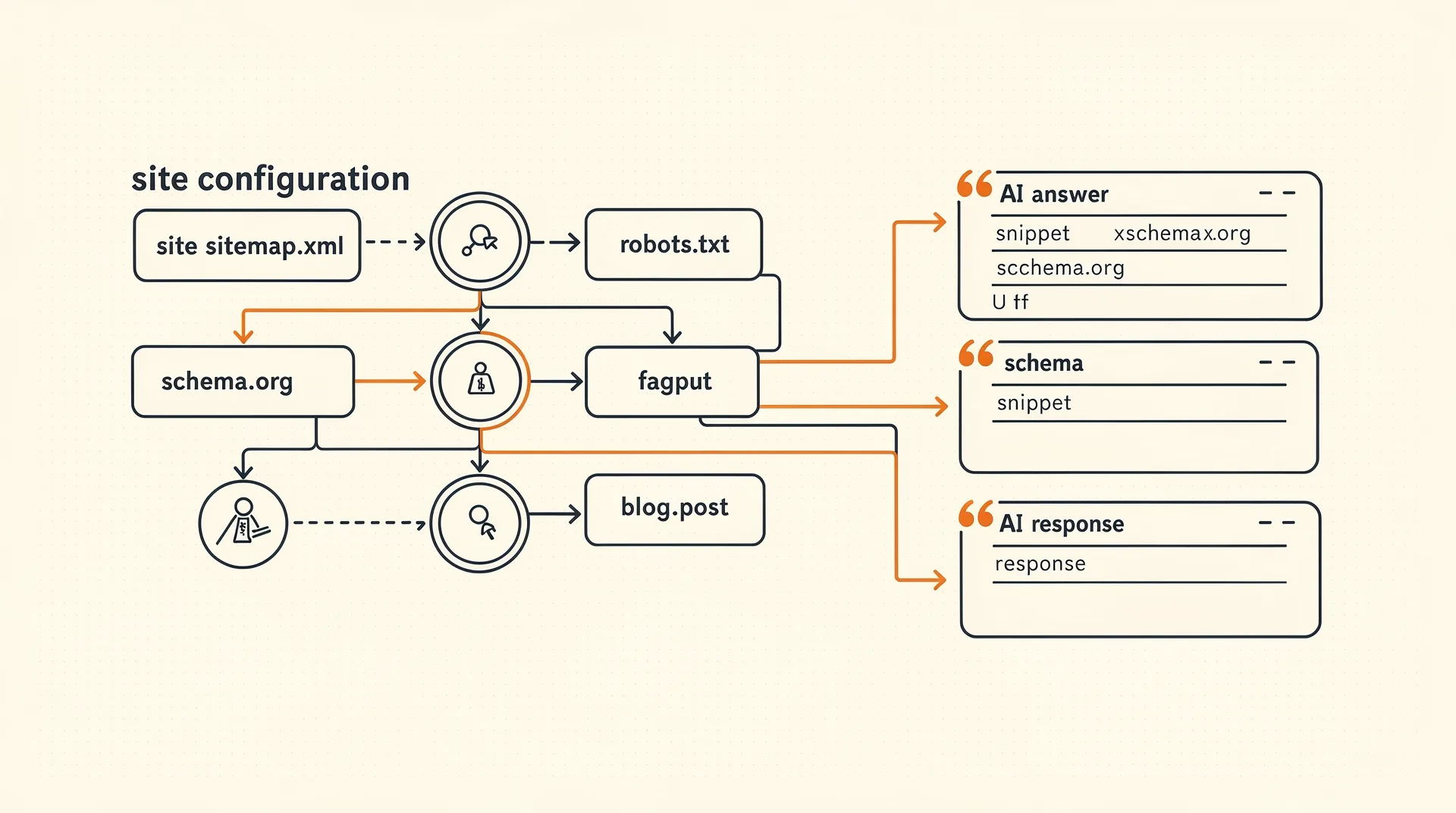
Robots.txt deserves the same operational clarity. It controls crawler access, and rules that block crawling can affect more than one class of automated visitor. Before changing directives in the name of AI access or exclusion, document which crawlers and agents the rules affect and have SEO and engineering review the consequences. The technical details, including Google’s notes on 503 responses, robots.txt, and other crawling issues, are a reminder that fundamentals remain part of the AI search plan.
The move to make this week
Do three things. First, establish your own AI-referral baseline and compare volume, conversion rate, and total contribution—not one metric in isolation. Second, check robots.txt and your downtime response with the people responsible for your infrastructure. Third, identify whether entry-level marketing roles are explicitly represented in your next planning cycle.
That is a more useful starting point than treating GEO as a standalone growth engine or assuming AI search has no value because its current traffic share is small. The interface is changing; the evidence should determine the response. Measure what is happening on your site, preserve the technical conditions that let search systems reach it, and fund the people needed to adapt.