Enterprise software once lived behind a screen. That screen is now optional.
Salesforce’s expanded partnership with Anthropic, called Claudeforce, puts Salesforce data and workflows directly inside Claude. Its first product, Salesforce in Claude, lets users query CRM data, update records, review deals, and run workflows without ever opening Salesforce itself. Marketing, service, and commerce capabilities are expected to follow over the next few months, and an open beta is slated for September. On its face, this is an impressive integration. Below the surface, it is something more radical: Salesforce’s entire partnership with Anthropic is a bet that the company’s long-term value is not the UI users look at, but the customer data, permissions, business rules, and metadata underneath the interface.
Patrick Stokes, Salesforce’s president of applications and marketing, made it explicit: “The value of Salesforce is not in our UI itself. It’s not the application. The value of Salesforce is in the data and the metadata.”
Now that the interface has become the optional layer, the entire marketing dialogue has moved to a fundamental question: if the screens disappear, what actually remains in your control? For most teams, the honest answer is uncomfortable.
When algorithms took the control levers
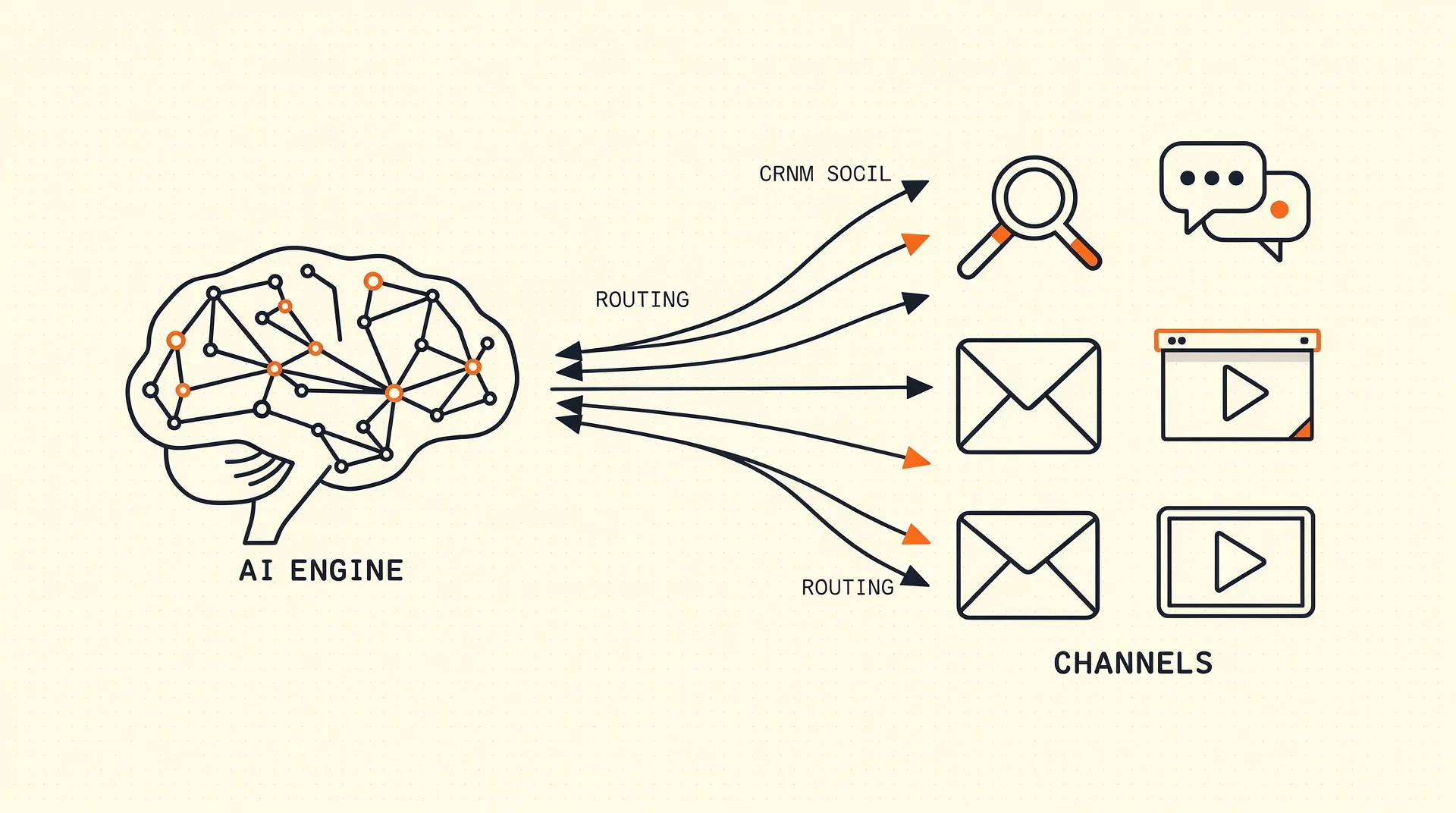
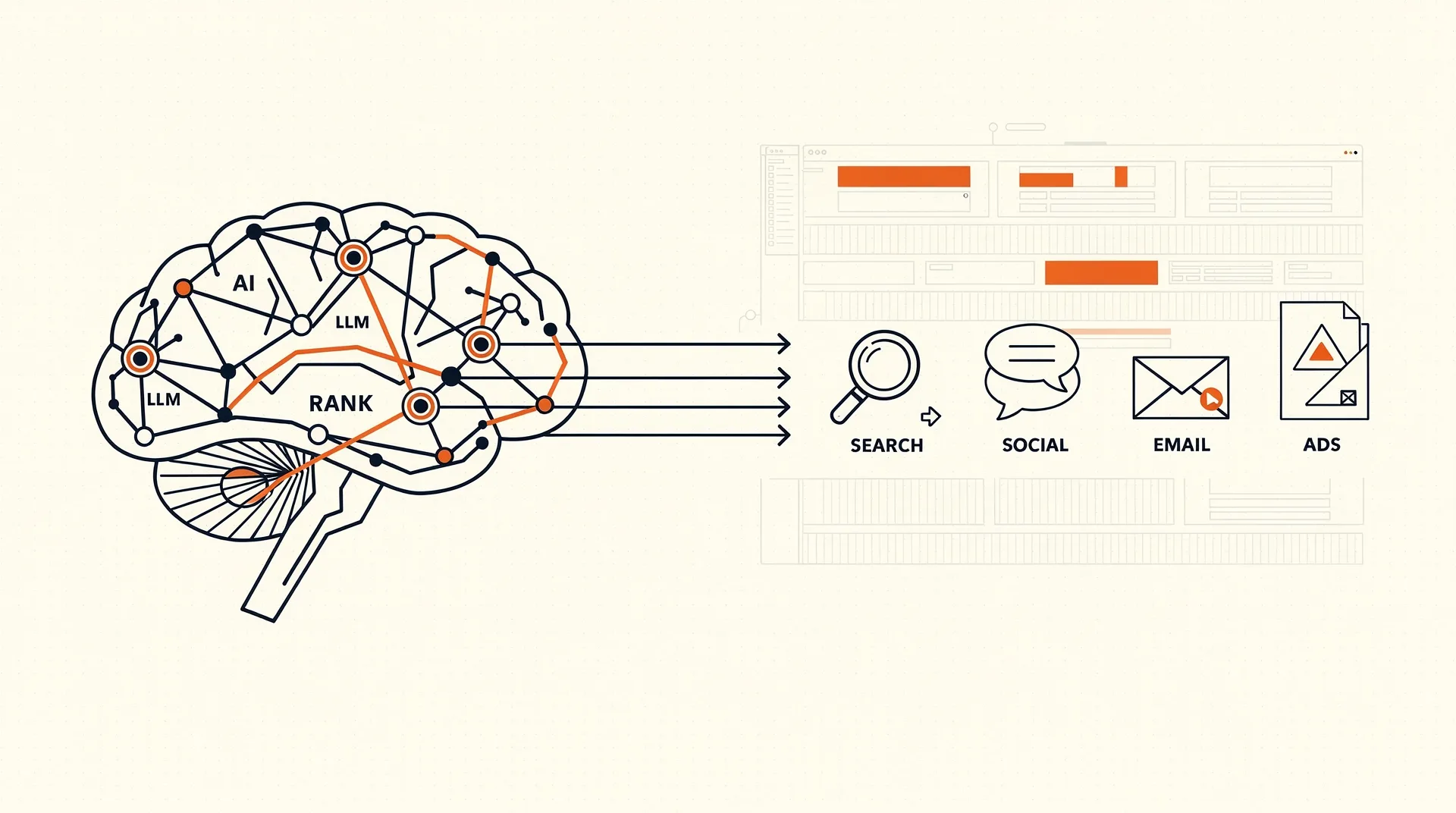
The same “interface is optional” dynamic has already hit performance marketing. The familiar levers — precise audiences, manual bids, custom creative variations, and direct conversion attribution — are being absorbed by platform algorithms. Paid media channels automatically handle targeting and creative allocation; search engines use AI answers to alter how users discover brands; email platforms optimize of their own.
At the MarTech Conference this week, experts from Cisco, Google, Jiffy.com, and Thoughtlight are asking a harder question: when systems automate, which signals still reflect true business value when systems automate—and which legacy metrics are quietly misguiding your team? The session title — What’s really driving results across channels now — is a recognition that the black box is permanent. The only way to trust the box is to trust the inputs.
Bad data now makes decisions by itself
That miss between trust and inputs is about to become a business liability.
According to the State of CRM Data Report 2026 in Validity, nearly 91% of marketers say data readiness is critical for adopting AI, but only 21% consider their CRM data very well prepared for the AI tools they use or plan to use. Meanwhile, 45% already use agentic AI that can act without human review, and two-thirds of organizations said they have increased the number of marketing decisions delegated to autonomous agents over the past year.
This is where the dynamic becomes dangerous. Colleagues used to see breaking ups and repeated bad data. Now an agent can act on those errors instantly — sending a campaign, scoring a lead, personalizing an offer, or reallocating budget — before anyone checks the underlying record. The same warm stat: 62% of marketers say poor CRM data has probably or definitely cost their organization revenue in missed renewals, inaccurate forecasts, lost deals, or disturbed campaigns. Yet only 28% are very confident their CRM gives an accurate view of performance.
What to do this week: run a data readiness audit
You don’t need to wait for the September beta of Salesforce in Claude to take action. The edge you can buy this week is not another AI tool — it’s CRM hygiene.
Start by creating a three-field readiness threshold: every record your agents touch must have a complete owner, a valid and an inbox-safe email address, and a timestamped lifecycle stage. If any one of those is blank, mark the record not agent-ready. Then run that filter against your top 1,000 open opportunities and your last 30 days of marketing-sgated leads. You’ll quickly see what your AI is already “reading” — or acting on blind.
Second, test one agent workflow at time. Pick a low-risk workflow that creates real value, like updating a lead status based on a reply or flagging duplicate records. Set it up to run in a sandbox against a copy of that on-sanitized dataset. Let the agent make its mistakes there, where no billing alert fires.
Third, enforce a metadata rule that aligns with the Salesforce Headless 360 architecture. For anything you’ll eventually expose to Claude or another agent, add a human-readable L writing for why a value is what it is. Permissions and metadata defined clarity — yes the same asset that Salesforce is now monetizing.
The new marketing operating model
It’s not an abstract debate. The interface is what used to be the competitive screen; that interface is now ’s commodity. As the Salesforce partnership demonstrates, the entire point of enterprise software is quickly becoming the data and metadata layer underneath the screens. Marketers who invest in that layer — clean data, explicit business rules, defined ownership, and permissions that allow allowed, disallowed allowed — will be the only ones who can safely delegate more authority to agents.
The last week also chimes clarifies why this starts in the data plane and not in the creative plan. When an automated search algorithm shifts traffic patterns, you can’t reposition in time. When a platform reallocates budget overnight, you can’t flag it. But you can make sure the AI is making recommendations on data that is fact, accurate, and complete. That is the controllable input in an irregulating system.
The comfortable news is that you already know the guide. You need to follow it now. Because in a world where the interface is optional, your data is the only interface left.